Domain/URL Structure (ccTLDs, Subdomains, Subdirectories) for International Websites (International SEO)
If you operate a website and want to target international markets, the initial question arises about how to best organize the web, domain, and URL structure for International SEO. Should you use country code top-level domains (ccTLDs)? Or are subdomains or subdirectories the better choice? This question is often asked, and the answer is – as is often the case in SEO – “it depends.” In this article, I will explain which web structure might be best suited for you, based on the strengths of your business and the specific characteristics of the target market.
The three main options are ccTLDs, subdomains, and subdirectories.
What you shouldn’t do is use voice control via URL parameters instead of proper URLs, because this comes with some disadvantages (implementation, indexing, etc.).
1. ccTLDs – e.g. .de, .fr, .es
ccTLDs (country code top level domains) are the clearest way to target your website to specific countries. A well-known international example is Pinterest, which operates its German and French sites via ccTLDs: pinterest.de and pinterest.fr.
The use of a country-specific domain offers clear advantages, particularly a distinct geographical orientation that signals the location of the company or target audience. Another advantage is that the server location is irrelevant, allowing for more flexibility in the technical infrastructure. Moreover, such a domain makes it easier to seamlessly divide websites by country.
It is also interesting to note a conclusion drawn by Pinterest itself, that with the switch to top-level domains such as .de, .fr, etc., traffic has developed positively. Impressions and clicks increased. More pages were indexed as a different top-level domain releases a separate “crawl budget” for search bots.
However, there are also some disadvantages: Country-specific domains can be expensive, and their availability is not always guaranteed. Furthermore, their management often requires a more extensive infrastructure. Strict requirements for ccTLDs (country code Top-Level Domains) can also pose a challenge, and the domain is usually only targeted towards a single country.
For example, if you want to target the German market, a .de domain would be the first choice. This structure is particularly suitable when the competition in the target market is manageable and you want to establish a strong, locally rooted presence from the outset.
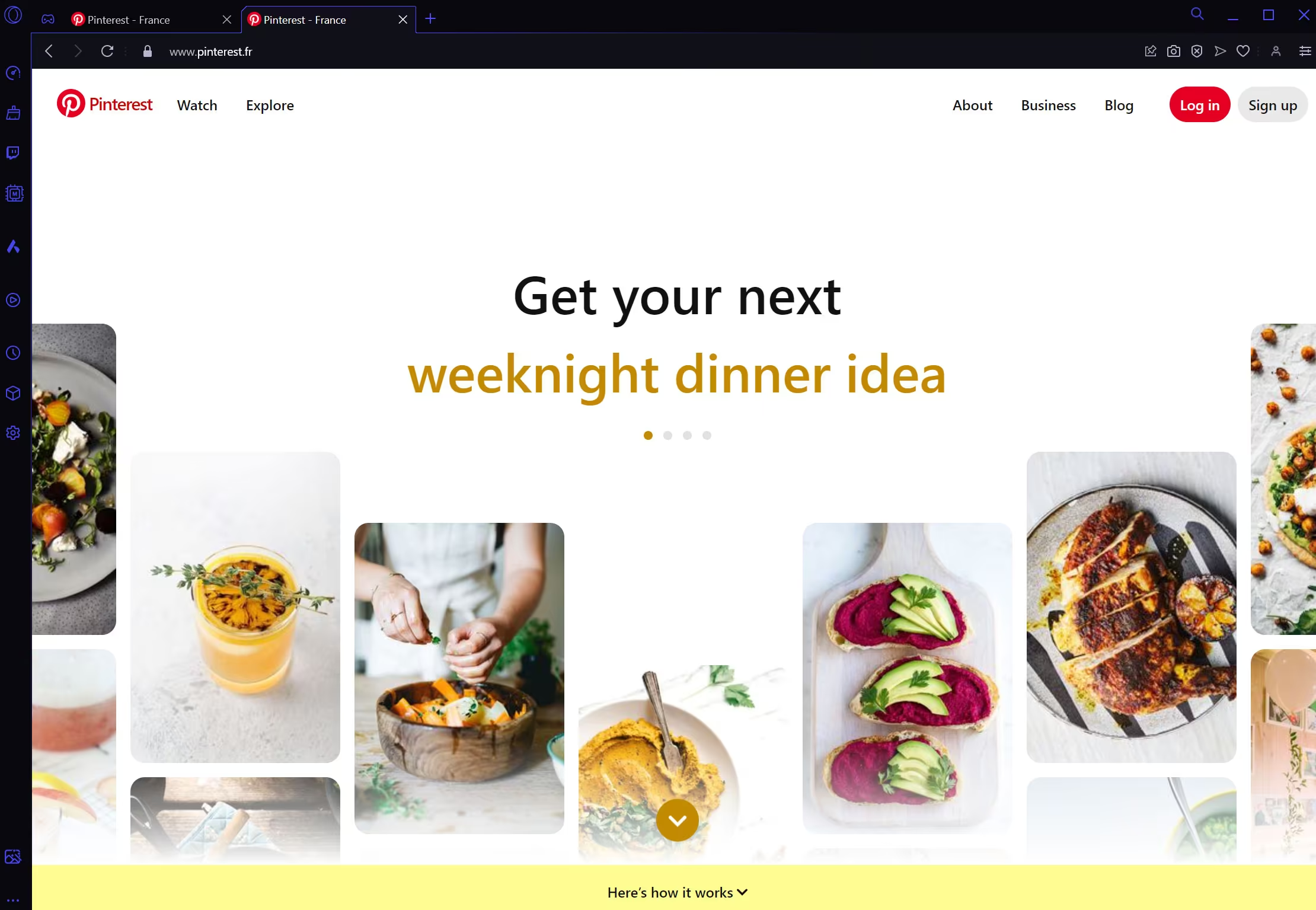
Pinterest automatically queries the browser language. In the Opera browser, I have English set as the default language, which is why – even though I am on the French site pinterest.fr – the English version is displayed. This is particularly disadvantageous when, for example, you arrive at the German Pinterest page through a German search query on Google, but the entire user interface is presented in the language of your browser language setting. This could confuse users because they expect German content with a German search term and the corresponding German page.
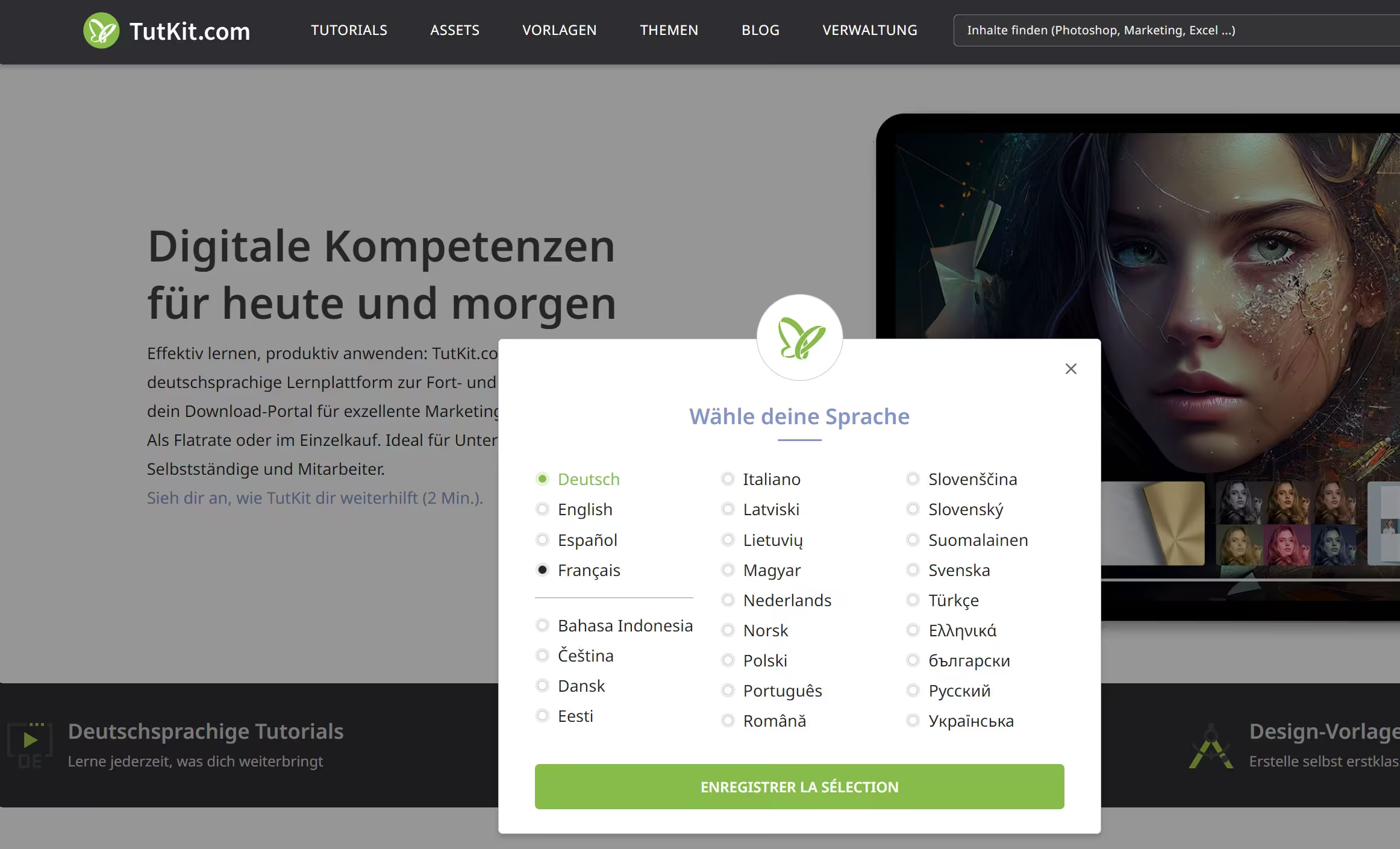
From a UX perspective, it is better to let the website visitor decide whether they want to switch to the language of their browser when they have entered a page in a different language. At TutKit.com, we solve this by displaying a small pop-up for the website visitor with the information that the content is also available in their language, and with a click on a button, the page can be switched accordingly.
2. Subdomains (e.g. de.examplewebsite.com)
Subdomains are another way to provide international content. Using subdomains with a generic top-level domain (gTLD), such as “de.example.com,” offers several advantages. The setup is relatively simple and allows for different server locations to be used for different subdomains, providing more flexibility in managing the website. Additionally, this structure enables a seamless division of websites by regions or languages. Google often treats subdomains as standalone entities, which means you may not benefit from the existing authority of your main domain.
Users may also not immediately recognize the geographic orientation of the subdomain and may wonder whether “de” stands for the country Germany or merely for the German language, which can lead to confusion.
This option of subdomains can be useful if you have technical or legal requirements that necessitate separate management of content for different countries.
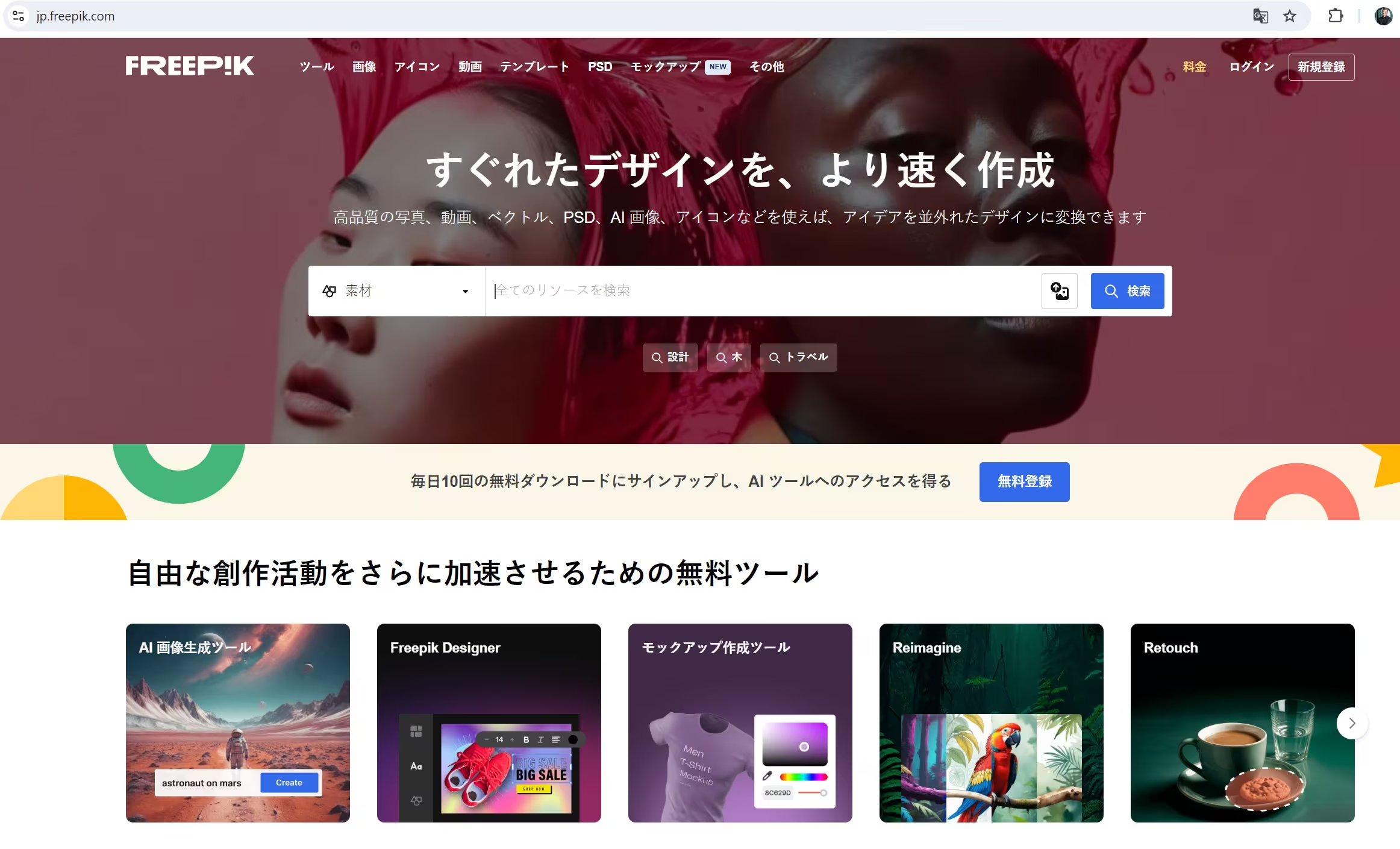
A well-known international example is Freepik, which has set up its eleven languages in subdomains: de.freepik.com, fr.freepik.com, etc. Here is the Japanese variant. It is well done with a hero image featuring a person from the cultural background, so the cultural fit has also been considered. However, it is somewhat less effective that not all menu cards are correctly translated.
But Pinterest also uses a subdomain for the Spanish site: https://es.pinterest.com. And not only there but in most of the presumably “smaller” language regions. So, a mixed approach with ccTLDs and subdomains is also possible for some companies.
3. Subdirectories (e.g. examplewebsite.com/de/)
The use of subdirectories with a generic top-level domain (gTLD) – as we have with “tutkit.com/de/” – has some clear advantages. The setup is straightforward and maintenance efforts remain low since all content is hosted on the same server. This structure is particularly convenient for centralized management. Adobe also uses subdirectories (adobe.com/fr/, …).
However, users do not immediately recognize the geographical orientation, as the URL does not contain a clear country code, but only the language code. Another disadvantage is that you are limited to a single server location, which restricts your flexibility.
Subdirectories are often, in my opinion, the most flexible solution. They allow you to organize content for different countries under a single domain, making it easier to leverage the authority of your main domain. Particularly in competitive markets, this structure can be beneficial, as you do not need to build a new domain from scratch.
Website visitors can change the language on TutKit.com with just two clicks. Depending on the language choice, the button text already changes to the new language upon selection, so the call-to-action is immediately available in the new language.
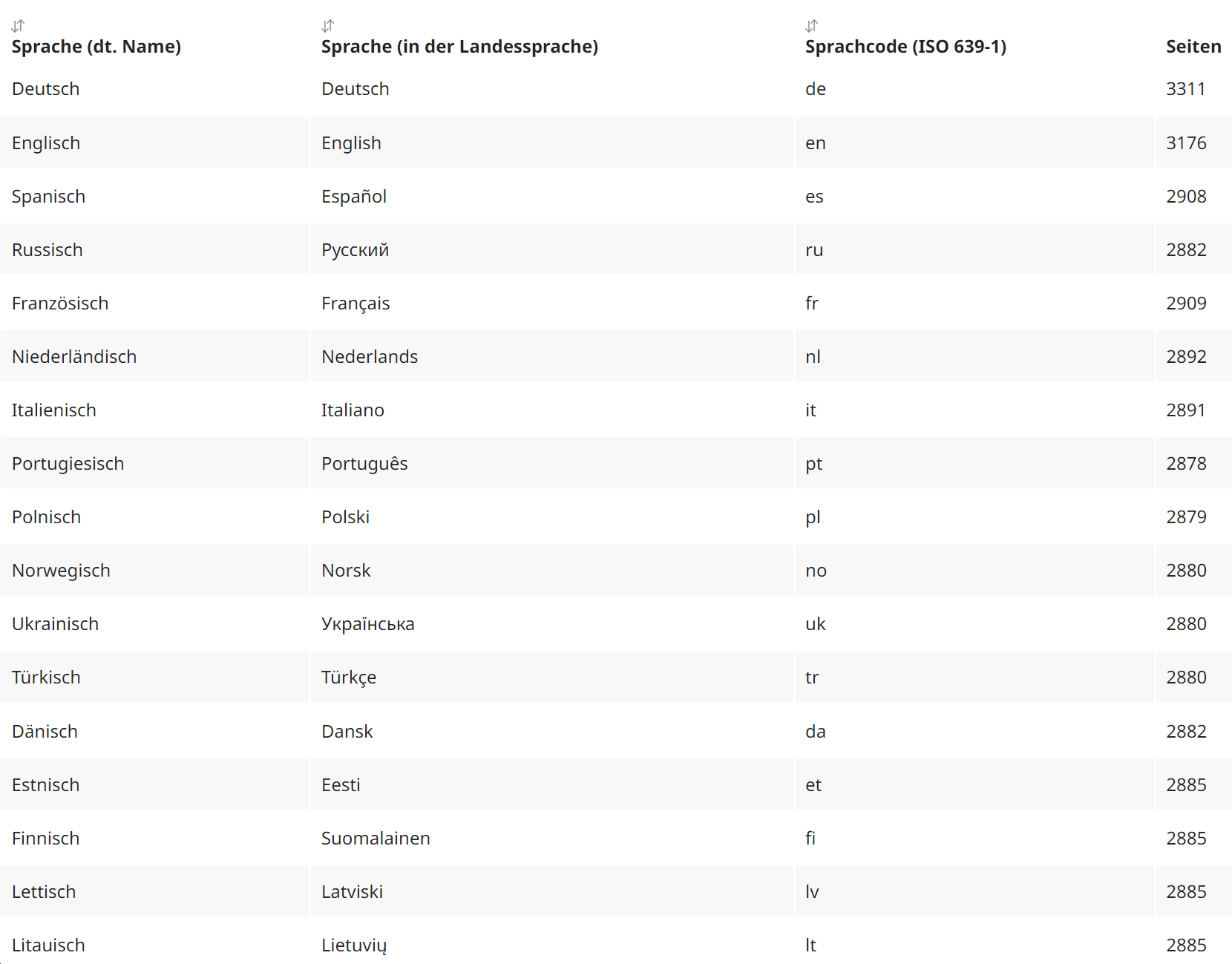
This is what the language management of TutKit.com looks like in our backend, based on the language code ISO 639-1:
Recommendation: Which domain and URL structure should you choose?
The choice of the best web structure depends on several considerations.
Look at the competitors in the target market as part of a competitive analysis. If most successful websites use ccTLDs, this could indicate that you should adopt this strategy as well. For me, as a German user, a .de domain appears more familiar than an international domain where German pages are stored as a subdomain or in a separate directory.
Country-specific domains also show higher click-through rates in the SERPs compared to the two alternatives. If subdirectories or subdomains dominate in the target market and your competition already has a high domain authority, a subdirectory under an existing gTLD (e.g., .com) could be more sensible. This is because with country-specific domains, you have to build the domain authority of each individual domain separately. The backlink profile of your .de site does not transfer to your .fr site and so on. This fact was one of the two main reasons why we at TutKit.com chose subdirectories, as this allows us to focus our link building activities on a single domain.
Another point is that with country-specific domains, you need more time and personnel resources to manage multiple domains and implement a separate SEO strategy for each country.
In some cases, there are technical or legal reasons that necessitate a certain structure. For example, if you need different IP addresses for different countries or have to separate content for legal reasons, subdomains might be the best solution. In fact, it is now a greater effort for us to adapt the cookie consent banner in compliance with regulations in different countries. With the EU, we already have the strictest rules. However, in countries where a cookie banner is not required, this banner will significantly impair the user experience, and people are more likely to leave the website if they encounter something unfamiliar that they cannot quickly categorize within seconds. Therefore, we want to display the cookie banner only where it is really necessary. It is easier to implement this with separate systems. From a single system, it requires more queries for geolocation.
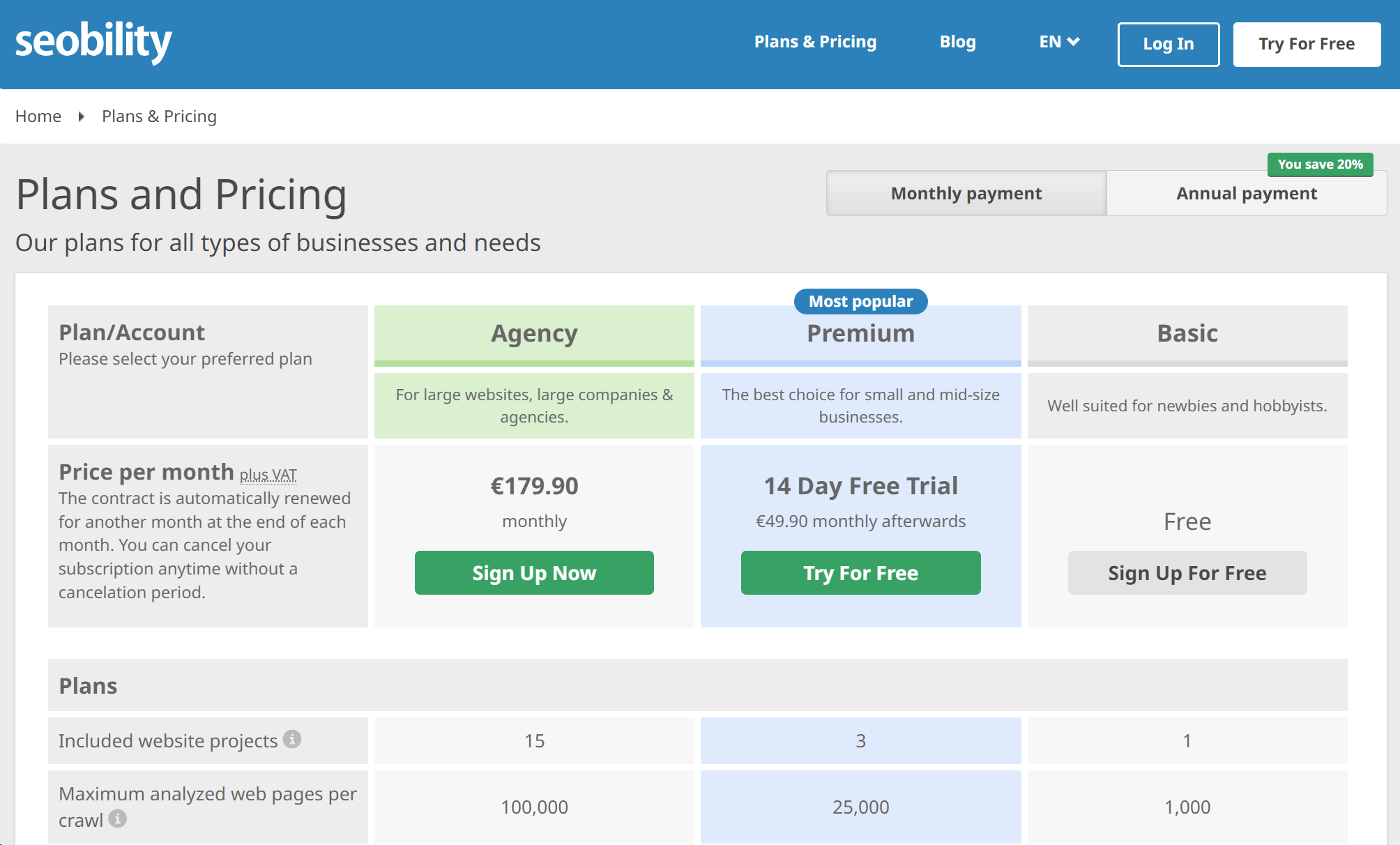
In conclusion, we opted for the subdirectories /de, /fr, etc. for TutKit.com, as we maintain everything from a single system and our resources for content maintenance, SEO, and link building are also limited. This included practical considerations in our ongoing work. In our SEO tools for crawling (currently Seobility and Audisto), the project is only listed once, and yet the crawlers can be easily restricted to specific directories if we want to resolve an issue in a particular language variant, for example. Thus, we only need to book one project in the tools. The tool providers often calculate the costs for usage based on the number of projects, which can become quite expensive with dozens of country-specific domains. Here are the prices from Seobility as an example:
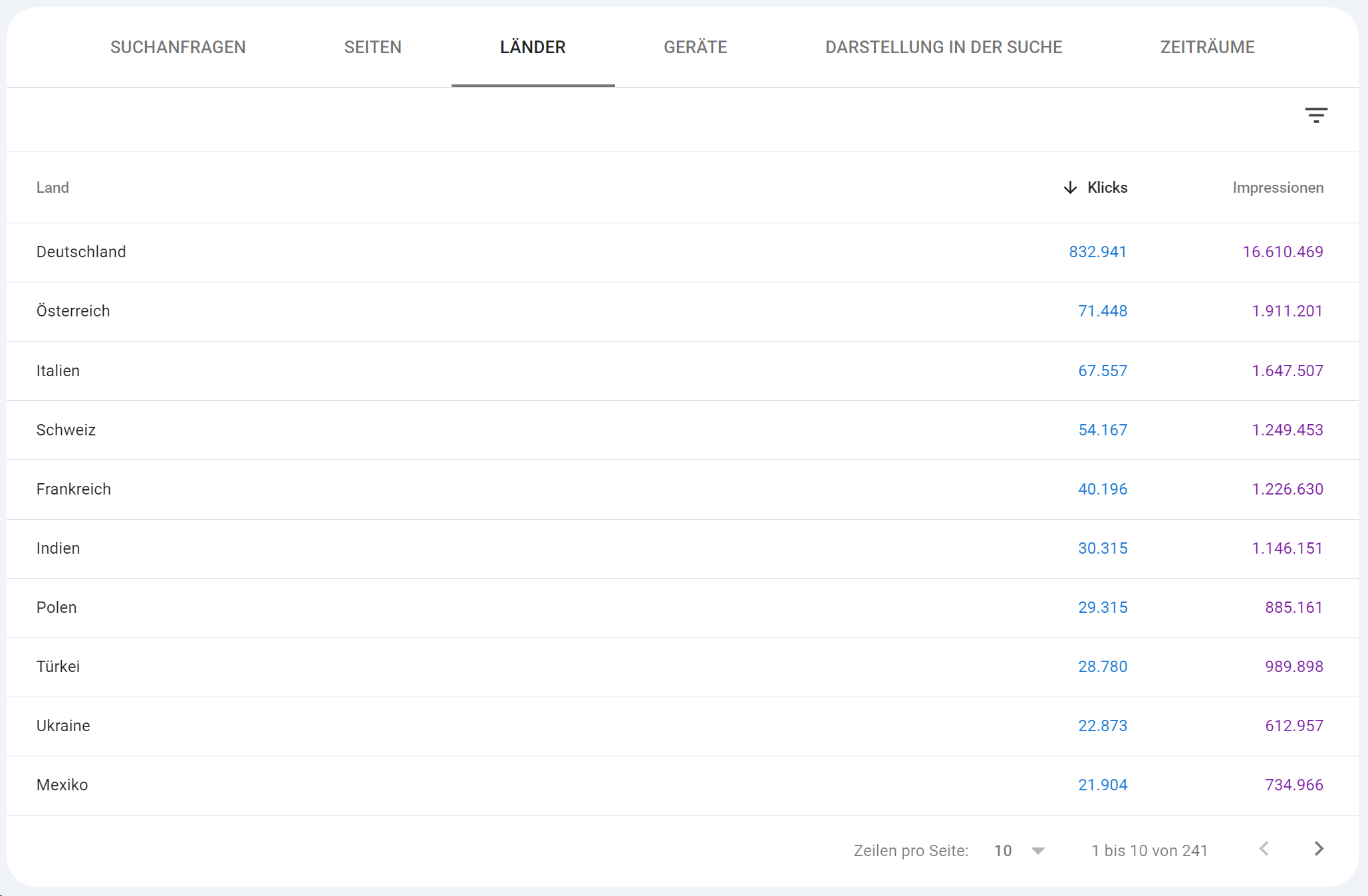
The ranking check via the Search Console is also quite simple because, in addition to the country display, we can also directly limit all rankings for the respective directory.
The international ranking monitoring via Sistrix is also very straightforward for us, as it is only one domain thanks to the subdirectories.
These advantages still make subdirectories the best choice for us today.
HREFLANG, Geo-Targeting, and cultural fit – here’s how to proceed.
In future blog posts, I will explain these three topics to you, which are also important for the multilingualism of websites and for international SEO.
- The HREFLANG attribute: The hreflang attribute is an HTML attribute used to inform search engines like Google which language and/or country version of a webpage should be displayed.
- Geo-Targeting: John Mueller from Google explained in one of his Google Webmaster Central office hours that the URL structure for multilingual websites does not matter as long as each website has its own URL. However, when content in the same language is intended to be targeted to specific countries via geo-targeting, some specifics come into play.
- Content adjustment: It is also wise that each country-specific page is not only in the correct language but is also culturally adjusted. This means that you should not just translate a page but also consider local needs and expectations.
Conclusion on the international URL structure
Choosing the right web structure for international SEO is a strategic decision that must be well thought out. A comprehensive analysis of your target markets, the competitive landscape, and your own resources is essential. Whether you opt for ccTLDs, subdomains, or subdirectories, the goal is always the same: better rankings, more traffic, and higher conversions in the markets, as well as efficiency in managing the website.
If you have any questions about the international URL structure, feel free to contact us.