Introduction to Technical SEO
By mid-2024, we have adjusted our focus and priorities in our agency activities. Through our intensive work on our own project TutKit.com, we have delved deeply into the topics of Technical SEO, PageSpeed, and Code Analysis. Therefore, we will be publishing some news to help you, dear readers, better understand where our strengths lie and what motivates and drives us every day. This article on Technical SEO will kick things off.
What is Technical SEO?
Technical SEO is an essential component of any successful SEO strategy. It focuses on optimizing the technical aspects of a website to improve its visibility in search engines and user experience. This article provides an overview of the basics of Technical SEO, explains why it is so important, and details why some pages have crawlability issues and what measures can be taken to resolve them.
Technical SEO refers to the measures taken to make a website accessible and understandable for search engine crawlers. Unlike On-Page SEO, which focuses on the content and structure of the pages, and Off-Page SEO, which targets external factors like backlinks, Technical SEO deals with the infrastructure and technical conditions of the website.
Goals of Technical SEO
The essential focus points in Technical SEO are the crawlability, the indexability, and the user-friendliness of your website. This leads to the three primary objectives:
- Improve crawlability: Ensure that search engines can crawl all pages of the website.
- Ensure indexability: Make sure that the crawled pages are actually included in the search index.
- Increase user-friendliness: Optimization of website speed and mobile usability.
Important components of Technical SEO
Six components are particularly important for Technical SEO.
1. Crawlability
This is about ensuring that search engines can crawl all pages of the website and capture the content. Particularly, content delivered via JavaScript can sometimes pose challenges for crawling. Points for improving crawlability include:
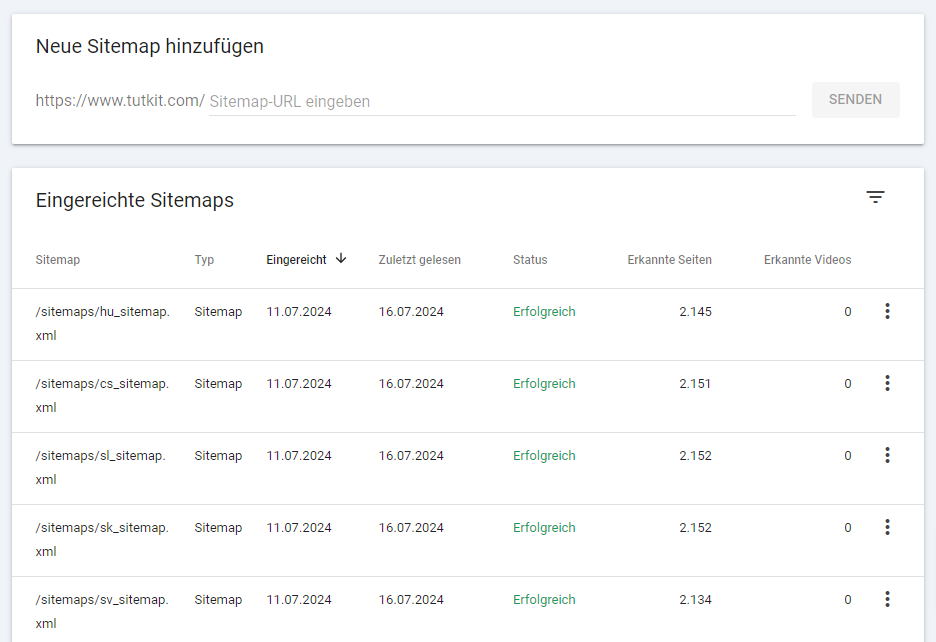
- XML sitemaps: These files help search engines understand the structure of your website and discover all relevant pages.
- Robots.txt: This file provides search engines with instructions on which pages or files they are allowed to crawl and which ones they are not.
- URL structure and hierarchy: A clear and logical URL structure makes it easier for search engines to understand the relationships between different pages.
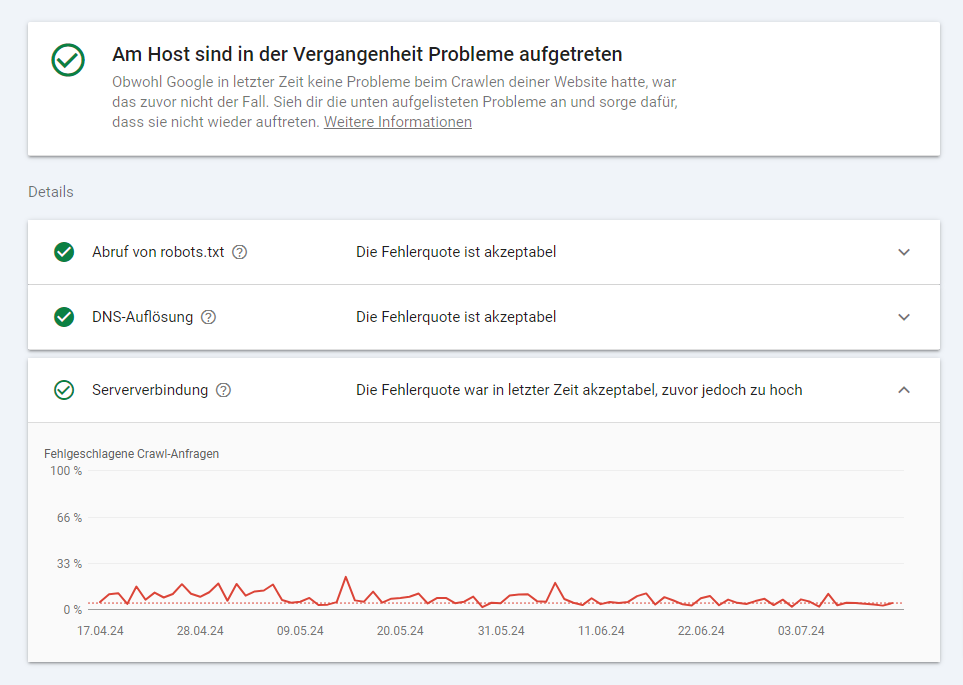
A tool that provides information about your crawl status is Google Search Console. It is essentially the most important tool for you if you are practicing SEO professionally. It is an indispensable tool for monitoring and analyzing the crawlability and indexing of your website, as well as the performance of your pages in Google search.
The following screenshot makes it clear that the server connection is responsible for up to 23 percent of failed crawl requests by Google bots. It is a problem that must be addressed.
Here is, for example, the view of the submitted sitemaps from TutKit.com, which are split by language versions:
2. Indexability
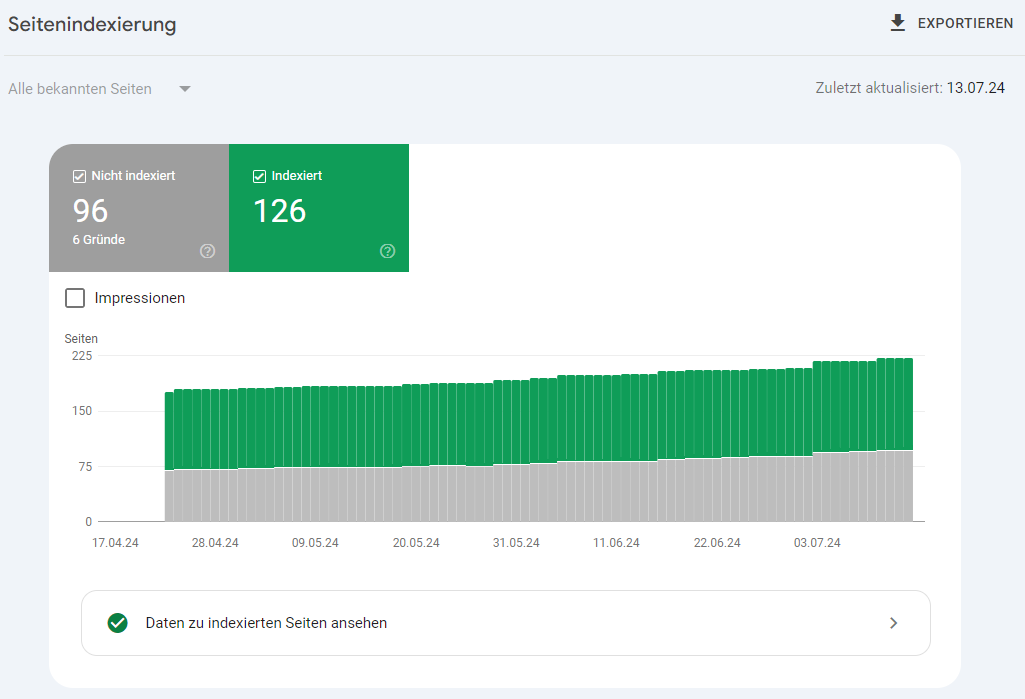
Crawled has not yet been indexed, meaning a crawled page may not yet appear in Google’s index. This can have various causes. And sometimes, pages may not be intended to appear in the index at all. The ability to control this exists, among other things, in:
- Noindex tags: These tags can be used to instruct search engines not to index certain pages.
- Canonical tags: These tags help avoid problems with duplicate content by indicating to search engines the main version of a page.
Here is an example of a project where 126 indexed pages face 96 non-indexed pages, which are mainly based on pages with parameter URLs that reference the correct pages through a canonical tag.
3. Website Architecture
Website architecture refers to the structural design and organization of a website. It includes the arrangement of pages and content as well as the way these are linked to each other. A well-planned website architecture is crucial for usability and search engine optimization (SEO), as it helps both visitors and search engines easily find and navigate content. Here we focus on:
- Internal linking: A well-structured internal linking system helps search engines understand the relationship between different pages.
- Hierarchy and Categorization: The contents of the website should be organized in a logical hierarchy that includes main categories, subcategories, and individual pages.
- Breadcrumbs: These navigation aids make it easier for users and search engines to navigate the website.
The following screenshot – an analysis from the Technical SEO specialized tool Audisto.com – shows that the content is located at too deep hierarchy levels. Accessibility to the content should be improved, both for users and bots.
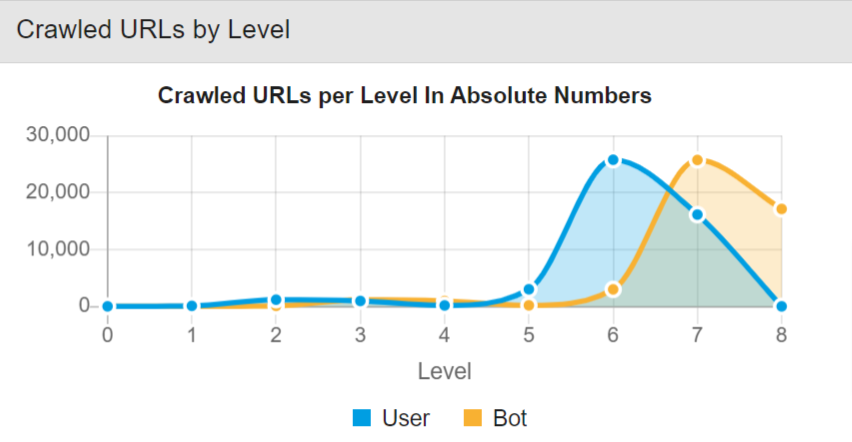
Audisto is a tool that primarily focuses on the technical aspects of very large websites. We have an account because we manage over 50,000 pages with TutKit.com. The evaluations are very specific. It is most comparable to Screaming Frog.
If your website is significantly smaller, it is certainly advisable to use another powerful tool for conducting comprehensive SEO audits, including the identification of crawl errors, duplicate content, and other technical issues. We also use the Performance Suite and Seobility to identify technical, content-related, and structural SEO problems and to monitor website health.
4. PageSpeed
One of my favorite topics! Increasing page speed or performance optimization is one of the SEO measures that works holistically for the entire website. If there is already sufficient relevant content on a website, performance optimization is, in my opinion, the best investment from an SEO perspective. Optimizing loading times and thus the speed of the website are crucial for user experience and an important ranking factor for Google. Google has summarized various metrics as Core Web Vitals, which deal with loading times and response times during interactivity, such as: First Contentful Paint (FCP), Largest Contentful Paint (LCP), Time to Interactive (TTI), Total Blocking Time (TBT), and Cumulative Layout Shift (CLS). Meeting these metrics is essential for a high technical user experience.
You can easily test the PageSpeed of your website using Google’s PageSpeed Insights. Google provides you with results for mobile use and for desktop resolution. The mobile result is crucial. You will almost always receive green results for desktop. Google primarily uses the mobile version of the website content, crawled with the smartphone agent, for indexing and ranking. This is known as Mobile-First Indexing. Therefore, focus on the mobile result. Here is an example of one of our client projects, a hotel website with many images on the homepage:
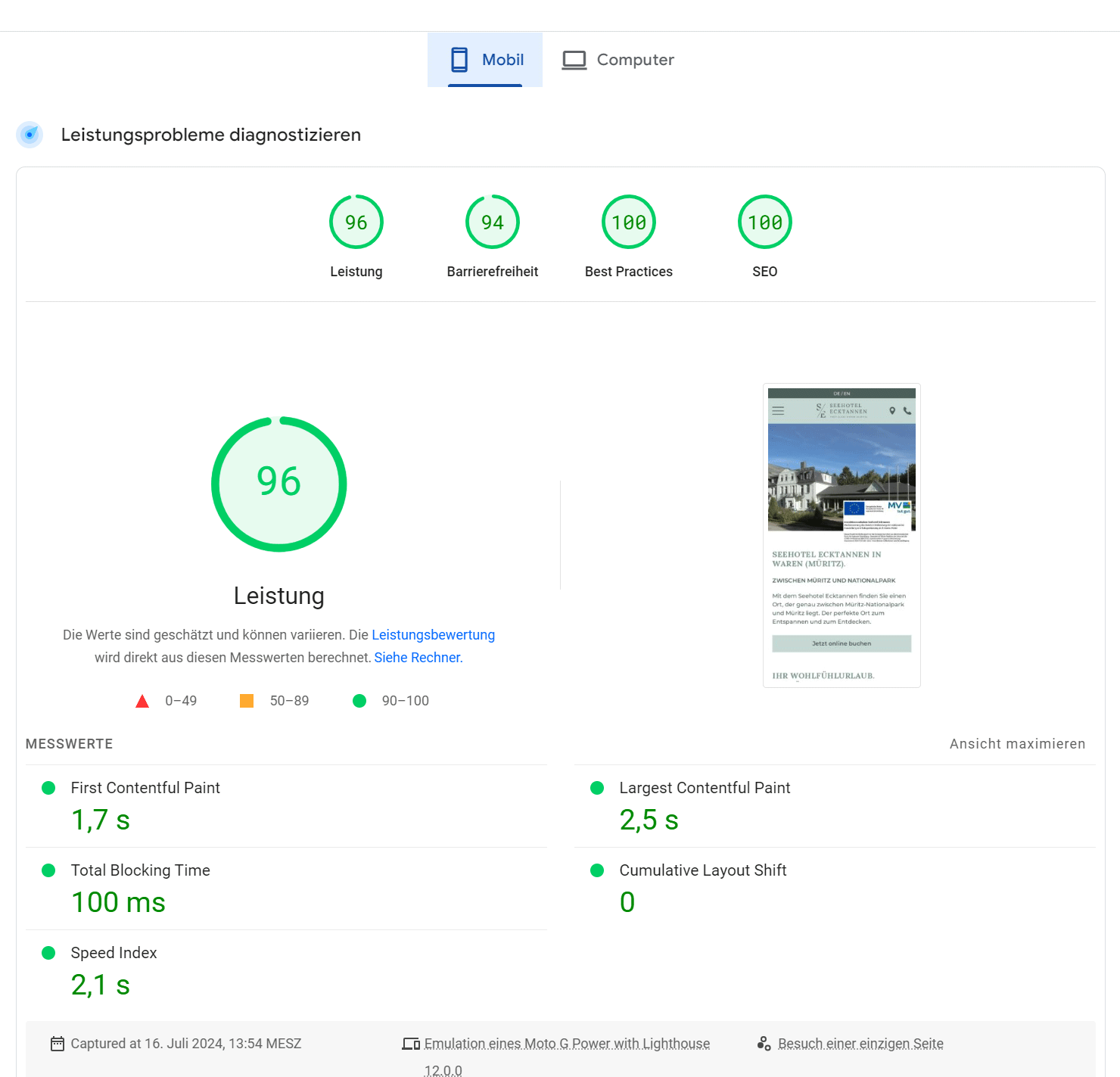
Other testing tools you should know about are Lighthouse directly through the DevTools of your Chrome browser (F12 = Lighthouse) and the website Webpagetest.org, which provides very detailed analyses of website speed and helps identify performance bottlenecks.
5. Mobile-Friendliness
As already mentioned, Google evaluates websites first based on their mobile version (Mobile-First Indexing). This is precisely why responsive design is essential, so that websites function well and look appealing on all devices. You can conduct the tests yourself with your mobile devices. However, you can also use free or commercial services.
A free option is available through the DevTools of your Chrome browser. To do this, click F12 in the Chrome browser. In the top right, you can switch to mobile mode. Then you can simulate various mobile devices and check the website display.
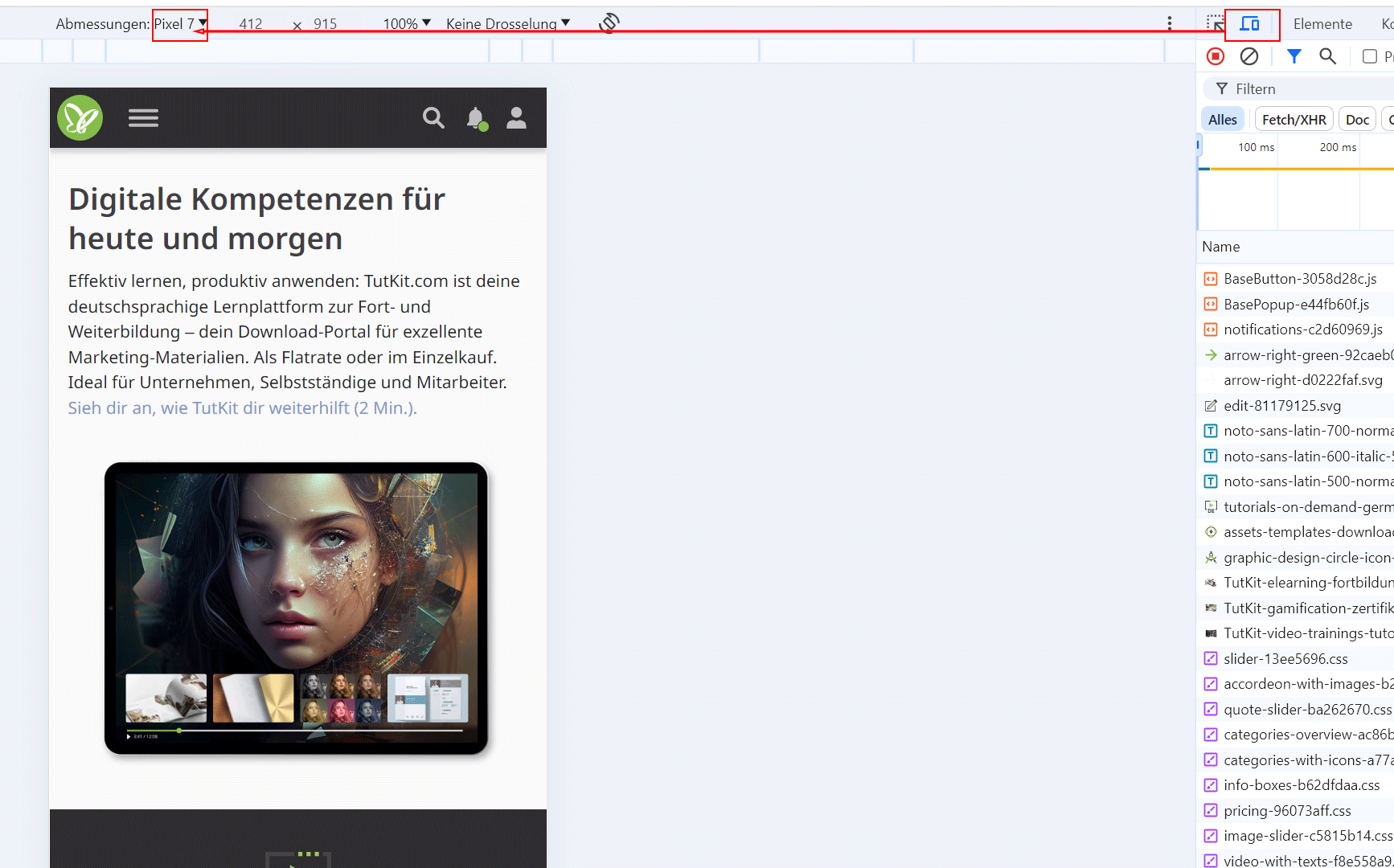
A commercial service that makes the tests a bit more user-friendly for you is, for example, LAMBDATEST:
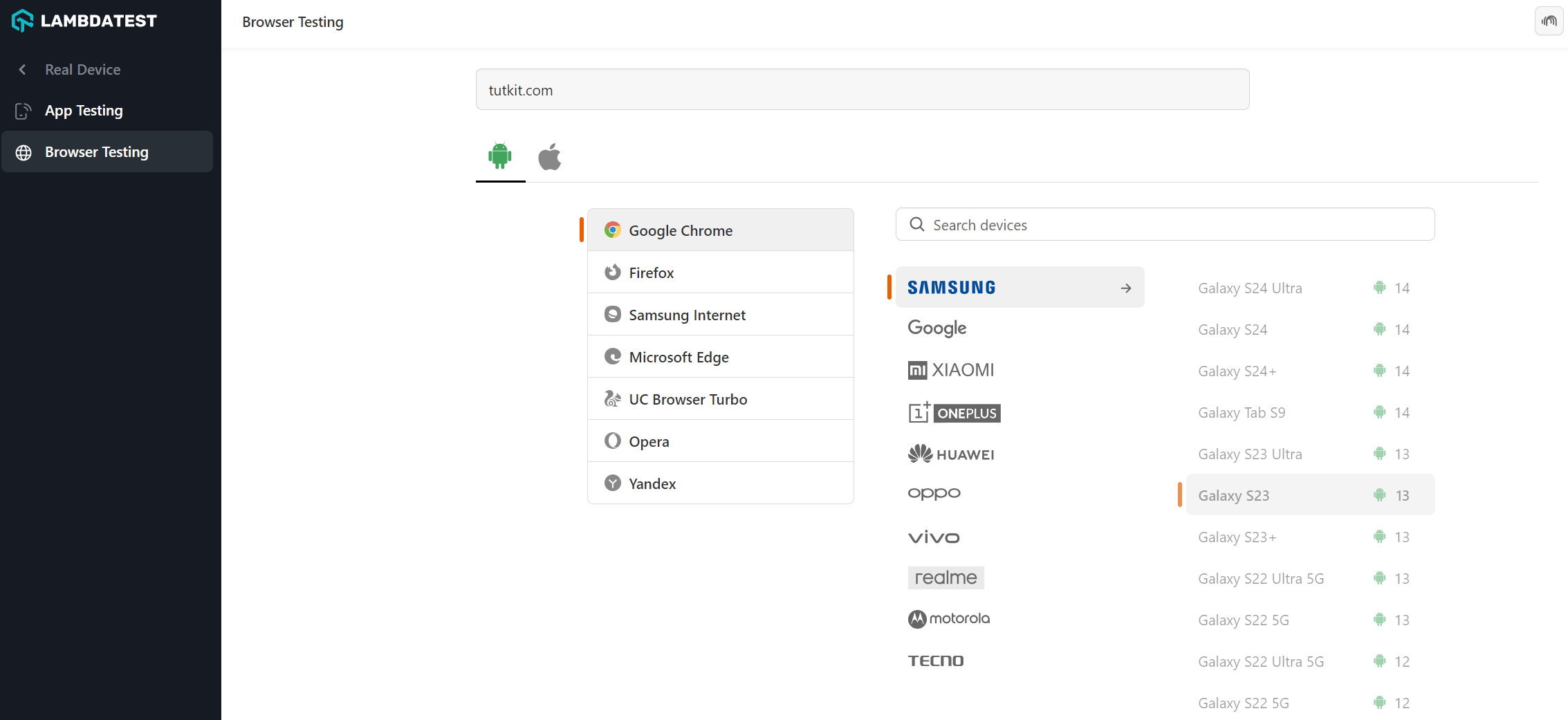
6. Safety
Websites should use an SSL certificate to ensure a secure connection. Additionally, website operators should be aware of security vulnerabilities, which include regular checks and remediation of security issues.
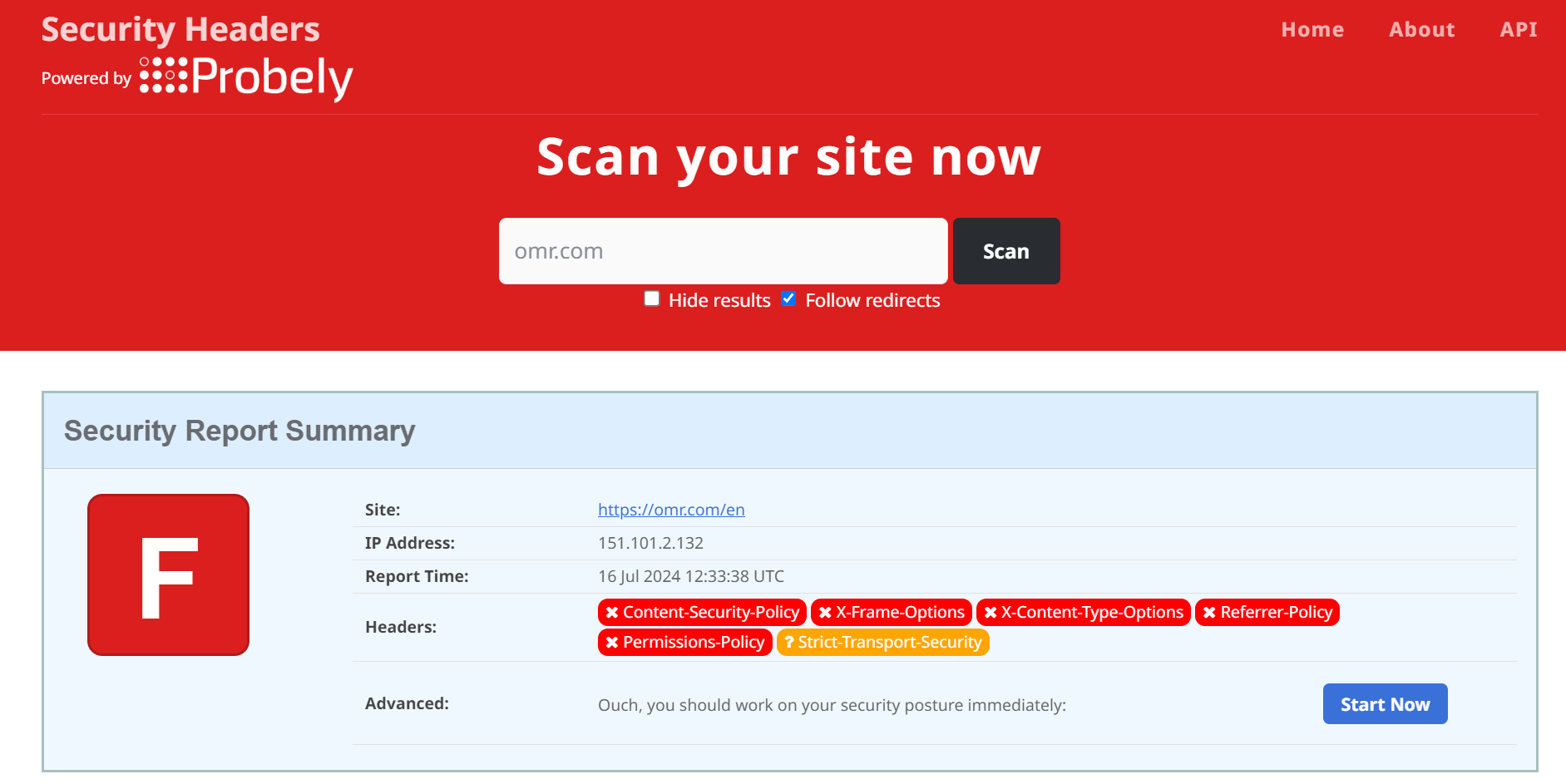
Perhaps a quick test to get started on the topic: Enter the URL of your website here: Security Headers
Even with trendy and popular companies like OMR, there is still no awareness of this important aspect – the range goes from A+ to F.
The all-in-one SEO tool Performance Suite already offers a dashboard with security checks. There is a free account that can crawl up to 50 pages. Such an audit and long-term monitoring are definitely worthwhile for you as well. During the initial check, you will see how well your website is positioned from a security perspective. The risks are categorized from High Risks to Medium Risks to Low Risks.
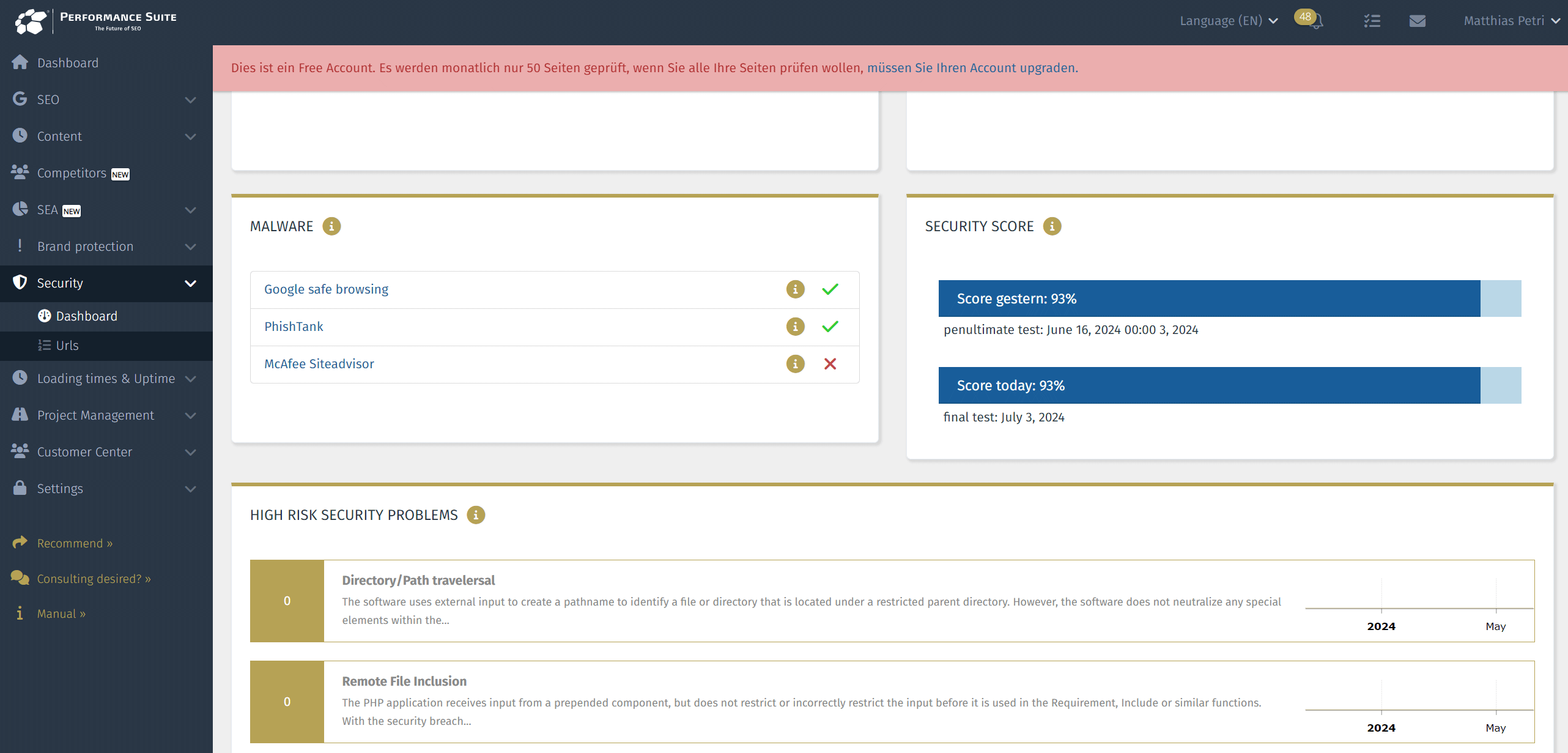
Since these tests only run on the frontend, I also recommend Symfony Insights and Sentry.io for backend security tests, which we also use ourselves.
Why is Technical SEO important?
Technical SEO plays a crucial role in the overall strategy of your search engine optimization, as it forms the foundation for search engines to effectively crawl, index, and assess the content of a website. Without a solid technical foundation, even the best content and the strongest backlinks cannot reach their full potential.
A well-optimized website is better crawled and indexed by search engines, leading to a higher ranking in search results. This increases the likelihood that potential customers will find your website.
Technical SEO not only improves visibility for search engines but also enhances user experience. A fast, secure, and mobile-friendly website leads to more satisfied visitors and lower bounce rates, which are important user signals for Google.
In a competitive environment, Technical SEO can make the difference. Websites that are technically flawless have a better chance of standing out against the competition.
By resolving technical issues and optimizing the website structure, the efficiency of the entire SEO process is increased. This facilitates the implementation of future SEO measures and makes the website scalable.
Technical SEO lays the foundation for sustainable SEO success. A solid technical base ensures that the website remains robust even with future updates of search engine algorithms.
Overall, technical SEO is essential to ensure that a website reaches its full potential, both in terms of search engine rankings and user experience. It is a crucial component of any comprehensive SEO strategy that promotes long-term success and sustainable growth.
Conclusion on Technical SEO and the Next Steps
Technical SEO is a complex but essential field that forms the foundation for a successful SEO strategy. By improving crawlability, indexability, and user-friendliness, you can increase the visibility of your website on Google and similar platforms while also ensuring a better user experience. Technical SEO is an ongoing process that requires continuous monitoring and adjustment. But this is how you stay competitive!
It is my firm belief that relevant content is the most important aspect of websites. However, today it is easier than ever to produce and place good content on websites with the help of AI. When equally strong websites compete for a better ranking, technical ranking factors and positive user signals will determine who stands on top. Therefore, Technical SEO is one of the most effective measures to sustainably improve your rankings.
So what are your current steps that you should take to get into action? Here are a few suggestions:
- Conducting a technical SEO audit: Use the mentioned tools to perform a comprehensive SEO audit of your website and identify potential issues.
- Optimize your website for better crawlability: Check the robots.txt file and XML sitemaps, improve internal linking, and ensure that your URL structure is logical and clear.
- Improve the loading speed of your website: During the performance audit, check not only the homepage but every type of page! Implement caching, use images in modern formats like AVIF, and follow additional recommendations from PageSpeed Insights. Advance mobile optimization:
- Make sure that your website works well on all devices and use tools like the Dev Tools to test for Android and iOS.
- Regular monitoring and adjustments: Use Google Search Console and another tool like Seobility to continuously monitor your website’s performance and make adjustments as needed.
By implementing these steps, you can strengthen the technical, structural, and content foundations of your website and create a solid basis for long-term SEO success.
If you need help with technical SEO, feel free to contact us. We are very competent and experienced and can find solutions for your current problems.