We in the interview about TutKit.com with PhotoWeekly 03/2021
E-learning has gained significant momentum in acceptance, especially due to Corona. PhotoWeekly, Germany’s fastest photography magazine, interviewed us about how we shape the success concept with online videos at TutKit.com and what expectations we have for future developments. You can find the interview on page 23: https://photo-weekly.de/photoweekly-20012021/0289700001611135827
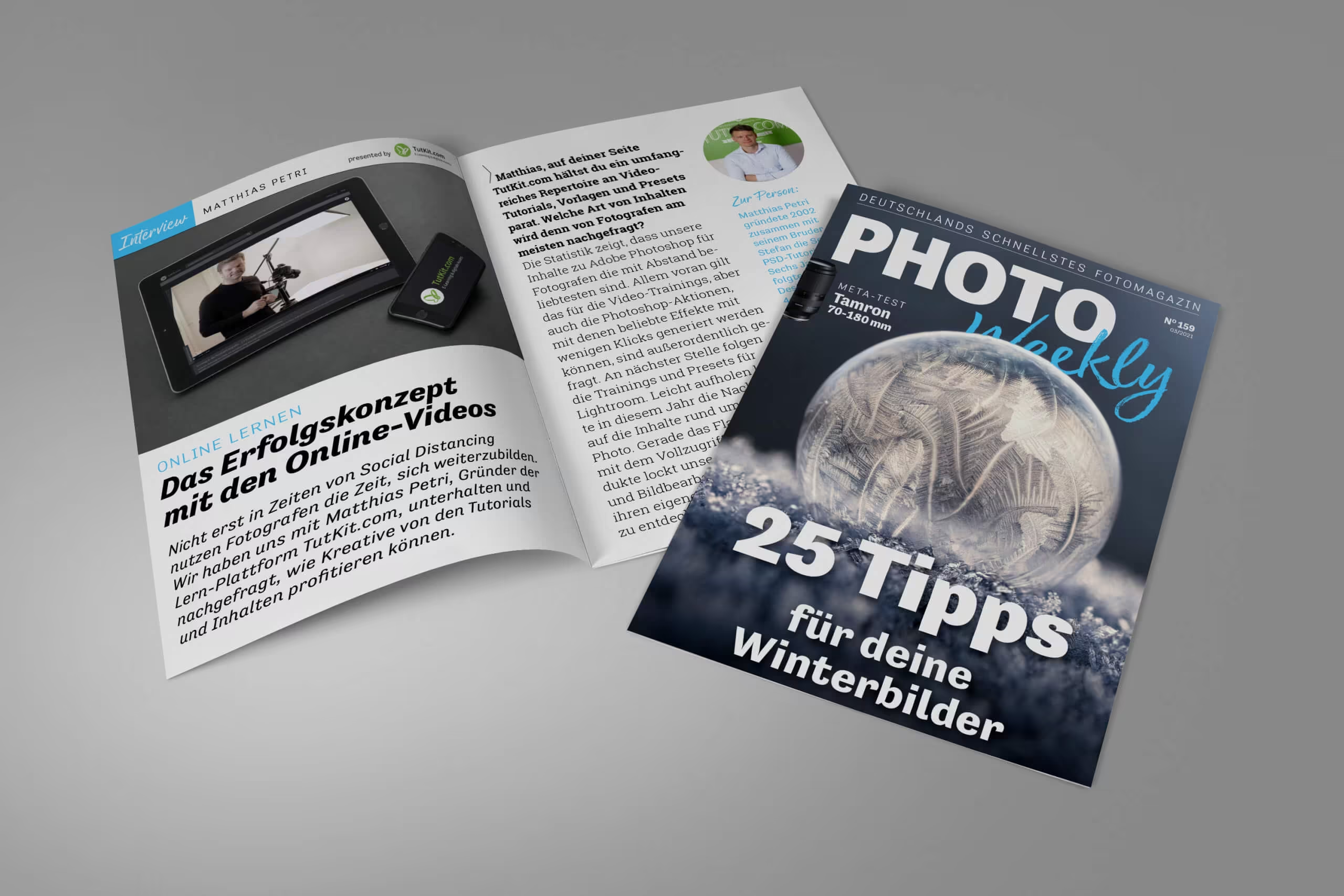
Matthias, on your site TutKit.com, you have a wide range of video tutorials, templates, and presets available. What type of content is most in demand by photographers?
The statistics show that our content on Adobe Photoshop for photographers is by far the most popular. This is especially true for the video training, but Photoshop actions that can create popular effects with just a few clicks are also in high demand. Next up are the training and presets for Lightroom. This year, the demand for content related to Affinity Photo has also increased significantly. The flat-rate model with full access to all products particularly attracts our photographers and image editors to discover content beyond their usual scope.
What personally connects you to photography? Do you own equipment yourself, and if so, what does your preferred equipment look like? Or do you see yourself more as an editor and Photoshop artist?
We have (semi-) professional photography equipment with a Nikon D750, several lenses, and continuous lighting equipment in the company, as we primarily photograph and edit our mockups and textures for TutKit.com ourselves. Privately, I used to have a Nikon D200. For my essential private needs, to be honest, the camera on my Google Pixel 5 smartphone is sufficient for me today.
What motivated you to start your own company for digital training? What has happened since 2002 and PSD-Tutorials.de? And who is actually behind it all now?
Stefan, my brother, co-managing director and founder of PSD-Tutorials.de, completed a training course in web design in 2002 and came into contact with Adobe Photoshop at that time. To learn the software better and to have a practice project right away, he created the first version of PSD-Tutorials.de as a pure HTML page. The content was our first tutorials. This laid the foundation for our current company. As the number of tutorials increased, the website was then connected to a CMS. It gained a forum and developed into a vibrant community for photography and image editing, with 45,000 visitors per day during its peak around 12 years ago. Then came Facebook and YouTube, and online behavior shifted somewhat. But even today, we still reach many enthusiasts and want to continue to provide them with a professional forum for creative topics.
It was 2006 when we released the first learning DVD for Photoshop. The demand at that time was enormous. Then another DVD was added, and then another, and so on. Stefan was still working at a sports club in Göttingen at that time, and I was with the police as a press spokesman up here in Mecklenburg-Vorpommern. During my parental leave for my first son, I then thought intensively about it and realized that there was an opportunity for a business model with PSD-Tutorials.de. So, in 2008, we both became self-employed and tried our luck. Alongside the expansion of PSD-Tutorials.de, we built a very good team and our own agency, 4eck Media GmbH & Co. KG, with which we have been successful here in the region to this day.
Meanwhile, we have over 800 products in our online shop and offer full access to all content in a flat rate model with TutKit.com.
To what extent has your experience from your brand development and the expansion of your web presence influenced the digital courses and vice versa? Do interested individuals also find courses in this regard with you?
We try to keep the entry point with us as low barrier as possible. Thus, most training content can already be streamed during our free and non-binding trial period. Our content offerings have grown parallel to our own competencies in our work and creation. While we originally started as image editors, we quickly opened up to photography and design. Training for web development and office solutions was added. When we noticed that our customers were no longer always looking for eight-hour training sessions but also wanted quick solutions, we began to increasingly expand our content towards design templates and mockups, Photoshop brushes and actions, presets, and textures. Today, we can say that people strengthen their digital skills with us to efficiently achieve the goals of their professional and entrepreneurial missions. We still delight the private photographer and Photoshop enthusiast with the content on TutKit.com. However, our own positioning is moving towards digital competencies for businesses, which will continue to include software topics such as Photoshop and InDesign or PowerPoint and Excel, but will also focus on courses in digital marketing, project management, and cloud-based solutions.
In times of homeschooling and social distancing, digital training opportunities have gained enormous importance. Is this trend also noticeable in your industry?
Yes, we are also experiencing increased demand for new approaches and solutions in further education. For example, at the beginning of the corona pandemic, we were able to acquire a large vocational school in Luxembourg as a client, which booked access to our content for the training of their media designers. We no longer need to explain our e-learning model and the advantages for companies and educational institutions in detail, as the topic of digital further education has made it onto the agenda of most companies and schools, especially since corona.
*In which area have you last continued your education?*
In the summer of 2020, I took on a course on “Digital Marketing and Communication” as a lecturer at the University of Applied Sciences in Rostock, consisting of 60 teaching units. I initially underestimated the preparation for this course. I spent over half a year of my evenings and weekends developing a nearly 500-page script and dozens of presentations and assessments in the form of quizzes for the students. The research for my course was the best further training I could have hoped for. This time gave structure to my existing knowledge and enriched it with so much more know-how from books, videos, and podcasts, which I still greatly benefit from today. Continuous further education is simply essential.
Where do you source your content from? And do you give your trainers impulses yourself when, for example, new software or trends emerge in the market?
A part of our presets and design templates, such as Photoshop brushes and actions, layout and presentation templates, or hand lettering illustrations and mockups, we usually create ourselves. Our team consists of six very capable designers. We also produce some video training in-house with our team. Additionally, we are constantly looking for people from the industry who can support us with their know-how. Over the last 10 years, we have collaborated with over 100 trainers and content creators. In doing so, we also provide input to the trainers to promptly introduce new trends in the form of products. Our own goal is to publish at least 100 new releases per year on TutKit.com and in the online shop of PSD-Tutorials.de.
Where is the trend heading regarding digital learning content?
We want to bridge the gap between effective learning and immediate application with our digital content. Therefore, in addition to pure e-learning topics, we also focus heavily on assets and templates that our customers can directly use in their software for private or commercial purposes. The trend will continue to move towards gamification. With the relaunch in summer 2021, we aim to implement elements such as trophies, quizzes, and progress bars, so our customers feel more motivated to continue their education. There will also be a content onboarding process for customers after registration, allowing them to be guided through suitable “playlists” of learning content according to their interests. Spotify and Netflix do it well. Why can’t e-learning platforms do the same?
Here you can save the interview as a PDF along with the other contributions from PhotoWeekly: PhotoWeekly 03/2021