SEO 2025: Why it is harder than ever today – and how our clients are still growing.
Website operators and SEOs feel that something is slipping. AI overviews, SGE rollouts, and GPT searches are changing the way content is presented to searchers. Many SEO managers are struggling to get any clicks from Google at all. The core updates from recent months have taken their toll. And to be honest: those who don’t keep up will be left behind.
At the same time, many SEO agencies continue to claim to be “currently successful.” But what does that mean today when the majority of traffic is consumed by Google itself? When ChatGPT or Perplexity provide the answer right away? And when featured snippets suddenly disappear behind AI responses?
The question arises: Is there even anything left to be done? And is the effort worth it?
Yes, definitely. And we will show you how – with four fresh project insights straight from our agency. With real numbers. Without beautified excerpts. And with what really matters: sustainable strategies in an environment that is changing faster than ever.
SEO 2025: Being visible is no longer enough.
Until the introduction of AI Overviews, meaning AI-based responses to Google search queries, the value of zero-click searches was already at 65 percent. Even fewer mobile users clicked, with 77 percent of their search queries remaining without a click on a website search result. This was the reality that SEO agencies tried to extract as many clicks as possible from the rankings. Then came the AI Overviews, which are direct AI responses in Google search – also in reaction to the rise of ChatGPT, Perplexity, and other AI tools. Just last week, the AI Overviews were rolled out for everyone, regardless of whether you are logged in to Google or not. Google promises that the new AI Overviews will enhance the user experience. Sounds good. In practice, however, it looks different – at least when looking at the click numbers. Because they are currently changing dramatically – to the detriment of website operators.
A sensational report from Ahrefs in April 2025 highlights: The introduction of AI Overviews has led to an average decrease in click-through rate of 34.5%.
Data basis? 300,000 keywords, a one-year comparison period, all with informational intent. The thesis: The better Google provides the answer directly in the search result, the fewer clicks are needed on the actual website. And this can be measured.
In Ahrefs’ study, the average CTR for position 1 dropped from 7.3% to 2.6% – despite still having good rankings. And this is just the beginning.
The problem is: You don’t immediately recognize this trend in your tools. The Google Search Console provides no separate data on clicks for AI Overviews. There is no clear visibility into how many users click on your linked content in the overviews – or do not click.
And exactly this is what we are experiencing in practice right now. Here are some examples from our work and experiences.
Case 1: Visibility at record levels – but traffic collapses
A perfect example of this is an earlier client project of ours. A specialized niche shop that we built in its first version. With the relaunch in September 2024 and a switch to Shopify, the client handed over SEO management to an SEO freelancer. Due to the system change and the changing URLs, there was initially a drop in rankings. Since January 2025, the rankings have recovered.
If you look at the visibility curve today, you could say: It’s working. The Sistrix index value has never been as high as it is now.
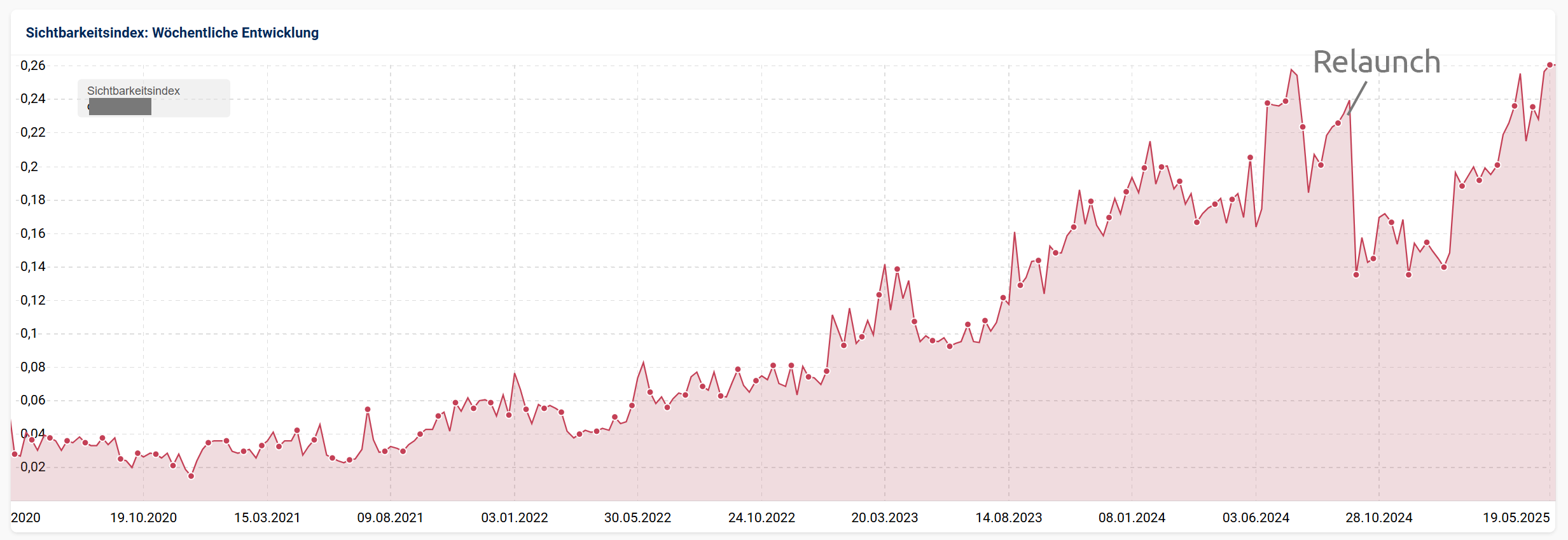
We have not been servicing the customer for about a year now, but we have not been removed from the Search Console either. So let’s take a look at the real numbers. In fact, the Google Search Console reveals a different truth than the Sistrix chart:
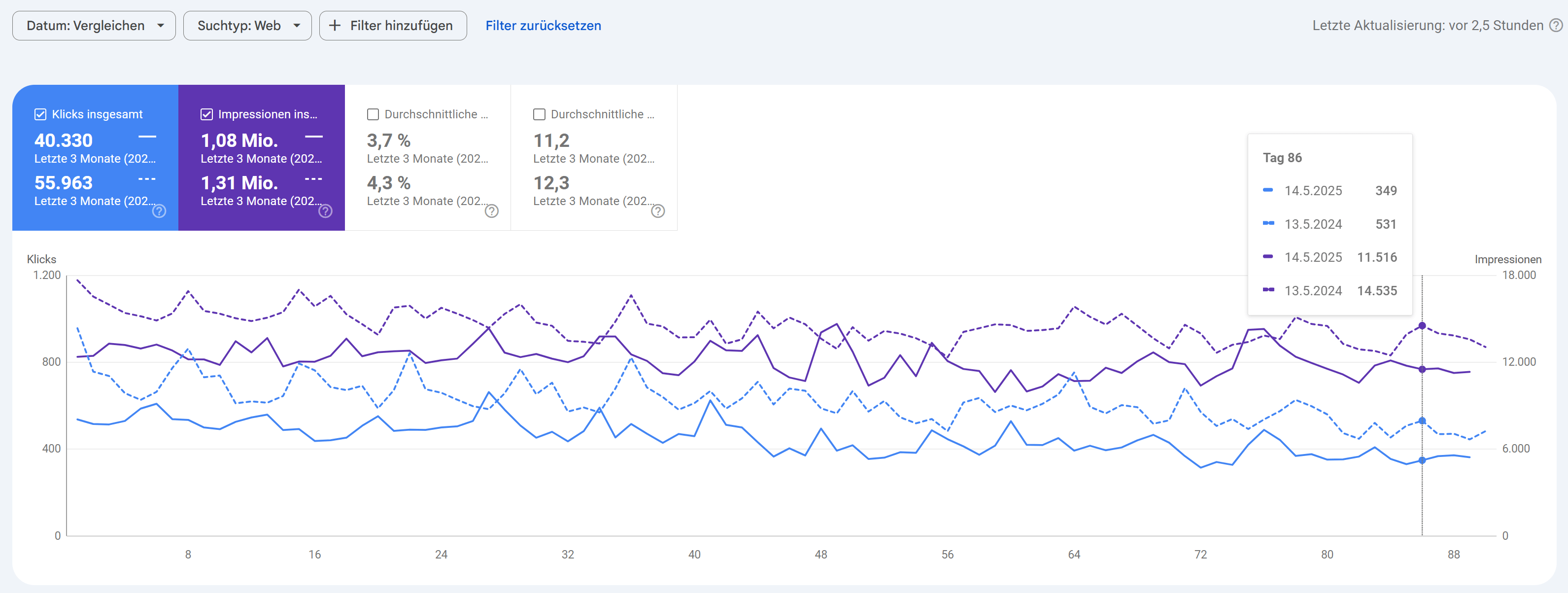
3-month comparison to the previous year:
- Clicks: from 55,963 to 40,330 – a decrease of 28%
- CTR: from 4.3% to 3.7%
It would have been expected that clicks and visibility would have increased, as the Sistrix data shows better rankings than in the previous year. Through Google Ads, Google Shopping, and Google Product Snippets, the search engine has managed to divert the attention of searchers to other aspects. Those who were able to expand their organic visibility have still lost.
The trend is even clearer on a 28-day level:
- Clicks: from 15,430 to 10,941 – minus 29%
- CTR: from 3.9% to 3.3%
The downward trend continues. What has happened? We assume that the rollout of AI Overviews for all users (not just logged-in ones) is accelerating its effect here, which is particularly evident in the further decline in the click-through rate. Especially for niche shops with complex products, Google is increasingly scraping content – without users even having to click at all.
Our conclusion regarding Case 1: Visibility alone will not be enough in 2025. Those who rely on rankings do not necessarily have traffic. And those who do not adjust their SEO measures to changing user behavior and new SERP logics will ultimately lose – no matter how nice the SISTRIX curve looks.
Case 2: Visibility? Exploded. Technology? Optimized. Result? Clicks nearly doubled.
A current project from our agency shows how SEO will still work in 2025 – if you know which levers to pull.
The online shop belongs to the food industry, offers products from the “forest,” and had been rather inconspicuous in the SERPs until the end of 2024. Our task: more visibility, more traffic, more sales.
How have the rankings developed? Let’s take a look at Sistrix:
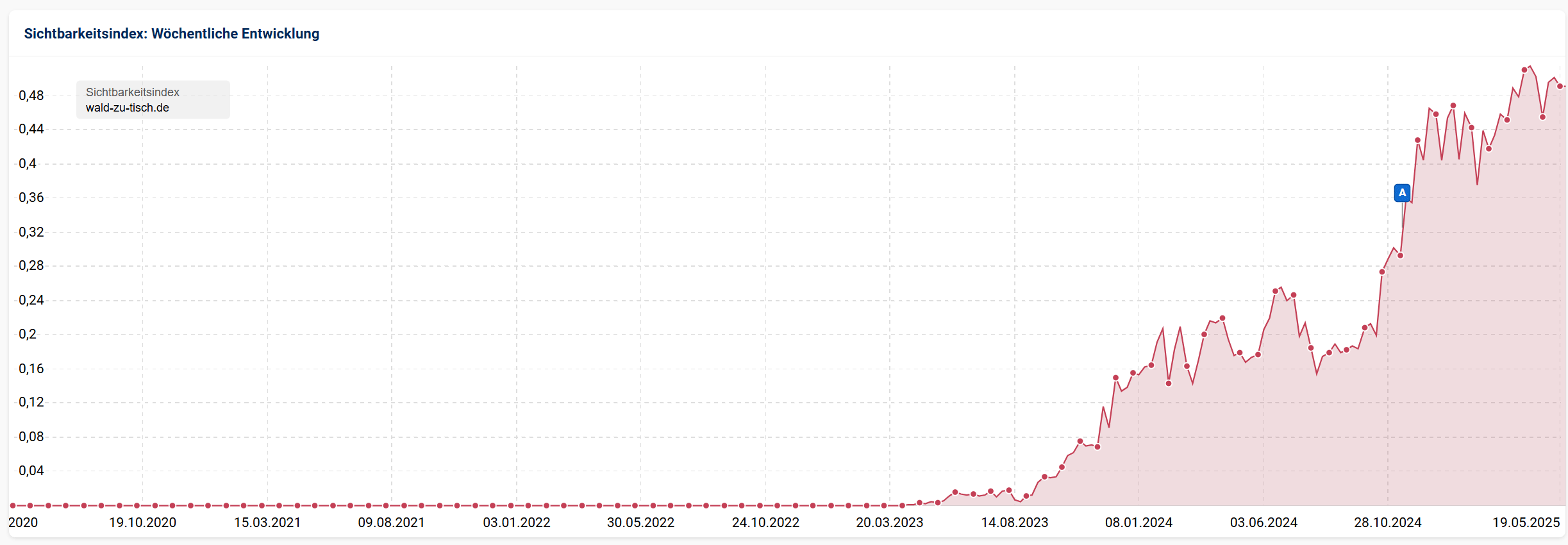
We designed and developed the online shop, and since 2023 it has been under our SEO care. Since October 2024, visibility has more than tripled. The curve shows: no stagnation, no setbacks – only continuous growth.
What have we done?
- Content marketing with relevant, well-researched content on product and topic trends.
- Technical optimization with a focus on PageSpeed
- Improvement of Core Web Vitals, both on mobile and desktop – until everything turned green.
Does the result also reflect in actual traffic? An impressive before-and-after comparison for the last three months compared to the same period last year in the Search Console:
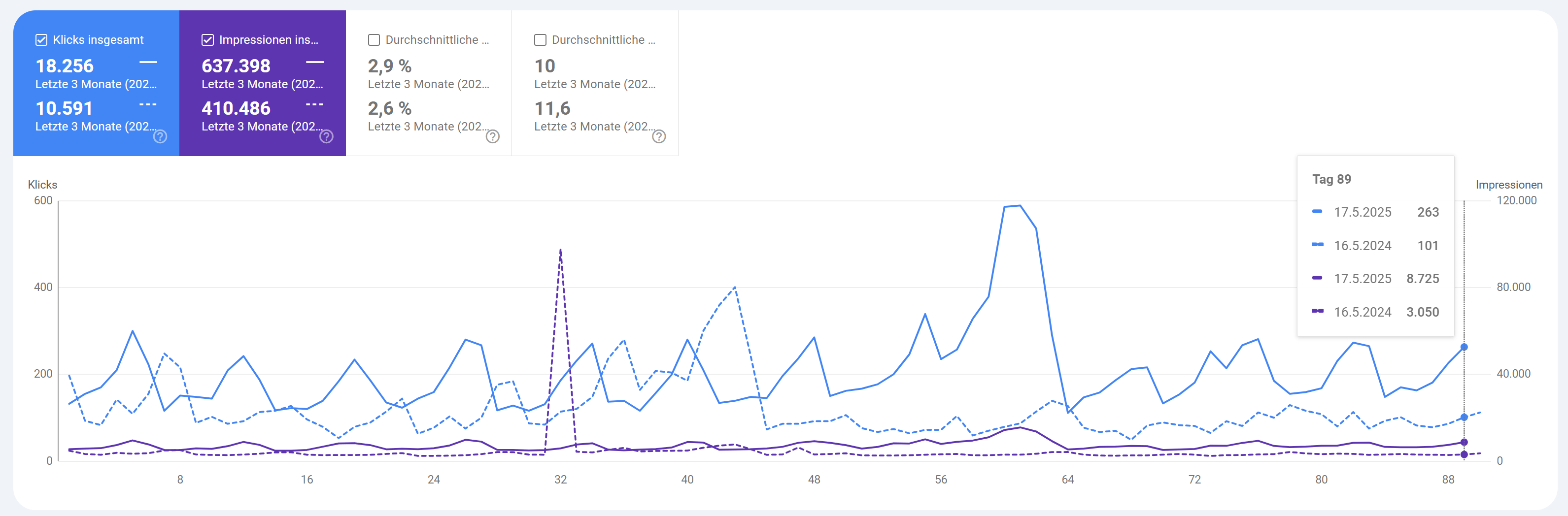
Last 3 months (2025) vs. Previous year:
- +72% clicks (from 10,591 to 18,256)
- +55% impressions (from 410,486 to 637,398)
- The CTR was able to be slightly increased – despite increased visibility (from 2.6% to 2.9%)
And it continues – because in parallel to the content offensive, we have tidied up on a technical level. The Core Web Vitals reports show the result in black and white:
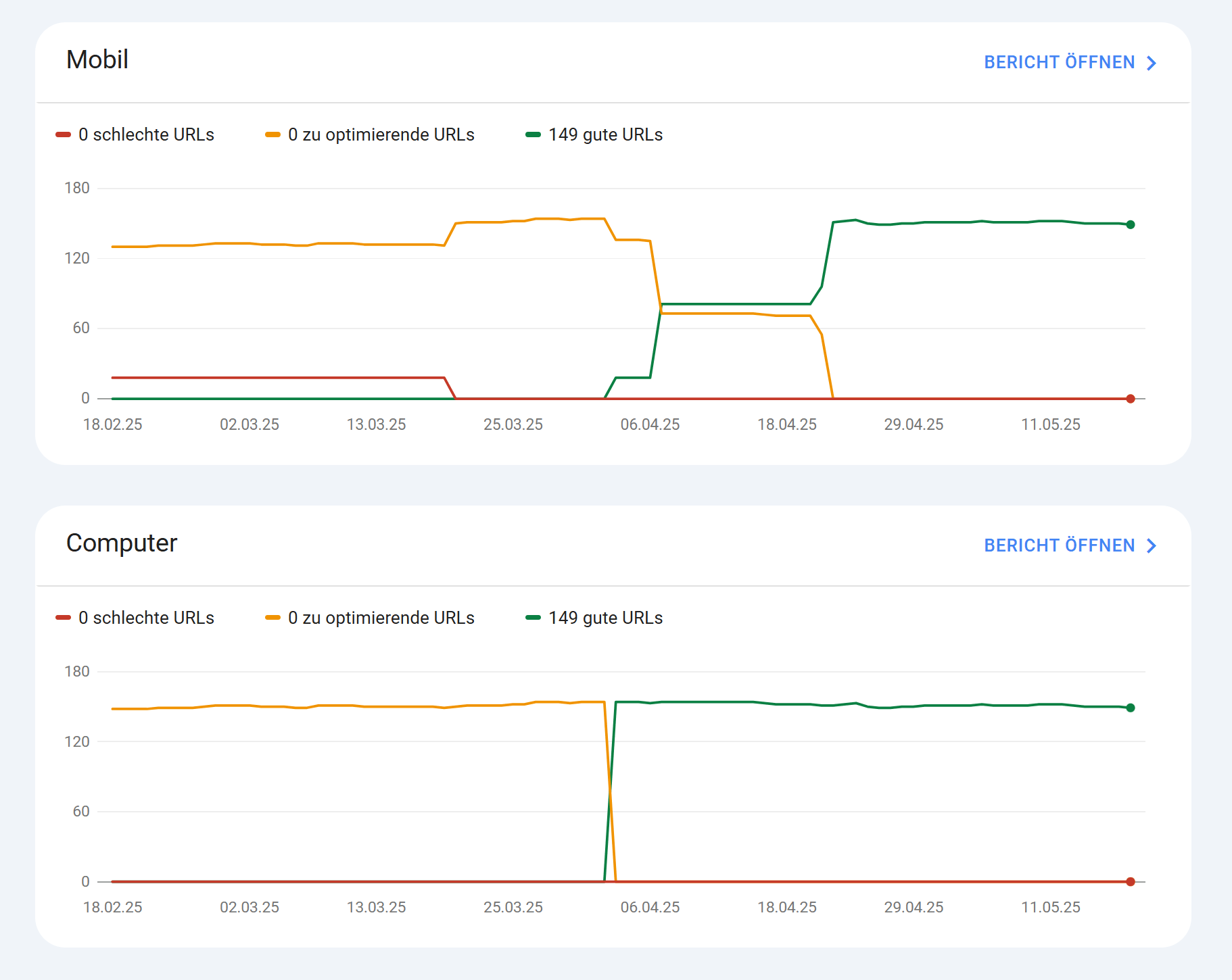
149 good URLs on desktop, 149 good URLs on mobile. 0 pages to optimize – and that is noticeable. The PageSpeed optimizations were important. Above all, the shop suffered when we integrated Amazon Pay. The JavaScripts caused problems. The CruX board clearly shows how the LCP optimization has had an impact.
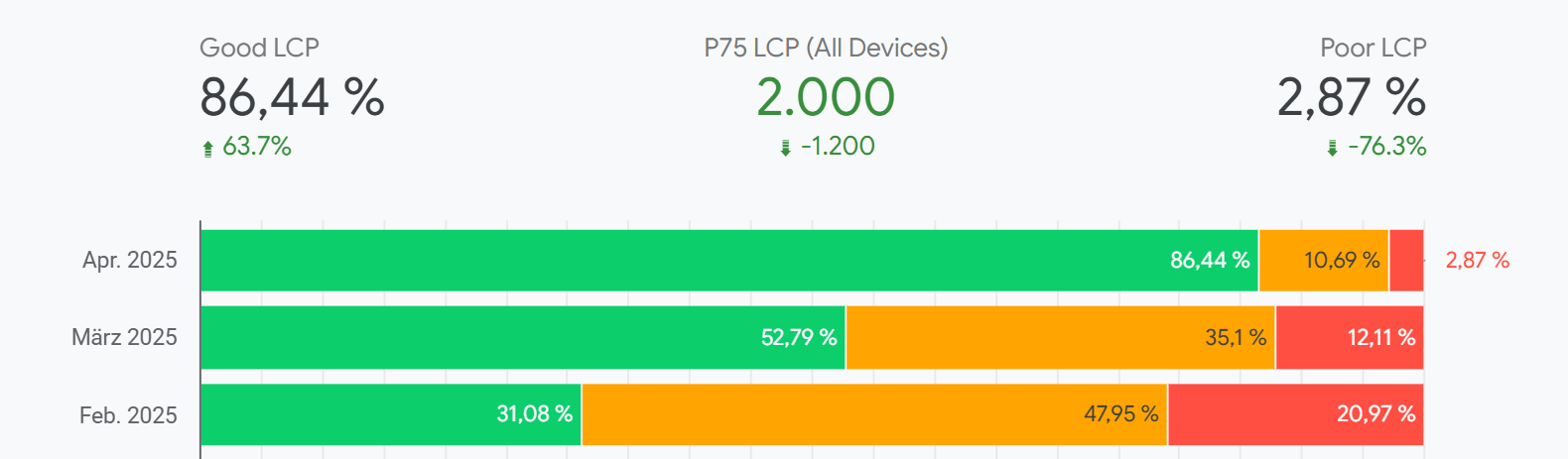
Conclusion to Case 2: SEO still works – but not superficially anymore. Those who simply “create content” or install a theme will not achieve much today. However, those who strategically plan their content, deliver it technically clean, and simultaneously optimize loading times, UX, and structure can still grow organically by 2025… even “despite” AI Overviews.
Case 3: Seasonal business? Yes. Growth? Nonetheless year-round.
The third example is about a current customer project that is actually very seasonal: a boat rental company specializing in holiday regions in Germany. It’s a classic case of operating from March to October, with a lull for the rest of the year.
Right?
In fact, this case shows that even in a seasonally dominated market, continuous visibility building is possible when content, technical foundation, and search intent work together.
Here are the numbers from Google Search Console for the last 28 days compared to the previous year:
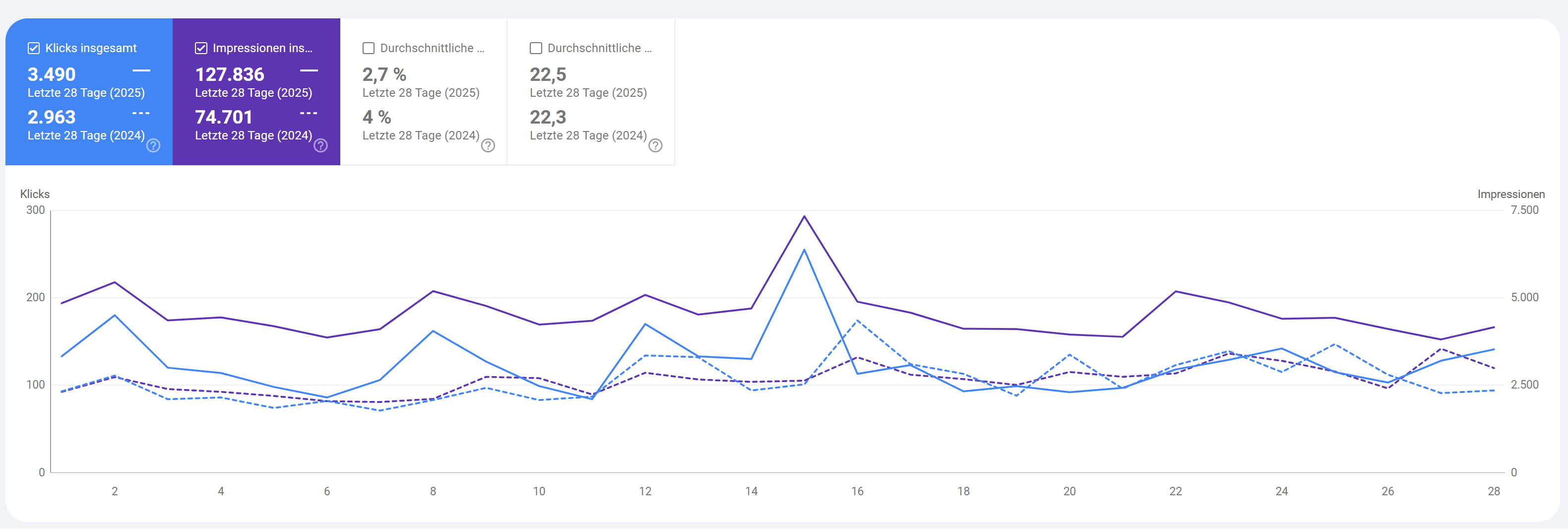
What stands out:
- The clicks increased from 2,963 to 3,490 → +17.8%
- The impressions have nearly doubled → +71.1%
- The average position has slightly improved (22.5 instead of 22.3)
The CTR has fallen – like in many projects in 2025 – from 4.0% to 2.7%.
In short: The visibility is there. The attention is also there. However, clicks are becoming more difficult.
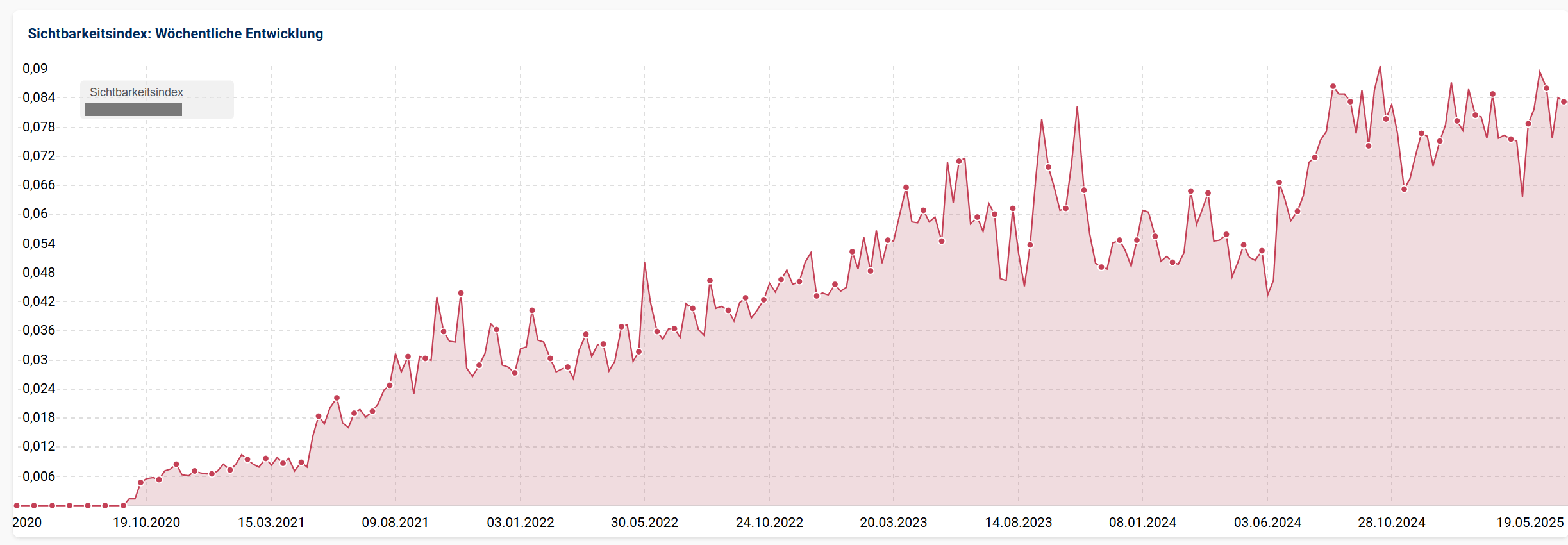
The SISTRIX visibility trend confirms the long-term trend:
- Continuous growth since 2021
- No dramatic declines – despite core updates and SGE rollouts.
- And since 2024, a clear level above the fluctuation limit.
What have we done?
- No witchcraft – but also no halfway measures:
- Keyword and topic clusters on travel times, charter areas, boat types & weather.
- Avoidance of redundant pages – Keyword: Crawl budget & consolidation
- On-page tuning for category and detail pages
- A/B tests for snippets to still get clicks despite AI overviews.
Conclusion for Case 3: Even in seasonal industries, visibility can be built year-round. And with the last 28 days, we can show that despite AI Overviews, an increase in clicks is possible, even if it’s not as easy as it was. This is evident when you compare the click growth (+17.8%) with the improvement in impressions (+71.1%) and the decline in CTR (from 4 to 2.7%). SEO is not a weather report, but long-term navigation. Once you plan the course cleanly, you don’t need to constantly steer frantically in turbulent waters; instead, you just have to sail a little harder against the wind today.
Case 4: From 1 to 28 Languages with International SEO – Scaling with Structure and Substance
TutKit.com is our own project – and at the same time the best proof that SEO will still work in 2025, provided you are willing to combine effort and structure. What we recommend to clients, we implement internally as well. And not sporadically, but consistently – in terms of content, technical aspects, and user experience.
The starting point: In 2024, we began our international rollout. From one language, we expanded to 28. At the same time, we scaled our content model – focusing on clear search intents (“Know” and “Do”), topic clusters, semantic depth, and an architecture that is both crawlable and usable.
The result:
- Clicks: from 124,423 to 1,150,000 – +824%
- Impressions: from 6.8 million to 58.3 million – +757%
- CTR: as expected, slightly decreased from 4.0% to 2.0%
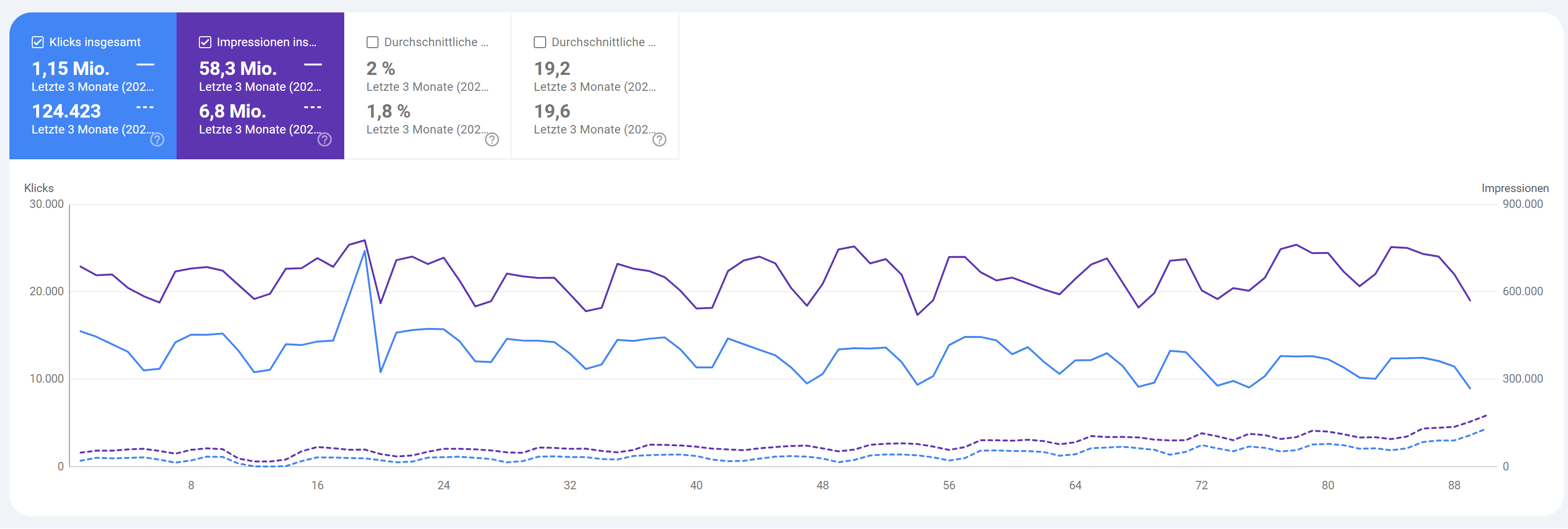
Internationalization ≠ Translation
The foundation of growth was not solely machine translation, but:
- clean hreflang structure
- own keyword sets per market
- localized content with real relevance
- technical separation of language versions through separate URL structures
Result:
- 433,941 keywords worldwide
- 197,110 of them alone in Germany
- 11,580 URLs in the Top 100, 3,790 in the Top 10.
Visibility index worldwide: 28.50
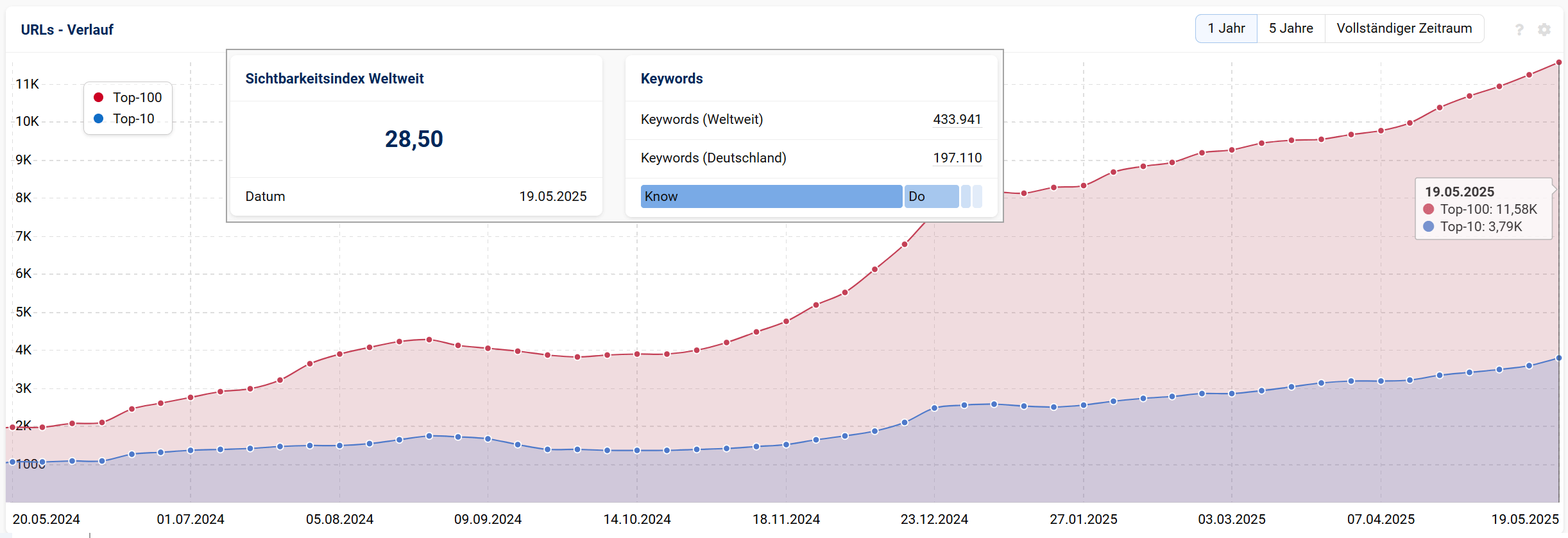
The German visibility also shows: The content concept works even without language multiplication. The number of URLs in the Top 100 and Top 10 is increasing weekly. We are gaining visibility.
What was done additionally? Everything that others only recommend. At the turn of the year, I like to read the predictions of international SEOs, and some shared the same mantra:
“Do more image SEO.”
“Make video content a priority.”
“Enhance your UX. Strengthen the signals.”
So we did exactly that.
Image SEO:
- Equip content with optimized, thematically appropriate images.
- File names, AVIF image format, alt texts, structured markup – consistently clean
- Image instructions for tutorials & tools added
- Free downloads such as coloring templates including a coloring app for online painting.
Video first:
- Every video individually indexable enabled
- Always include: independent image-text instructions as a page.
- Goal: highest possible user experience – for humans & machines
We are convinced that this consistently media-diverse content strategy has significantly improved user signals such as dwell time. The time on site is increasing. The bounce rate is decreasing. The click paths are extending. Google notices that users are satisfied – and we see it in the growth.
Technical basis: stable & scalable
More content means more URLs, more technical challenges. That’s why we have worked just as consistently on a technical level: currently indexing 325,760 pages. The chart shows that we have now created a system that enables us to publish and get over 100,000 pages indexed… per quarter. The multilingualism provides us with a real multiplier. And we are happy to utilize this, especially when such beautiful charts are created:
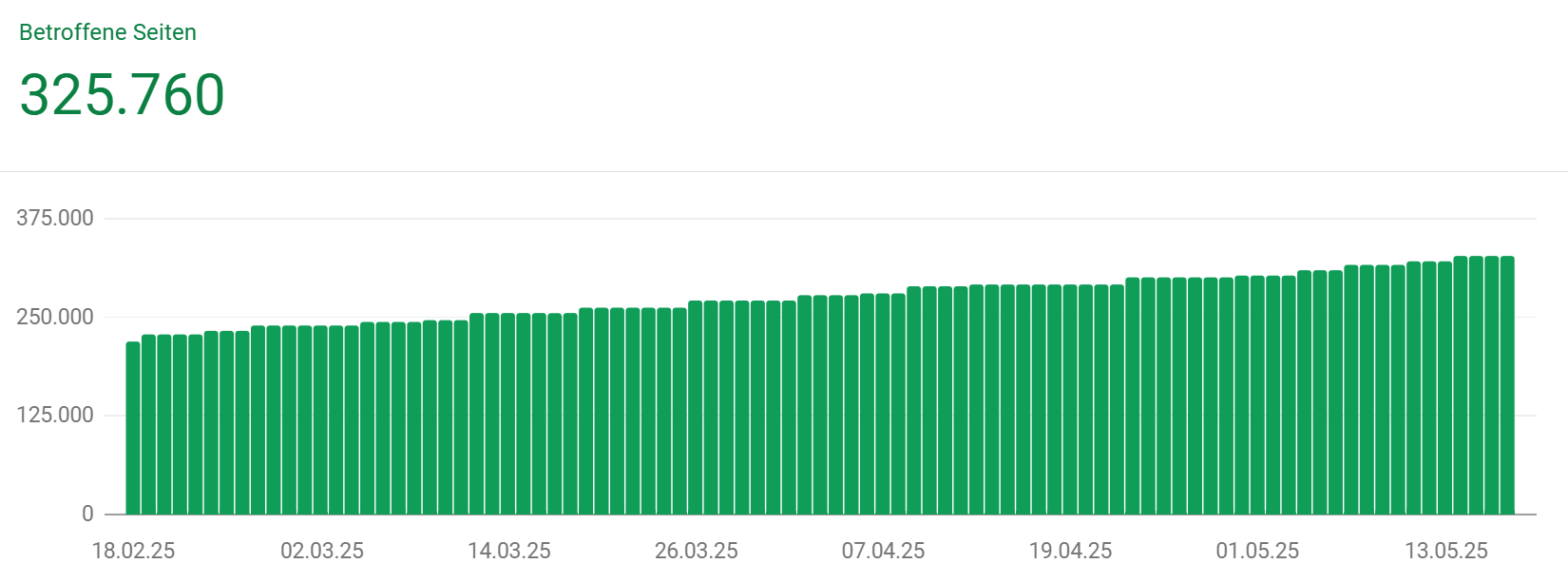
With such content scaling, large platforms also reach their limits. The databases need to be optimized and all settings readjusted to ensure that the website speed does not plummet. In fact, there is a correlation between large multilingual platforms and PageSpeed issues.
We also encountered these issues and kept steering against them. As most recently with fixing the CLS problems.
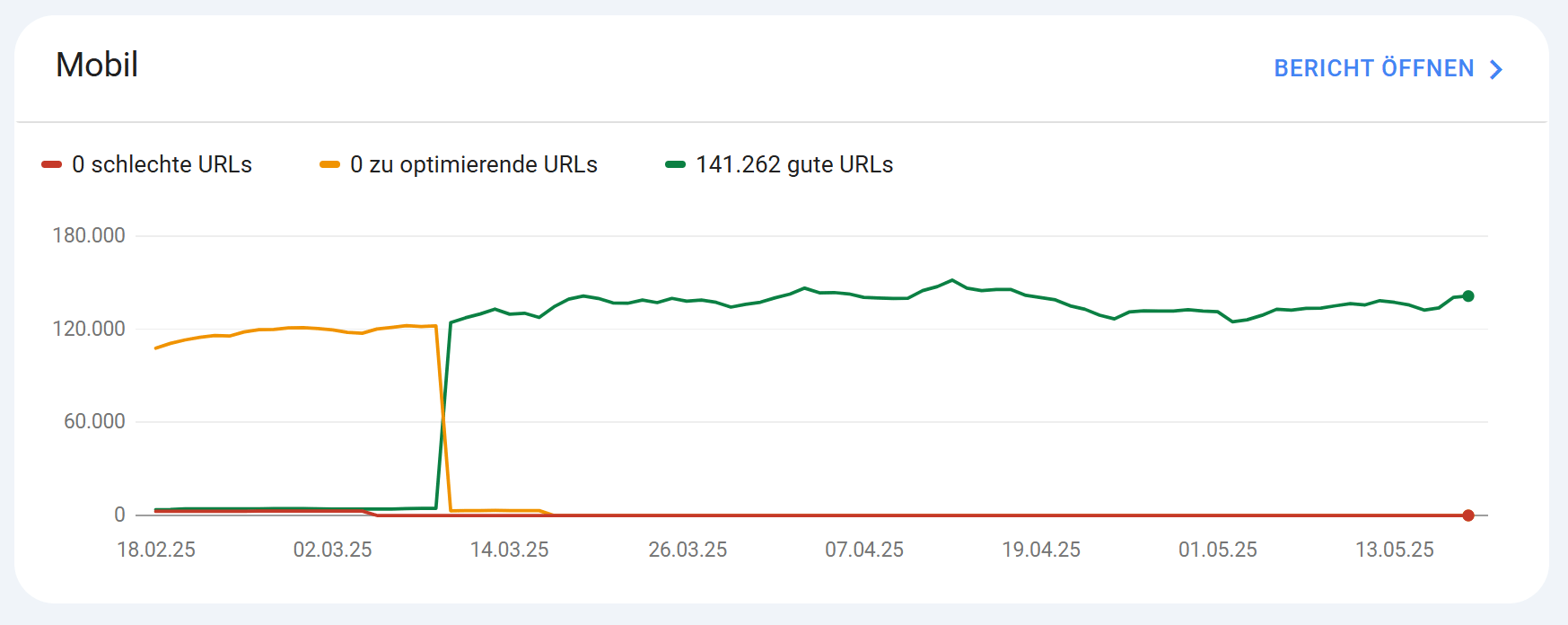
Now, 141,262 pages are classified as “good” under mobile for the Core Web Vitals. The same applies to desktop. It is important to know that only pages that have a baseline of traffic for real user data are listed for the Core Web Vitals. Many corporate websites exhibit exactly this perspective:
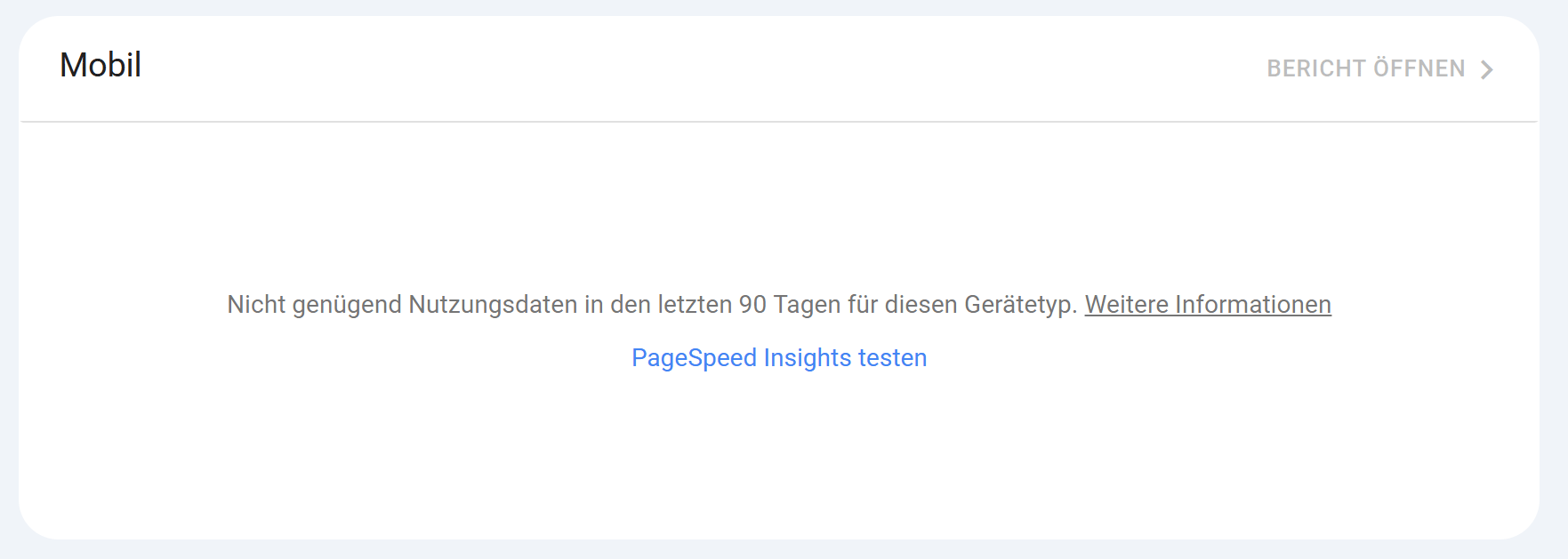
We are very proud that so many pages already have significant traffic. Our PageSpeed optimizations have paid off. Each page type on our site has a mobile score of over 90 in performance.
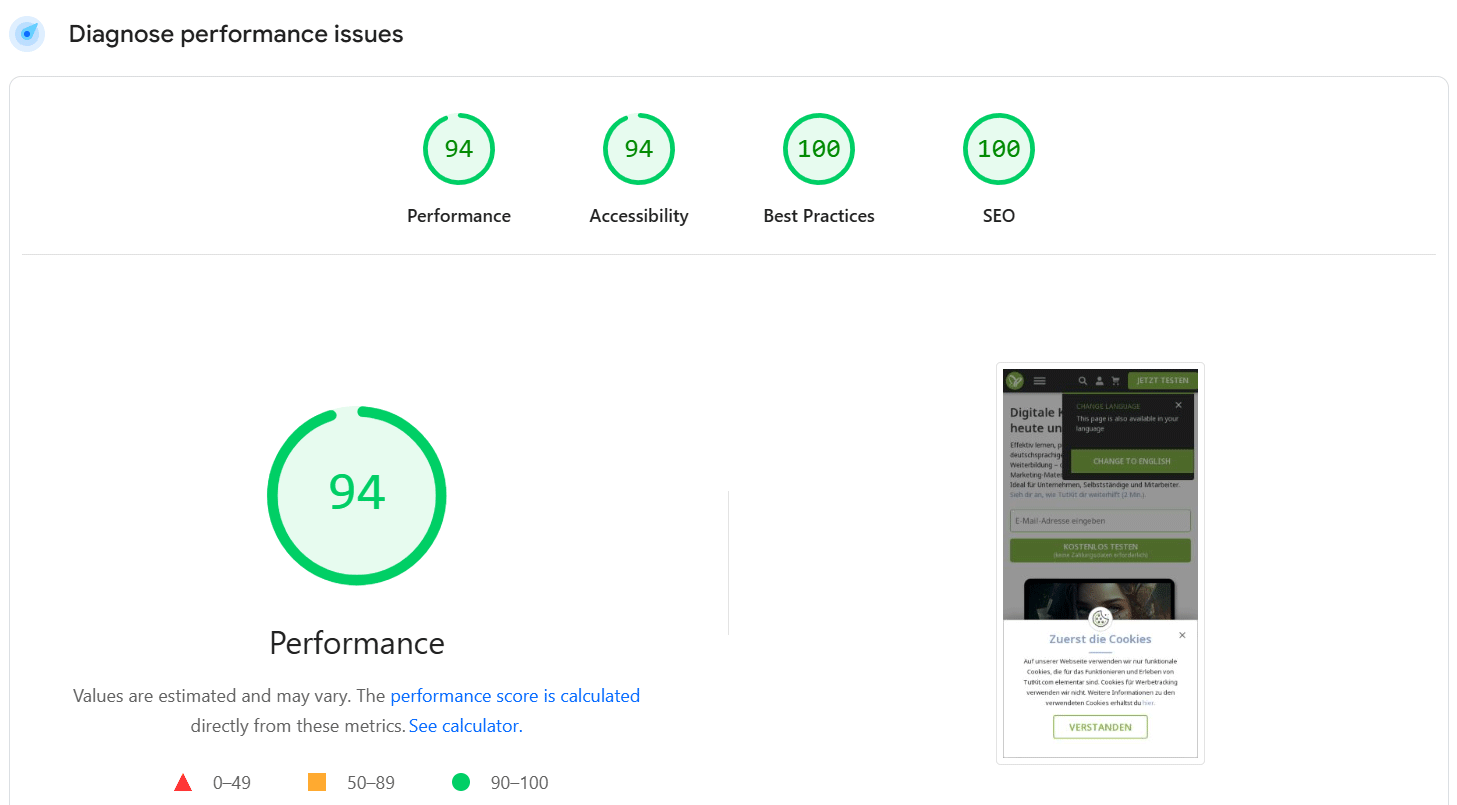
Even with massive scaling, the quality remains stable and the website fast.
Conclusion on Case 4: SEO growth is still possible in 2025 – but it requires more effort than ever before.
Those who only write a little blog, translate a bit, and measure loading times once a year will sink. However, those who think structurally, scale content cleanly, deliver technical quality, and engage with all media formats can win.
TutKit.com does it – with 28 languages, a scaled video and image strategy, 300,000+ pages, and clean KPIs. Because effort is indeed still worth it.
Conclusion: SEO 2025 is not a sprint – it’s a professional triathlon.
If the last few months have shown us anything, it is this: SEO will still work in 2025. But differently. Harsher. More honest.
It’s no longer about a few good rankings. And certainly not about visibility curves that only extend until the last update.
It’s about thinking holistically – and delivering:
- Technically clean.
- Content-structured.
- Thought out internationally.
- Visually relevant.
- And user-centered at all levels.
All five cases in this article demonstrate in their own way: Those who are willing to take responsibility for the outcome will also achieve reach in 2025. But the effort has increased. The complexity as well. And that is precisely why today it takes more than “just some SEO.”
It takes a team that brings experience, precision, and passion. It not only states what is possible – but proves that it can be done.
Do you want to not only rank in 2025 but also see real results?
Then talk to us.
- We’ll show you what you can do.
- We show you what you should avoid doing.
- And we will show you how sustainable SEO really works today.
➡️ Get in touch now Or write to us directly: info@4eck-media.de
We look forward to your project.