Tips for Implementing SEO Strategies in Large Projects
Our project TutKit.com is currently available in 26 languages, which collectively cover over 65,000 subpages. That’s quite a lot for the current status as of August 2024. For us, the portal is increasingly evolving into a large-scale project, requiring significant adjustments in teamwork between designers, developers, content creators, and the SEO team. We aim to continue scaling, and I predict that we will break the 100,000 subpage mark later this year. Next year, we will likely catch up with our forum PSD-Tutorials.de, which has nearly 200,000 indexed subpages. While a forum consists of user-generated content, TutKit.com drives traffic through self-produced products and content. Creating this and maintaining site hygiene therefore requires a different level of effort and dedication from our teams. In large projects with complex structures and extensive digital assets, implementing effective SEO strategies is thus a particular challenge.
In this article, I would like to share our experiences from our work with you. It is about internal linking, handling Google updates, incorporating AI, and a few procedural tips for collaborating with multiple teams on a project.
The role of internal linking in large projects
In large projects, everything is important: UI/UX, technology, meta, structure, content, and more. It is the small and numerous tasks that you, as an SEO, accomplish every day to ensure optimal on-page quality.
I would like to highlight a topic where I notice a recurring problem in projects: internal linking.
In large websites, which often have tens of thousands to millions of pages, internal linking plays a crucial role in guiding website visitors through the customer journey towards their target behavior. It’s not just about being optimized for SEO, but also about meaningfully guiding users through a vast amount of content. Internal linking should be structured to lead users through different stages of the sales funnel and help them find relevant information that ultimately leads to a conversion. A Customer Journey Map can be helpful in this process. What exactly a Customer Journey Map is and a template for download can be found in the linked article by me.
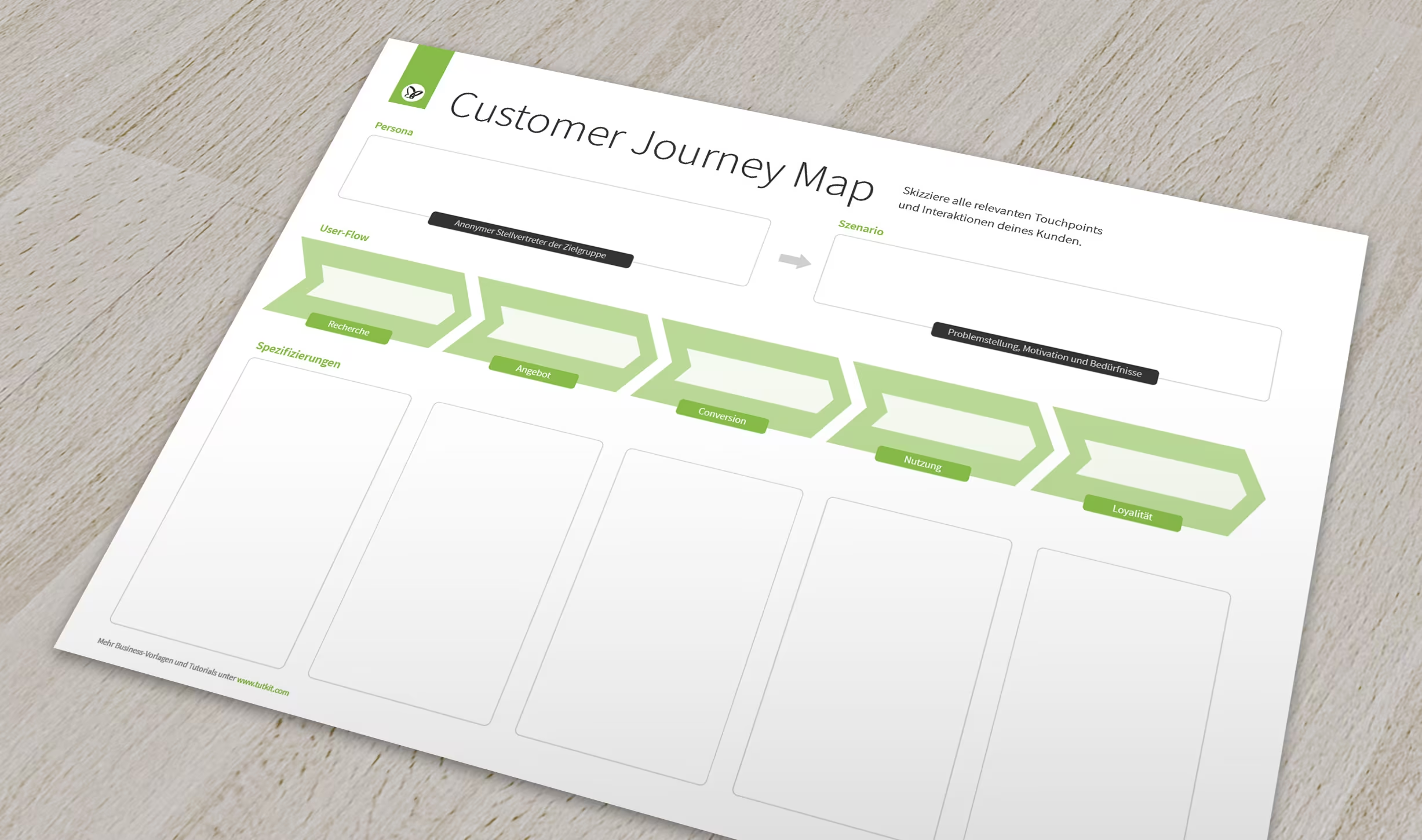
This PDF template can be used for small websites or individual pieces of content or pages. It is primarily about raising awareness that a user should be guided along this customer journey and seduced into a desired behavior. For large projects, such a simple map is not sufficient. We use tools like miro.com, for example, to clarify the processes. Here is a screenshot of what it looks like.
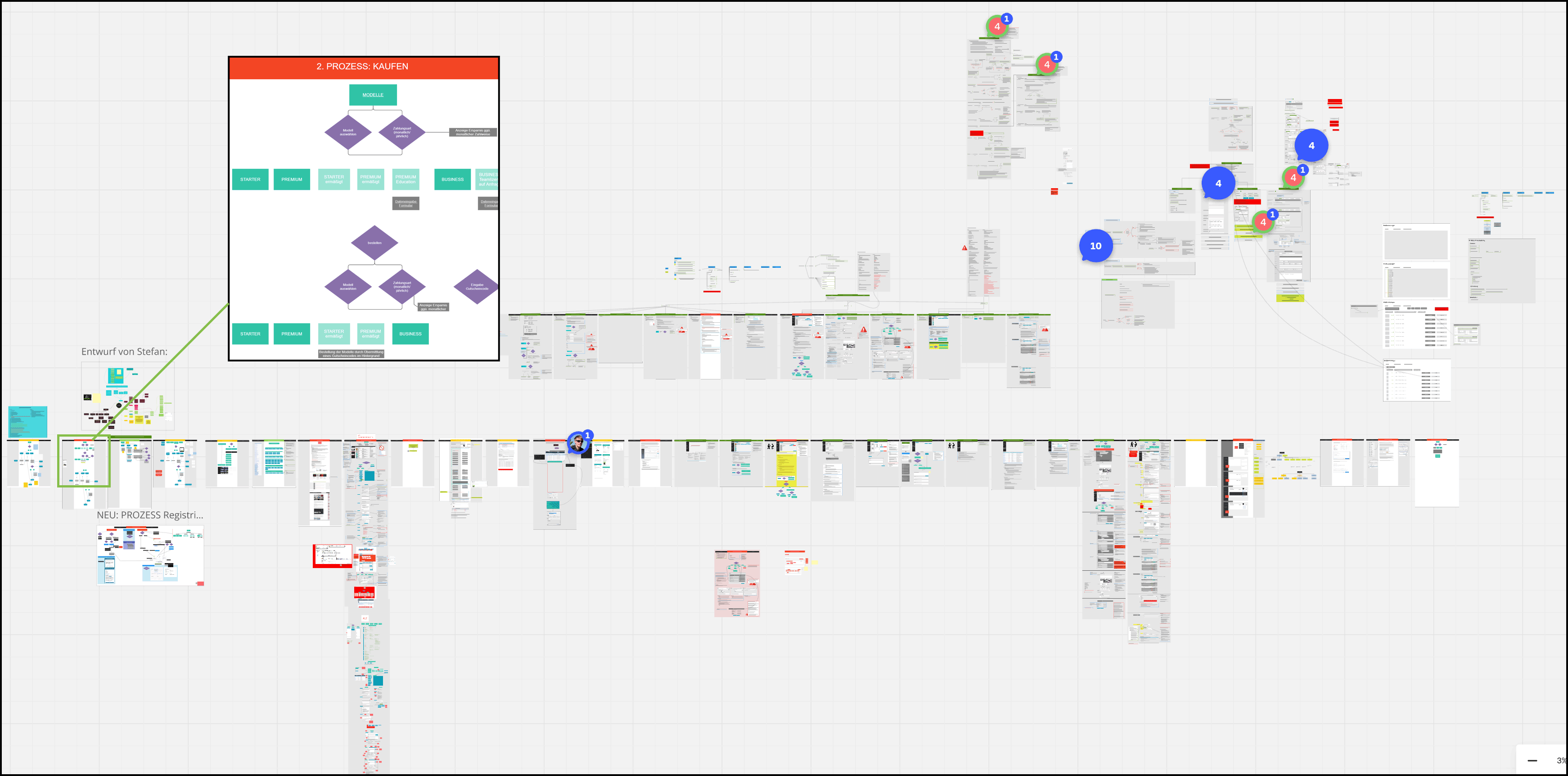
In a large company, the requirement for a transparent customer journey map, which is controlled through internal linking and navigation architecture, means that the SEO strategy must be closely coordinated with other departments – such as content creation, UX design, and development teams. For example, a central SEO team should create guidelines for internal linking that can then be implemented across the various departments. Regular training and workshops can ensure that all teams understand the importance of internal linking and take it into account accordingly.
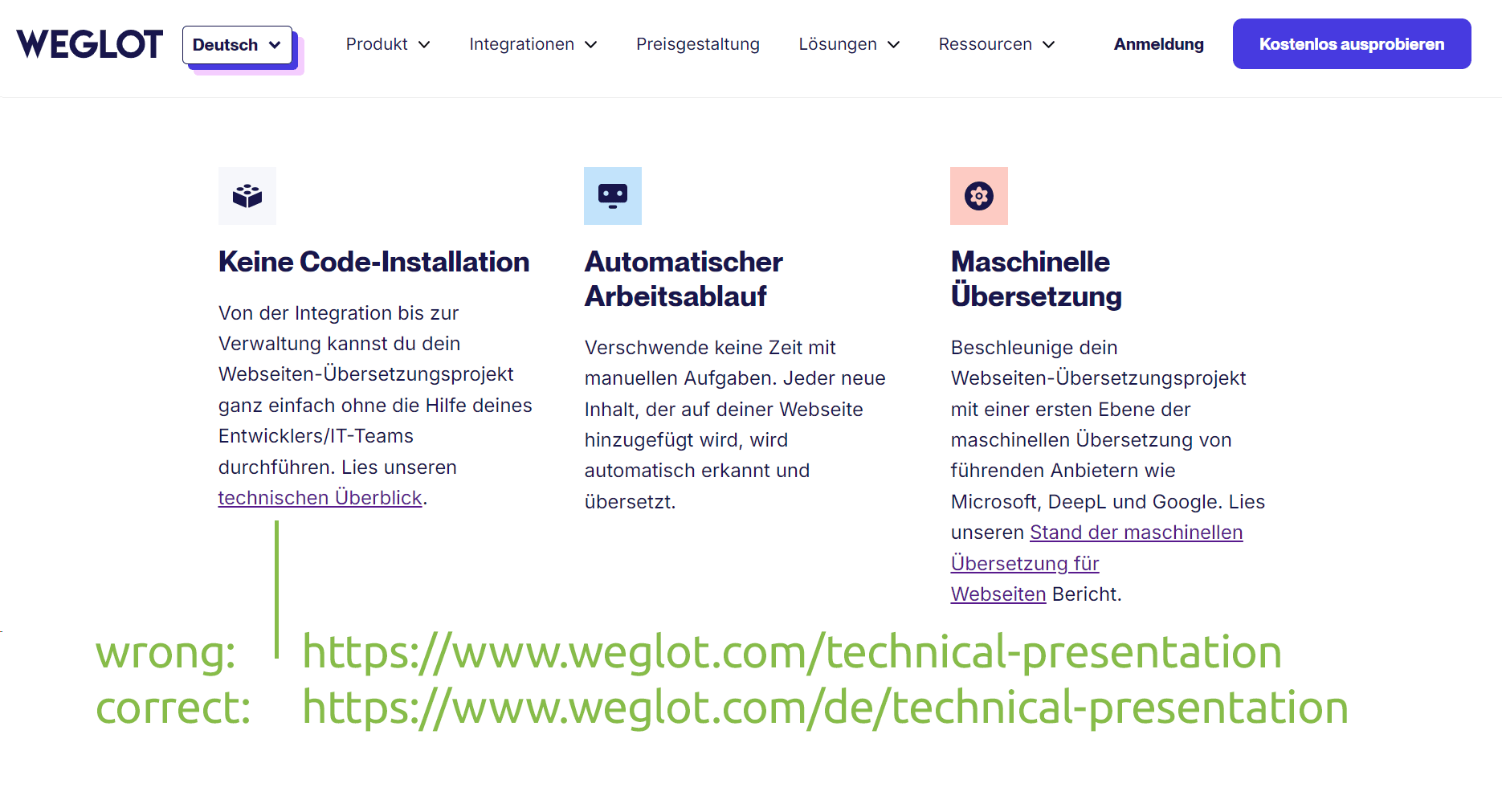
One example from us is the guideline for linking from one piece of content to another page. An absolute link path is never used in content processing in the backend; instead, a shortened ID is used, which enables our programmed system to understand that different slugs in the frontend must be assigned in other languages. This is essential because we have the requirement of multilingualism that on a translated page, it must also link to the corresponding equivalent in the same language. Sounds logical, right? However, this can be a challenge with machine translations on websites. Here is an example of a website that offers multilingualism as a service for other websites and is likely one of the leading SaaS in this segment, as over 80,000 websites use the service for machine translations.
On the German page, the link in the text leads to the English page, even though a German page is available. Such issues need to be identified by UX and SEO staff in large projects. A guideline for content editing or an automated adjustment at the code level is the solution.
Another tool that companies can use for large projects are heatmaps and other analytics tools to track user behavior on different pages. This data can then be used to continuously optimize the internal linking strategy and ensure that users find the most important content and do not prematurely end their journey on the website.
The importance of close collaboration between SEO staff and the development, content, and design teams.
I love SEO, I love page speed optimization. We are a real tech agency. That’s why SEO is a top priority for us, which simplifies many aspects from an SEO perspective in our processes, as it can be prioritized directly by me. I know that this is not the case in all companies with large projects just from our agency clients. Many have the classic cookie consent banner and have also integrated Google Analytics. Does anyone ever look at that? Rarely. And are decisions about the project made without data analysis from the Search Console? Constantly. It’s actually incredible.
One of the most valuable resources for companies is the disciplined and harmonious collaboration of the SEO team with developers, content creators, and designers. It is often assumed that developers just need to “push a few buttons” to implement changes. In reality, the process is much more complex, and without a good understanding of the technical requirements, SEO cannot be successful. New employees, in particular, who believe that this new desired feature could be developed by a developer within three hours, are operating under a misconception. We work in sprints, and tasks and projects are managed via JIRA. Since 2021, my development team alone has processed over 7,000 tickets for TutKit.com. And hundreds are still untouched in the designated sprints or the backlog channel. This is how it goes once a project has grown a bit larger. Everything takes time, nothing happens quickly.
When an employee comes up with a new idea, my recommendation is to first coordinate it with the designers who are responsible for UX. Afterwards, a visual prototype should be aligned with the decision-makers in the company. Finally, a meeting with the developers should take place for content and timeline coordination. Developers are always involved in some sprint and don’t want to jump between tasks and projects.
Therefore, it is important to appreciate the way all teams work and to promote close collaboration. Only in this way can SEO strategies be effectively implemented and the desired results achieved. This is especially true in large companies, where coordination between different departments is crucial for success.
Flexibility in Google updates and iterative processes in the SEO strategy
One of the biggest challenges in SEO is the necessity to constantly respond to changes. This is especially true for large projects where implementing changes often involves extensive processes and increased time expenditure – see above. SEO is an iterative process that requires continuous testing and optimization. Therefore, flexibility is crucial.
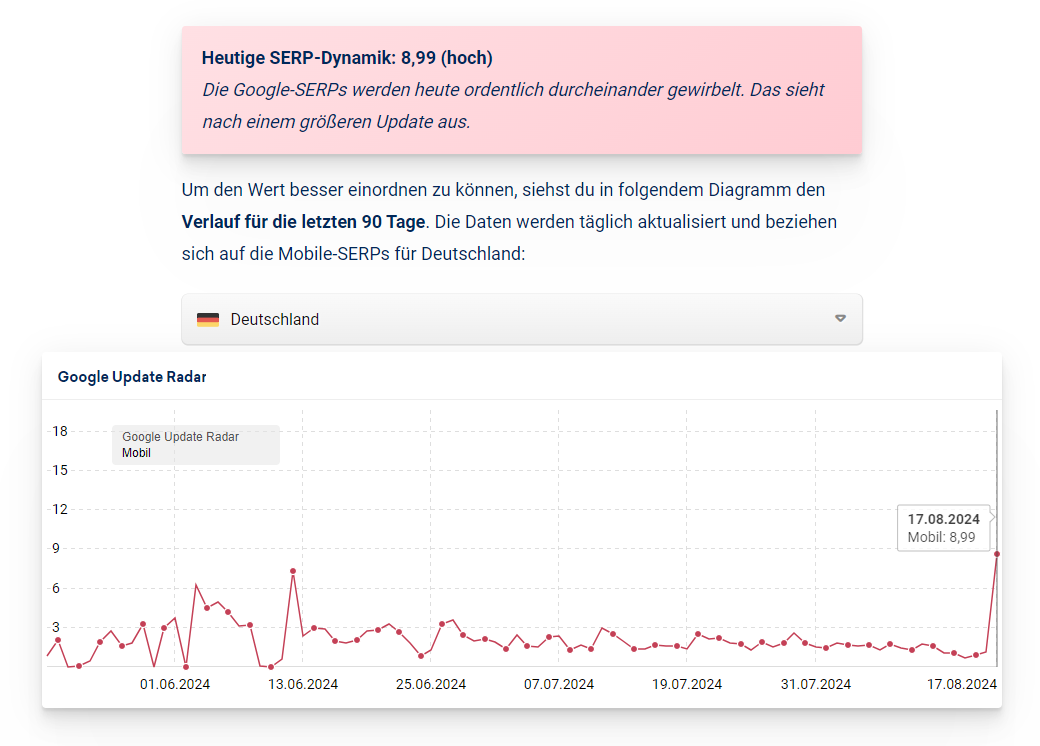
Google updates like the Helpful Content Update have shown that companies should be informed about new developments, but they don’t always need to react immediately. Instead of making changes in a panic, you can also wait and analyze with your team whether and how the updates actually affect your own traffic. That’s our perspective anyway. The SERP fluctuations often signal upcoming updates. When things go down, a calm, strategic approach is often more effective than hasty measures. This is because Google also experiments and gradually introduces additional influencing factors with the updates until it is finally rolled out. The Google Update Radar from Sistrix is helpful for this. With it, you can see SERP fluctuations and better assess whether a major Google update is occurring or if it’s just your rankings that are affected. By the way: Today is one of those days – the August Core Update is starting right now. This is how the update looks in the hours leading up to it… the calm before the storm:
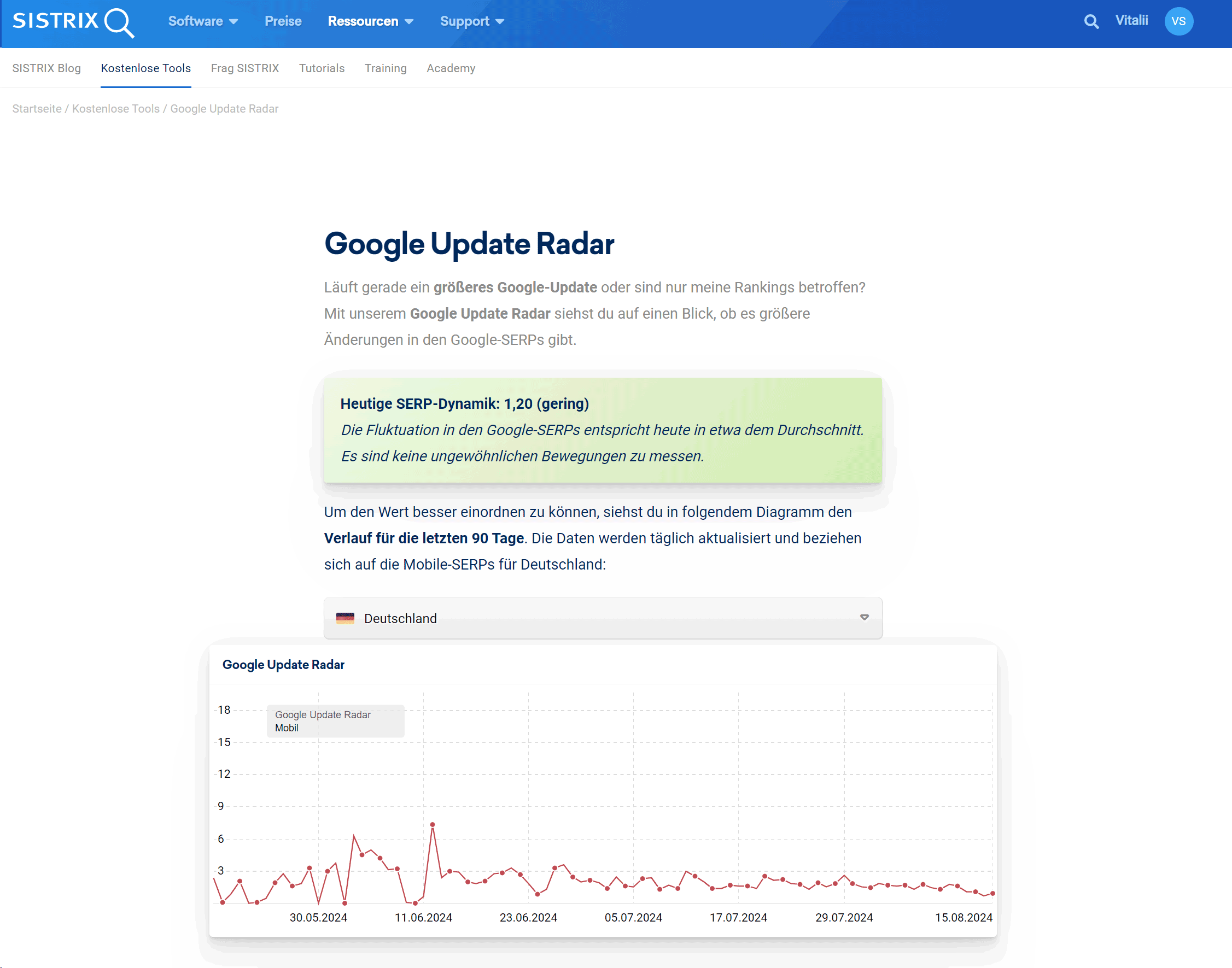
Update 17.08.2024: The Google Update Radar from Sistrix shows significant fluctuations in the SERPs. Our visibility is also rising and falling sharply in various areas.
For large companies that rely on a high level of organic traffic, Google updates can have significant impacts. Dealing with these updates requires you and your team to adopt a strategic approach based on solid data and informed analyses.
Companies that manage large projects should have employees who regularly analyze the impact of Google updates on their own pages and plan necessary adjustments. This team should work closely with the content and development teams to ensure that the measures are effectively implemented. For example, our SEO and content teams are even united in one team because they are closely related in content.
Agencies must also shape their communication with clients in such a way that decision-makers—from management to operational teams—are informed about the potential impacts of Google updates and understand the steps being taken to mitigate them.
The challenge posed by AI Overviews
Another topic that is currently generating a lot of discussion within our company is the introduction of AI Overviews by Google. These new features could potentially lead to users accessing actual websites less, as they already receive comprehensive answers in the search engine. This could particularly result in a decline in traffic for informational websites, including us with TutKit.com. I cannot deny a certain uncertainty among myself and my team regarding how these developments will impact the SEO landscape in the long term. Therefore, I also recommend closely monitoring these changes and remaining flexible in order to respond in a timely manner.
One type of reaction could be, for example, to activate more traffic sources in order to reduce dependence on Google, as new visitors could be directed to the website through own content on YouTube, Pinterest, TikTok, and similar platforms.
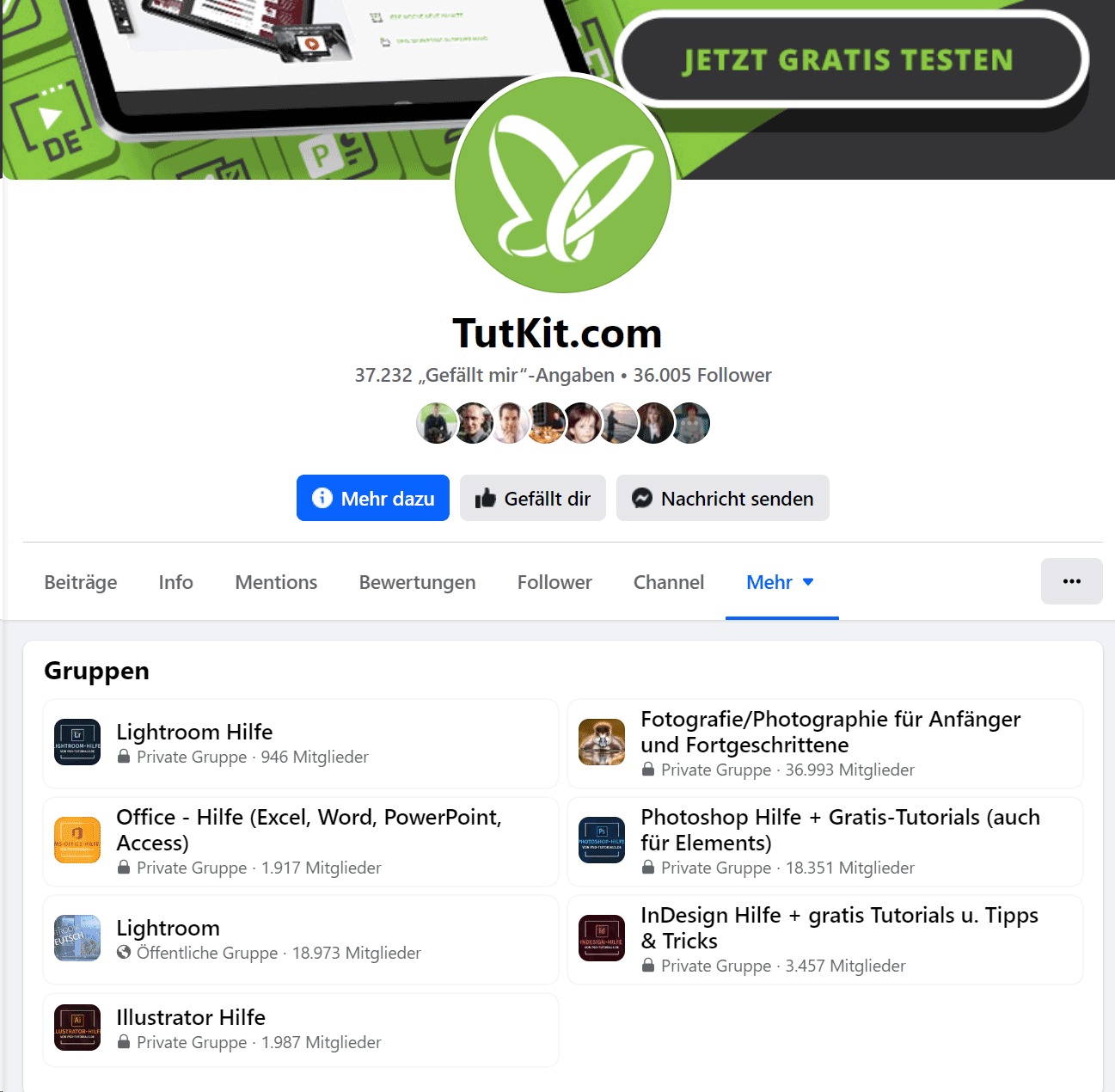
We ourselves run a YouTube channel with over 23,000 subscribers and several Facebook groups with a total of 82,000 members. Admittedly, our activity on social channels is currently rather suboptimal. We will likely intensify our engagement again to be prepared in case a worst-case scenario occurs and AI overviews take over a large part of the existing traffic for themselves.
At the current time, AI still provides too many incorrect and misleading answers. According to SE Ranking, “only” 7.47% of Google search results contained content from AI Overview in July 2024. In the previous month, there was even more content. The character length also decreased by a full 40%.
Google announced today that it will expand AI Overviews to six more countries: Brazil, India, Indonesia, Japan, Mexico, and the United Kingdom. Local languages will be supported in each of these countries. The rollout will take place over the next few weeks. It won’t be long before AI Overviews also make their way into German-speaking SERPs.
Let’s hope overall that AI Overview doesn’t have too high a presence in the SERPs. Nevertheless, for SEOs, it means keeping an eye on the topic and already planning with the marketing team how new traffic sources can be activated.
Conclusion: Efficient processes and disciplined collaboration lead to SEO success.
SEO in large companies requires more than just optimizing keywords and generating traffic. It’s about understanding the entire customer journey and structuring content to guide users through the entire funnel. Flexibility and close collaboration with development, content, and design teams are just as important as an iterative, data-driven approach. Internal linking must be designed to meet both SEO requirements and the needs of users. Handling Google updates should be strategic and data-driven to avoid unnecessary panic and make meaningful adjustments. Finally, it is crucial to closely monitor developments in artificial intelligence and integrate them into the overall strategy.
For companies with large projects, the successful implementation of SEO strategies is not a task that can be handled solely by an SEO team. It requires close collaboration between different departments, strategic planning, and a willingness to continuously educate oneself and respond to new developments.
Through such a holistic and proactive approach, agencies and in-house teams can ensure that they not only compete but also achieve long-term success. Test new hypotheses, respond to changes, and always keep user needs in mind, and you will be successful in the long run – even in a constantly changing digital environment.