For the digitization of our municipal coat of arms, I contacted “4eck Media” and received an offer within a very short time. The implementation was quick and to our complete satisfaction. Thank you very much.
Vectorization of the municipal coat of arms of the island municipality of Juist & the city coat of arms of Pryluky
In this blog post, we would like to present two projects where existing coats of arms, which were only available as pixel graphics, were manually redrawn in order to obtain them as vector files in an improved and losslessly scalable version. The advantage of vectorized files is that they can be infinitely enlarged without any loss of quality. They are also very small in file size compared to pixel-based graphics because everything is based on mathematically computable paths. Ideally, logos should also be integrated as vector files in websites.
Vectorization of the coat of arms of the island municipality of Juist.
The mayor’s office has contacted us because the existing municipal coat of arms needs to be vectorized on one hand. On the other hand, the blue color should also be edited to a less saturated and lighter variant.
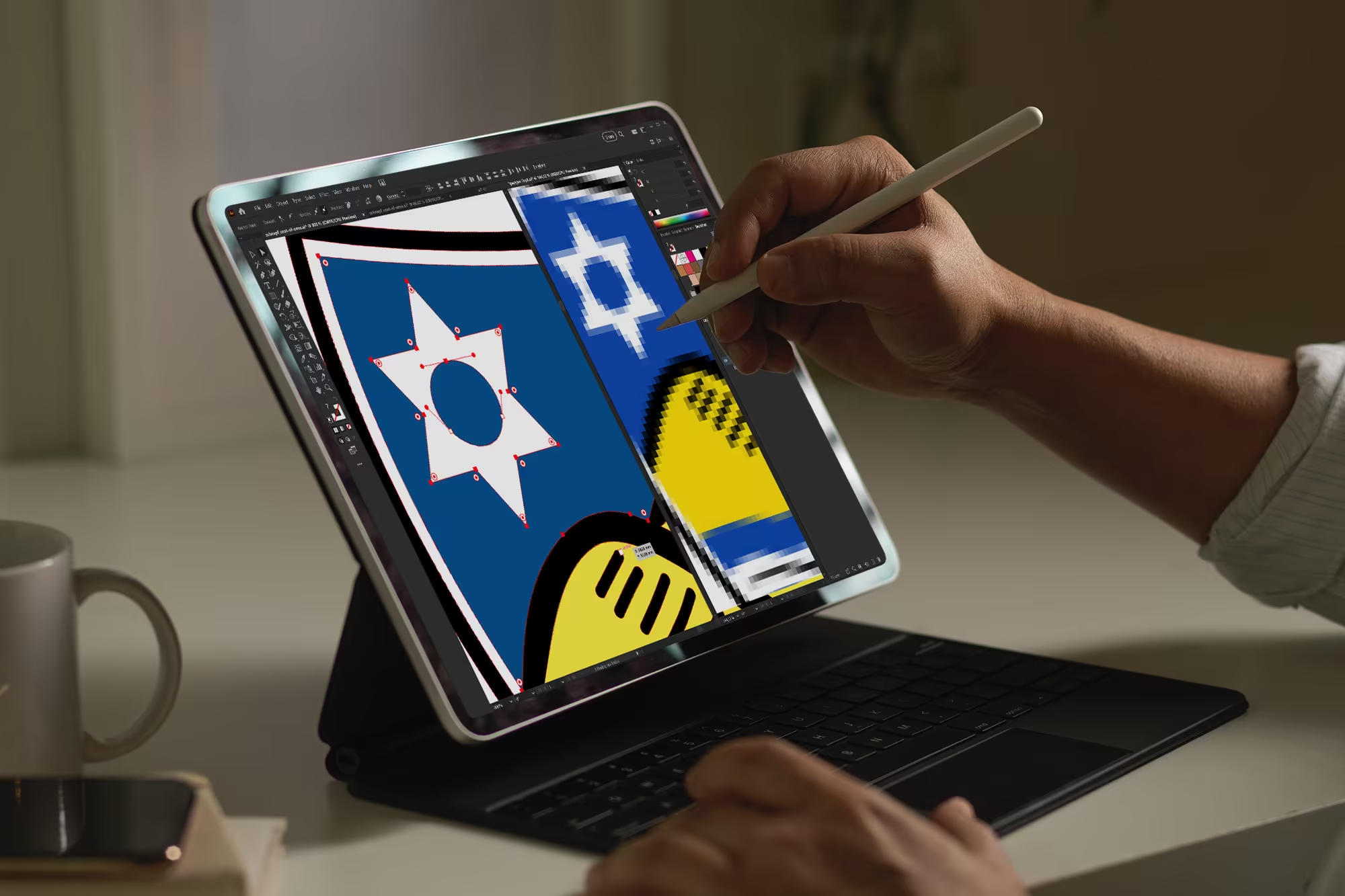
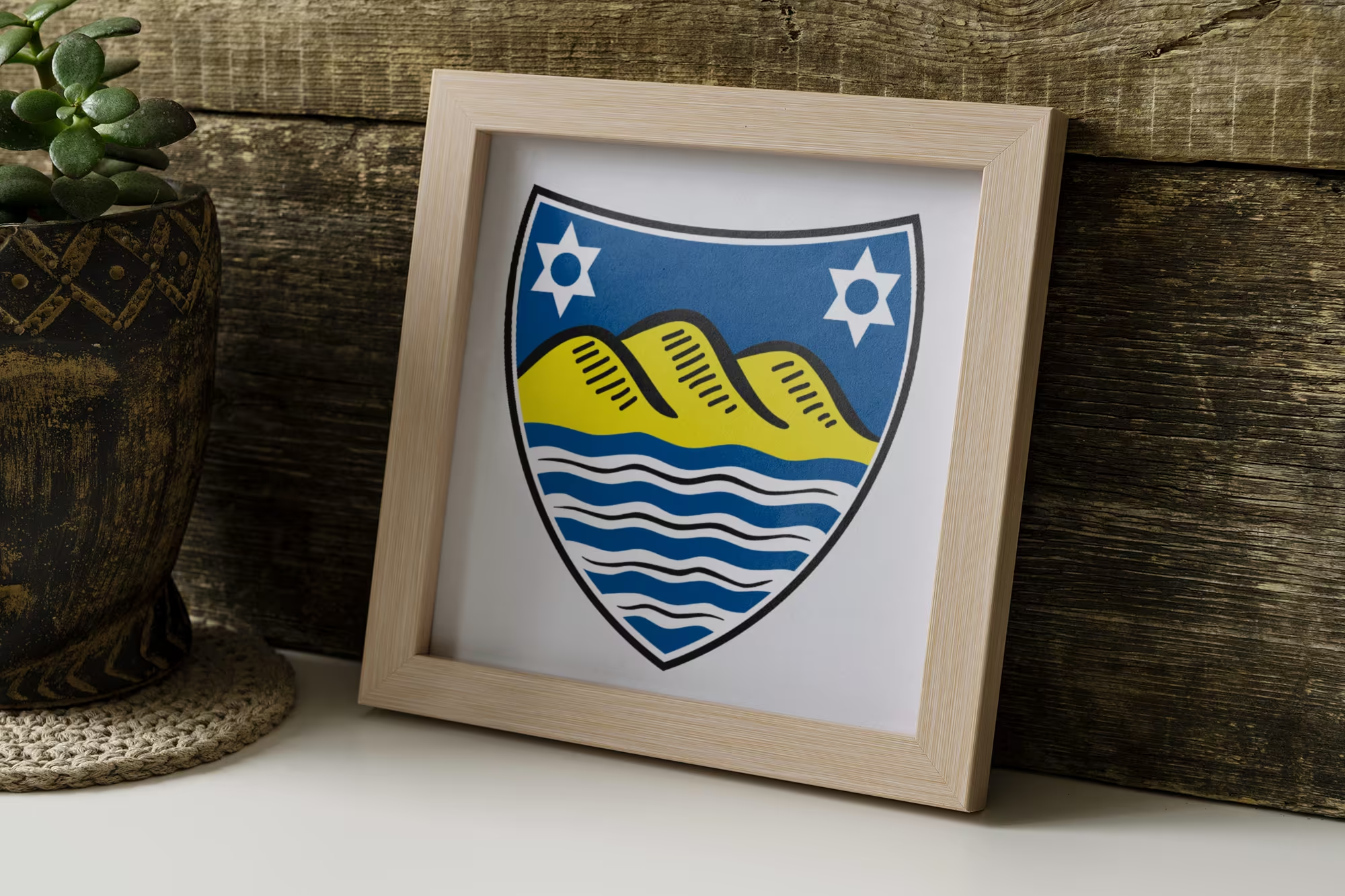
We set to work on the template and vectorized all elements of the coat of arms. Admittedly, this digitization of the coat of arms involved relatively simple shapes. Here is the municipal coat of arms in its vectorized form:
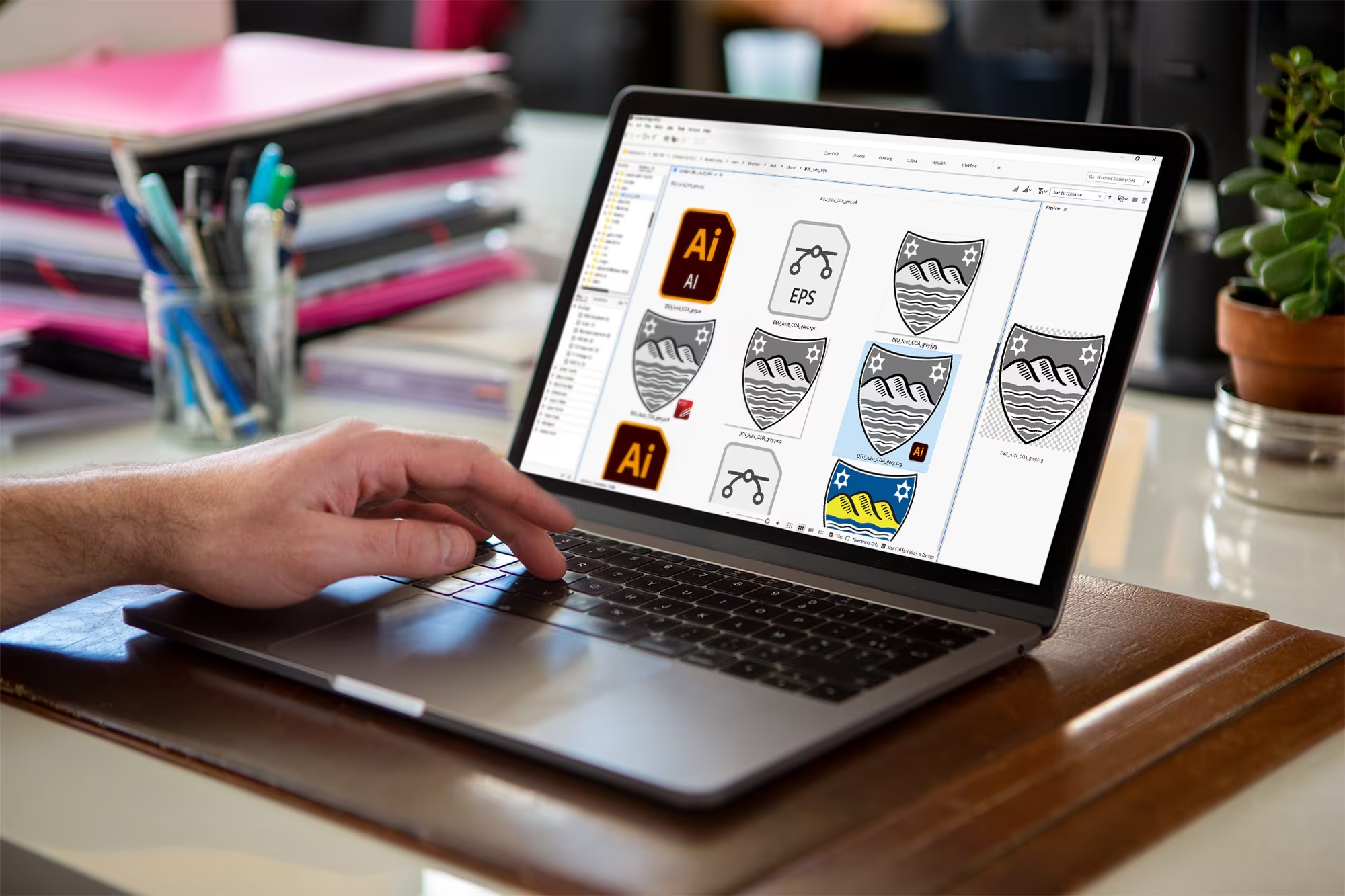
In addition, black and white variants of the municipal coat of arms were also needed. Therefore, we vectorized the coat of arms for the island municipality and created it in a variety of file formats (in lossless scalable vector formats EPS, AI, SVG, PDF, as well as in high-resolution pixel formats such as PNG and JPG) in color and black and white. This positions the municipality well for the future, allowing it to use the coat of arms as SVG on websites, as well as in email attachments or in printed media.
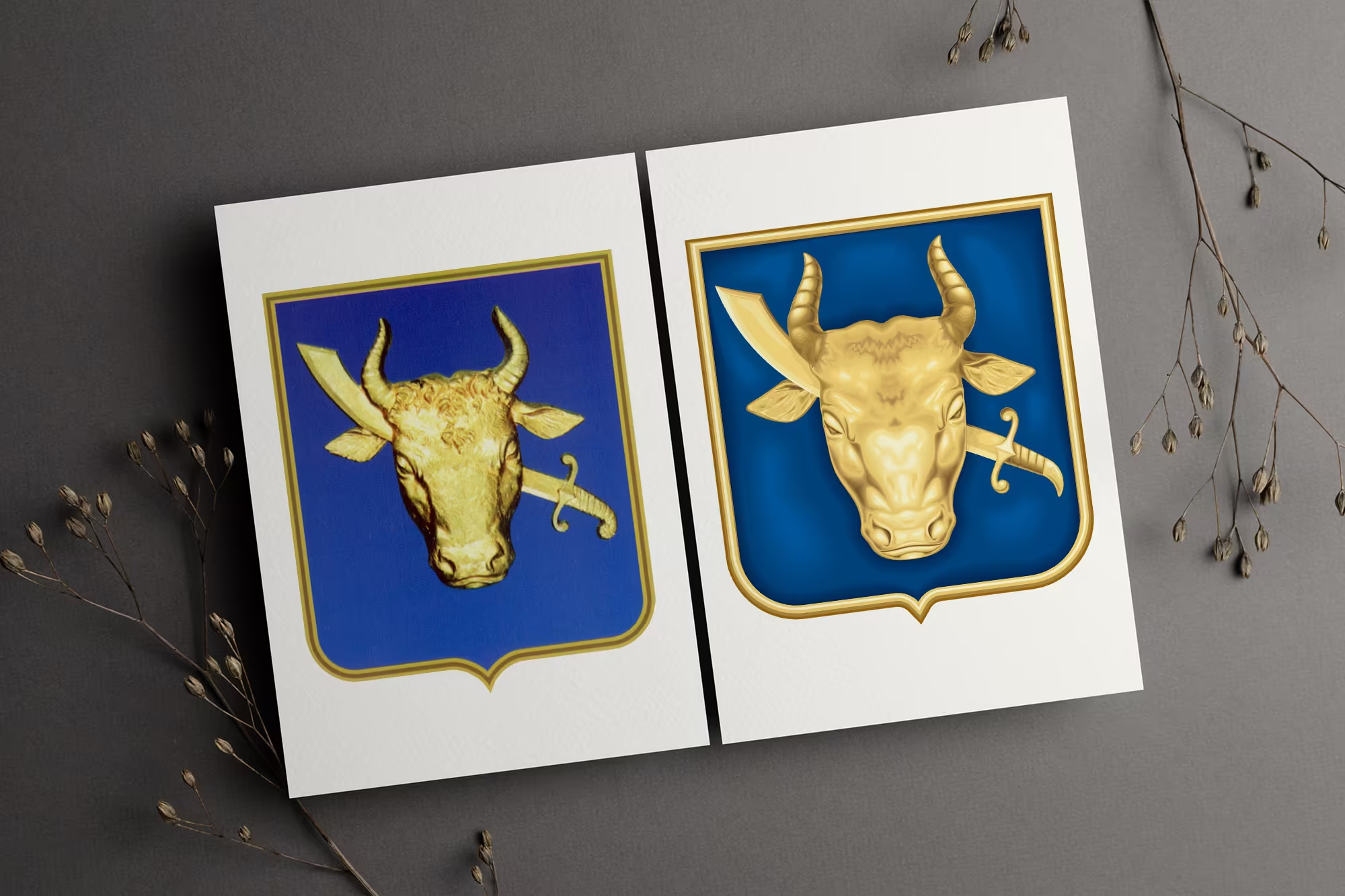
City coat of arms of Pryluky featuring a bull’s head with shading and gradients.
That it can also be more demanding is illustrated by the following example. The task was to illustrate the pixel-based city coat of arms. Here, the shading and gradients had to be created in Adobe Illustrator. Although there were only two color tones that made up the coat of arms, the task was significantly more challenging compared to the municipal coat of arms. Here is a before-and-after comparison:
Here are some close-up shots to show how the gradients and shades were incorporated in the illustration. And that was also the biggest challenge in vectorizing the Stiefkopf.
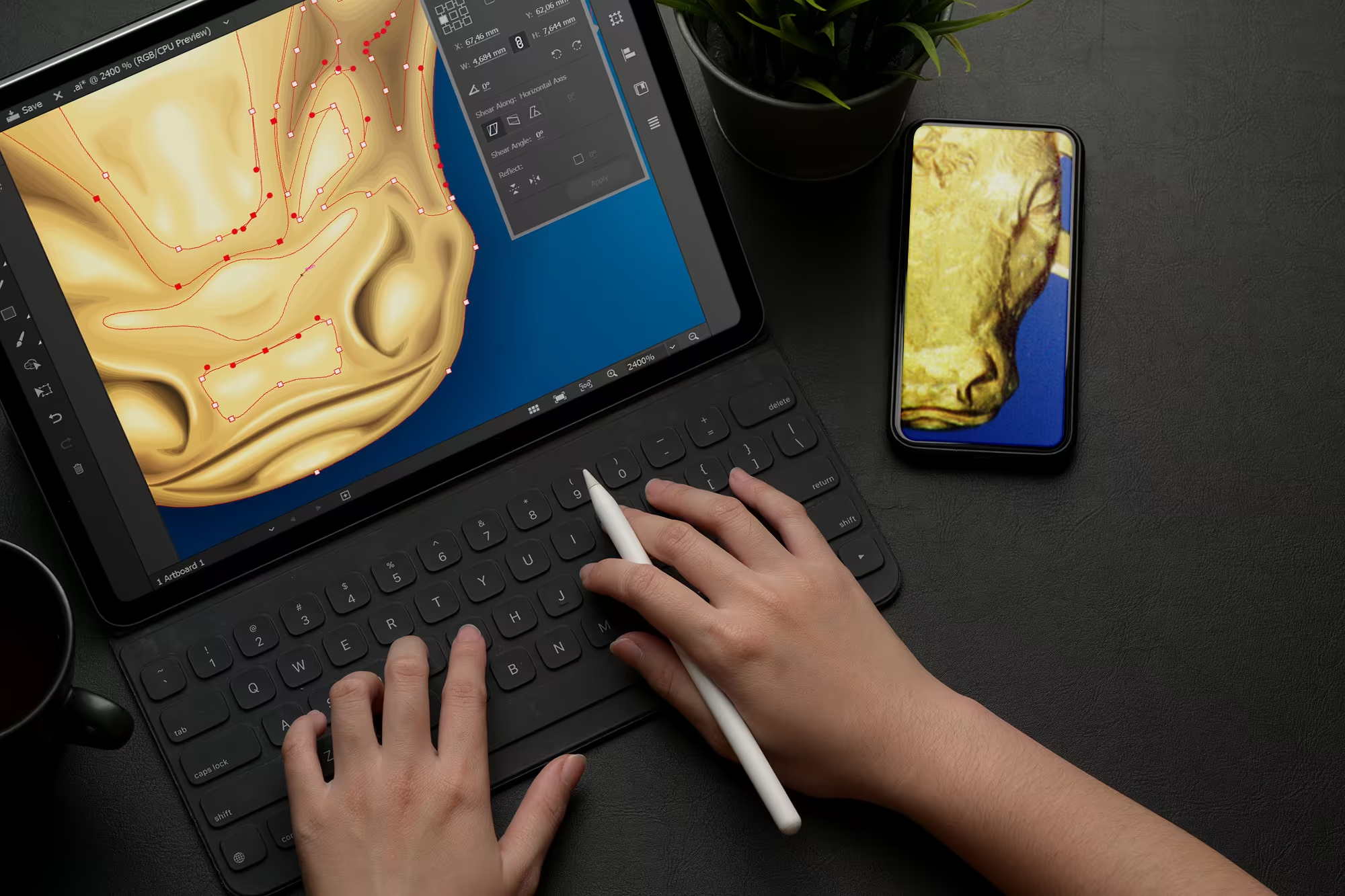
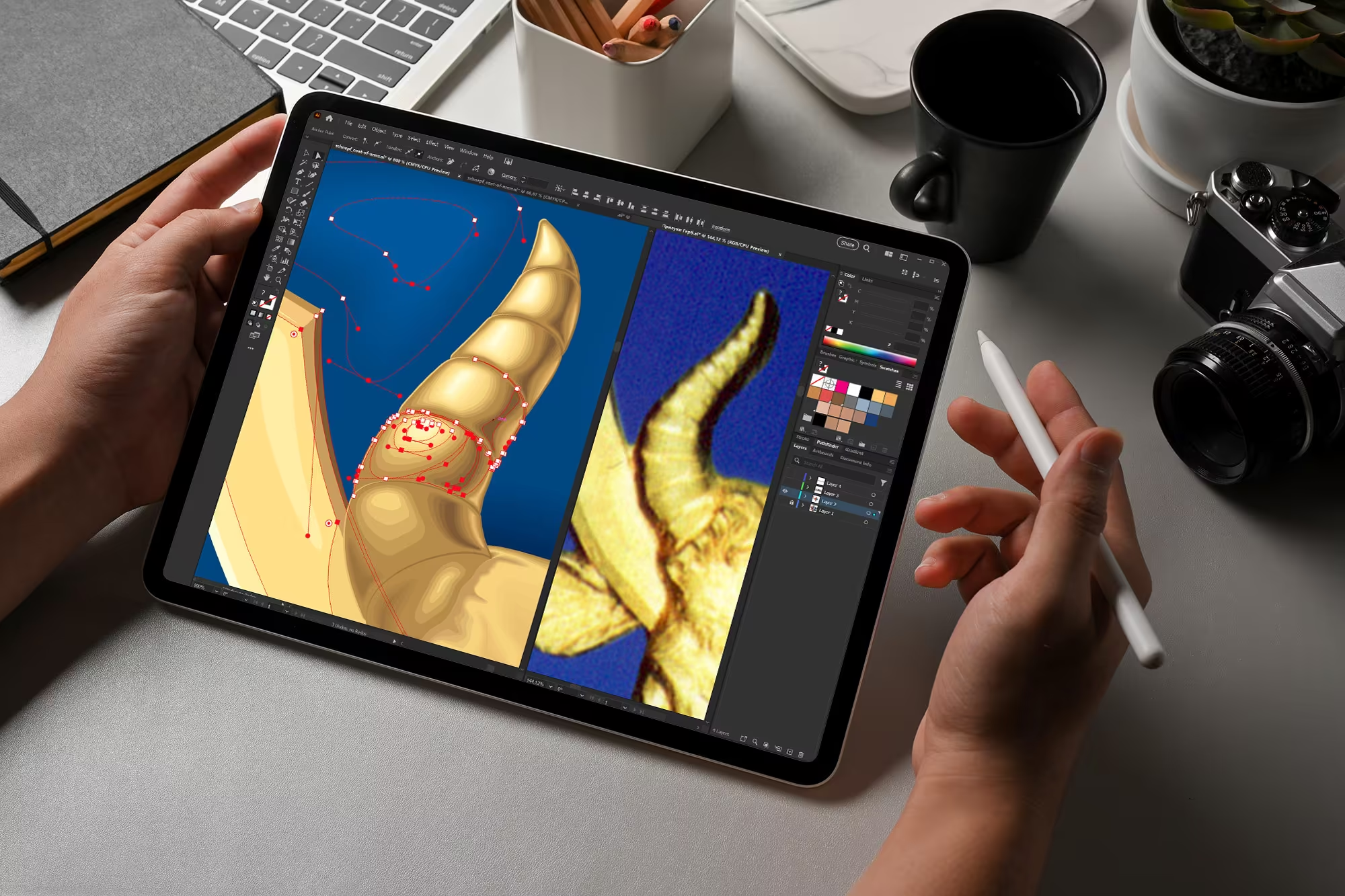
Many paths, many vectors. But in the end, a great piece of work by our illustrator Alex, who has also done Stadtwappen von Stavenhagen vektorisiert. Now the city is well-prepared for the future with its coat of arms and can optimally use the coat of arms for both digital and print purposes.
Difference between pixel graphics and vector graphics.
Pixel graphics and vector graphics are two fundamental types of digital graphics that use different approaches to represent images and graphics. Here are the main differences between the two, so you can understand why logos and coats of arms should ideally be in vector graphic format, even though they were often designed as pixel graphics in the past – or, in the case of heraldic motifs, drawn analogously.
Definition:
A pixel graphic (also known as a raster graphic) is a representation of images or graphics made up of a grid of tiny dots called pixels. Each pixel has specific color information that contributes to the overall image. A vector graphic uses geometric shapes, such as lines, curves, circles, and polygons, defined by mathematical relationships. These shapes are represented by vectors (mathematical descriptions) that define their position, shape, color, and other properties. This is especially well illustrated above with the bull’s head.
Scalability:
Since pixel graphics consist of a fixed number of pixels, they cannot be scaled indefinitely without losing quality. When a pixel graphic is enlarged, the individual pixels become visible, leading to a deterioration of the image quality. Vector graphics are scalable because they are defined by mathematical formulas and do not have a fixed number of pixels. They can be enlarged or reduced as needed without affecting the image quality.
File size:
The file size of bitmap graphics can be relatively large, especially at higher resolutions, because each pixel is defined individually. Vector graphics typically have smaller file sizes since they only contain the mathematical descriptions of shapes and do not need to store each individual pixel. Since smaller files support the performance of websites today, logos, icons, and emblems are primarily incorporated as vector files in SVG format.
Processing:
When editing pixel graphics, the pixels are changed individually, which can make them less suitable for complex modifications of graphics. Vector graphics are well-suited for editing because you can easily adjust the shapes and properties by changing the underlying mathematical descriptions.
Areas of application:
Pixel graphics are often used for photographs, detailed images, and photorealistic representations. Vector graphics are ideal for logos, illustrations, technical drawings, infographics, and other graphics like coats of arms, where scalability and precision are important. Overall, pixel and vector graphics each have their respective strengths and weaknesses and are chosen based on the project’s requirements.
Is vectorizing your coat of arms interesting for you?
We vectorize, enhance, and refine heraldic motifs in detail and are able to make lost details visible again. We pay close attention to historical accuracy. Simply send us a photo or scan of your coat of arms, and you will receive a prompt quote for the vectorization/digitalization of your coat of arms.