Employers who do not respond to this risk becoming invisible to talent.
Will conversational search replace traditional keyword search in recruitment marketing?
Part of our agency work revolves around recruiting and employer attractiveness. Since the rollout of AI responses, the SEO game rules are changing, and so is the way potential candidates find the right companies. To revisit the title of the blog post: Will conversational search replace traditional keyword search in personnel marketing? Our short answer: Not completely – but it will dominate in many areas, especially in job searches and employer branding.
Introduction: What’s behind Google’s new AI search mode?
An article in Handelsblatt from May 21, 2025, makes it clear: Google has introduced a radical AI mode that completely redefines the traditional search experience. CEO Sundar Pichai describes that Google will be “completely restructured” – moving away from purely list-based search towards an AI assistant that proactively provides context-based answers. This innovation clearly responds to the trend of more and more users using chatbots like ChatGPT alongside search. Google aims to position itself as an integrated AI search assistant in this environment.
Additionally, the Google Search Central blog (May 2025) provides specific recommendations on how websites can thrive in the new search reality:
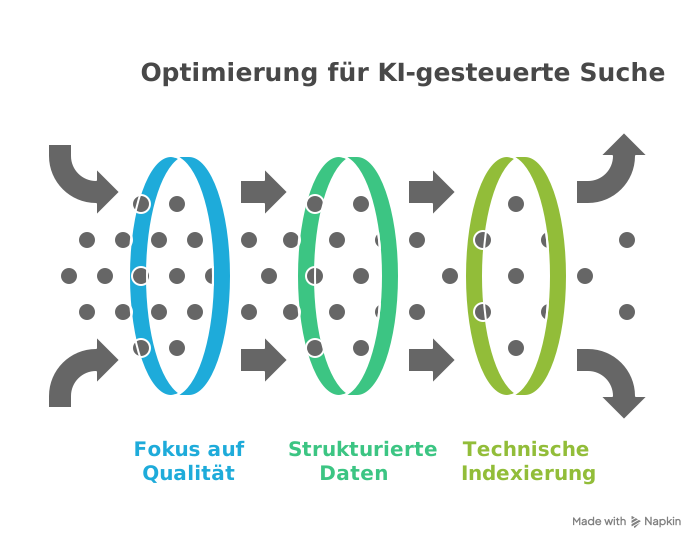
- Focus on high-quality content: Content must be useful, current, and trustworthy. Especially content that provides clear added value for users is preferred for indexing and display.
- Use structured data: Information such as job titles, salaries, or locations should be marked up with Schema.org. This improves semantic discoverability for AI systems.
- Technical indexing control: Through robots.txt, meta tags, and targeted URL architecture, it should be ensured that content is efficiently captured and correctly categorized by crawlers. These insights are essential for talent marketers who want to maximize their reach through AI-driven search experiences.
What does this mean for job postings and career content?
1. Search intent instead of mere keyword optimization
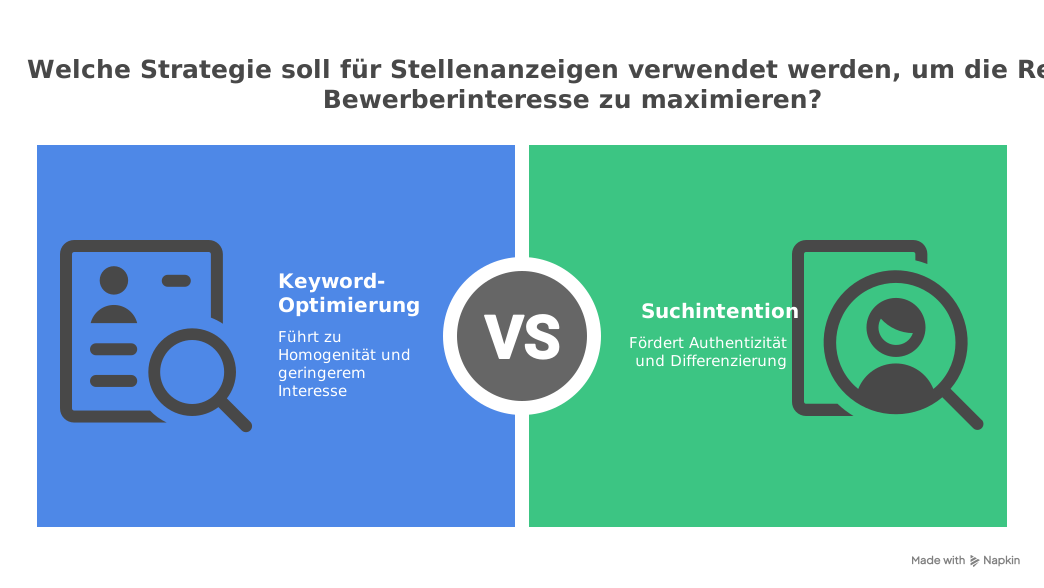
What does the realignment towards Conversational Search mean for my job listings? Standardized, generic, or copied ads lead to homogeneity, lower information quality, and weaker candidate interest. Current AI and embedding-based models are capable of detecting these. Only original, authentic content can still have a differentiating effect today – both for people and for machines. How can a genuine employer culture be conveyed and how can AI differentiate between offers? In short, it is detrimental to copy from other ads – a well-known issue in SEO. Therefore, ensure that important questions are answered as directly and individually as possible – for example, regarding working time models, salary, or development opportunities. Use clear sections. Many platforms already offer fields for structured information. Utilize these consistently to maximize your reach through AI-supported search systems, and if in doubt, seek advice from external experts, such as SEO agencies like us, who have already specialized in optimization for AI search systems.
Questions that need to be answered:
- What does the job really offer?
- Why should I apply to this employer?
- What is the salary? What is the company culture like?
- Is there remote work or flexible work models?
- What development opportunities do I have?
Practical tip: If you want to post a job advertisement, you should ensure that your content is not only optimized for keywords but also conversational. An ad – for example, on StepStone – should not only include the right keywords but also answer questions such as: “What flexibility does the employer offer?”
2. Content must be readable by AI and capable of dialogue.
This includes:
- Listen & Bulletpoints
- Clearly defined sections (e.g. “What we offer”)
- Simple language for natural language models (LLMs)
3. Structured data is mandatory.
Use Schema.org markup (e.g., JobTitle, Description, Salary, Location) to:
- to make your content visible in AI Overviews and the job snippet
- to ensure optimal indexing
- to perform better on Google and platforms like LinkedIn, Indeed
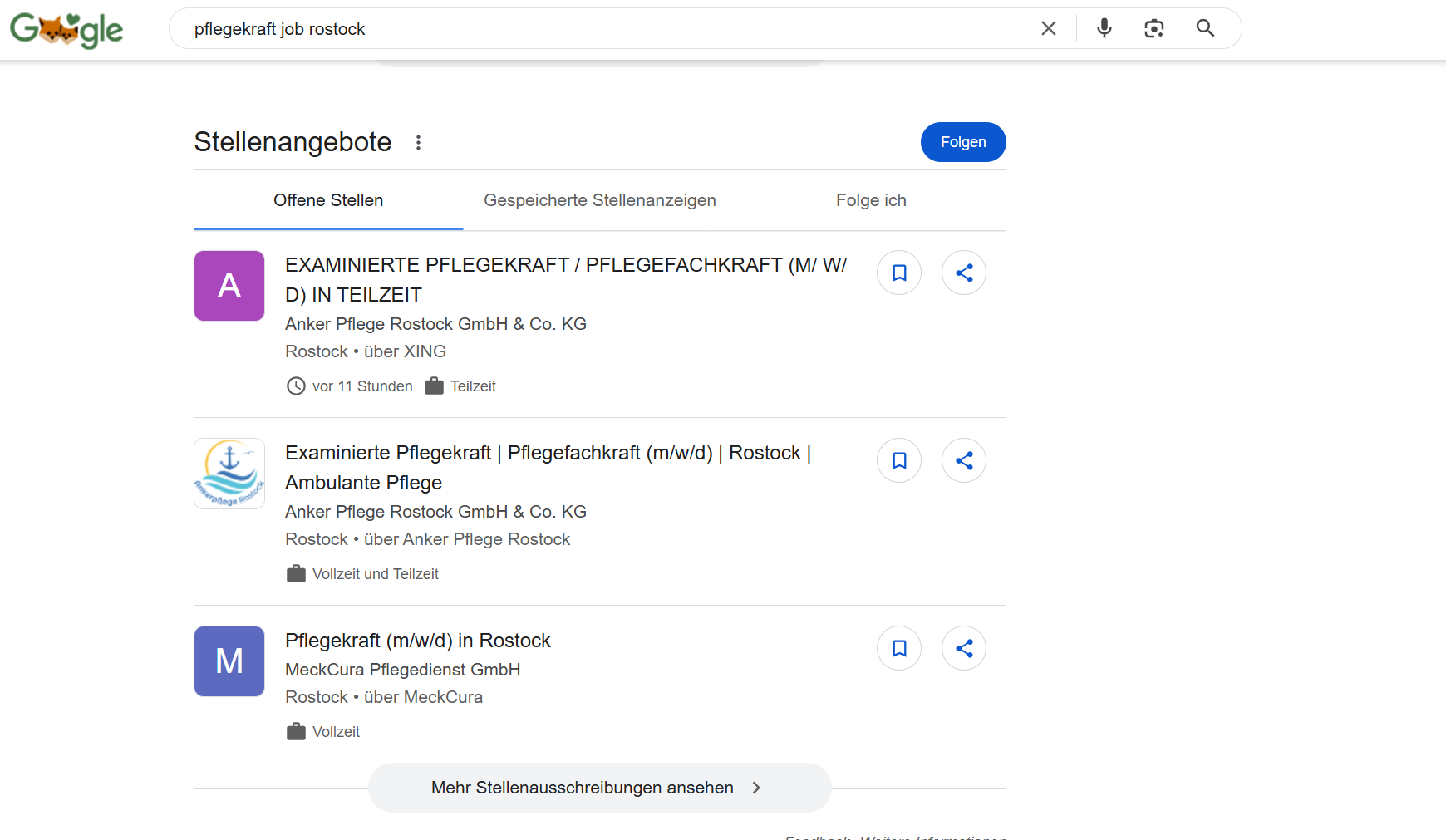
If someone is looking for a job as a caregiver in Rostock, our client MeckCura appears as the third result in the job listings snippet from Google. We achieve this only because the job advertisements on the website have the corresponding schema markup. Considering how many job openings there are for Rostock, this placement is a great SEO success.
4. From Text to Experience
A good text is no longer enough; it requires tangible experiences.
- Tone of voice suitable for the target audience.
- Authentic insights into everyday work life
- Images, videos & quotes from real employees
- Examples instead of clichés
5. Consider multi-platform capability.
Applicants use many channels, including Google search, chatbots on your career page, job boards, and social media. We have even successfully collected applications for our clients through eBay classifieds.
Tip: Plan content modularly:
- Text block for Google
- Consider response logic for chatbots.
- Teaser for social media
- Longform for the career page
- Specific modules for posting job advertisements, e.g., on StepStone.
The keyword-based search with its literal terms is expanded to include conversational search for context and intent.

FAQ: Frequently Asked Questions about Conversational Search in Recruiting
What is the difference between keyword search and conversational search?
Keyword search is based on individual search terms that the algorithm combines to find relevant content. This works technically well but is not optimal for more complex search intentions. Conversational search, on the other hand, processes inquiries in natural language and recognizes their semantic context. As a result, AI systems like Google AI Mode or ChatGPT provide precise, often ready-to-use answers.
Why is conversational search relevant for personnel marketing?
Applicants today are no longer just looking for job titles, but for answers to specific life realities: “Which jobs can be reconciled with family?” or “Which companies offer a hybrid working model?”. Addressing these questions in job postings or on career pages demonstrates relevance, empathy, and user orientation – key factors for modern employer branding.
How do I make my content conversational?
Conversational content is characterized by clarity, structure, and substance. Use clear question-and-answer formats (e.g., in FAQ sections), avoid generic phrases, and provide real information: numbers, processes, testimonials. The more specific and helpful the content, the greater the chance of being prominently featured in AI overviews and chatbots.
What do structured data bring me specifically? Structured data according to Schema.org allow Google and other AI systems to interpret content in a machine-readable way. For job offers, this means that title, location, salary range, or application deadline can be specifically extracted and displayed in features like the AI Overview. This improves visibility and click rates, even without users explicitly visiting your page.
How do I effectively use Conversational Search for my employer branding?
Tell stories – not just about products, but about people, values, and visions. Provide insights into the working world, for example through employee interviews, day-in-the-life videos, or blog articles on cultural topics. Conversational search prefers content that is profound and authentic. The more credible and relevant the content, the greater the impact on potential applicants.
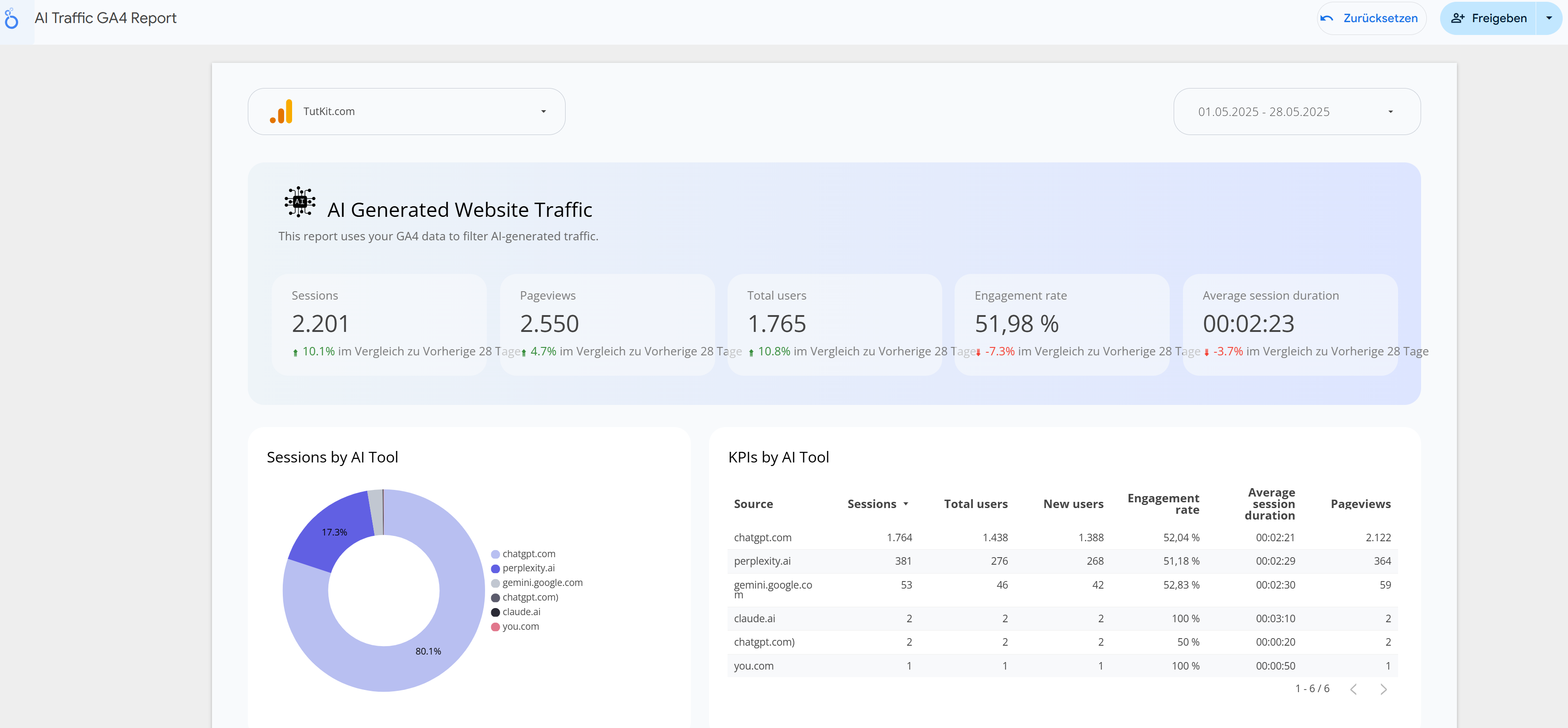
It is worth expanding the content specifically for the needs of AI response systems. Ultimately, the measures are not so different from what we have always done in the context of search engine optimization. In any case, we benefit from this approach and can observe a growing visibility in AI tools.
Google’s new AI mode shows: The search engine is becoming an assistant that answers questions instead of displaying lists of results. Companies that focus on conversational search now are securing visibility and relevance in a time when classic keyword strategies alone are no longer sufficient. The new formula for recruiting content:
- From keyword lists ➞ to semantic clarity
- From clichés ➞ to real answers
- From rigid pages to dialog-enabled information architectures
Those who act now secure visibility for their job postings in the future. Anyone needing help to make their website ready for AI search is welcome to contact us.