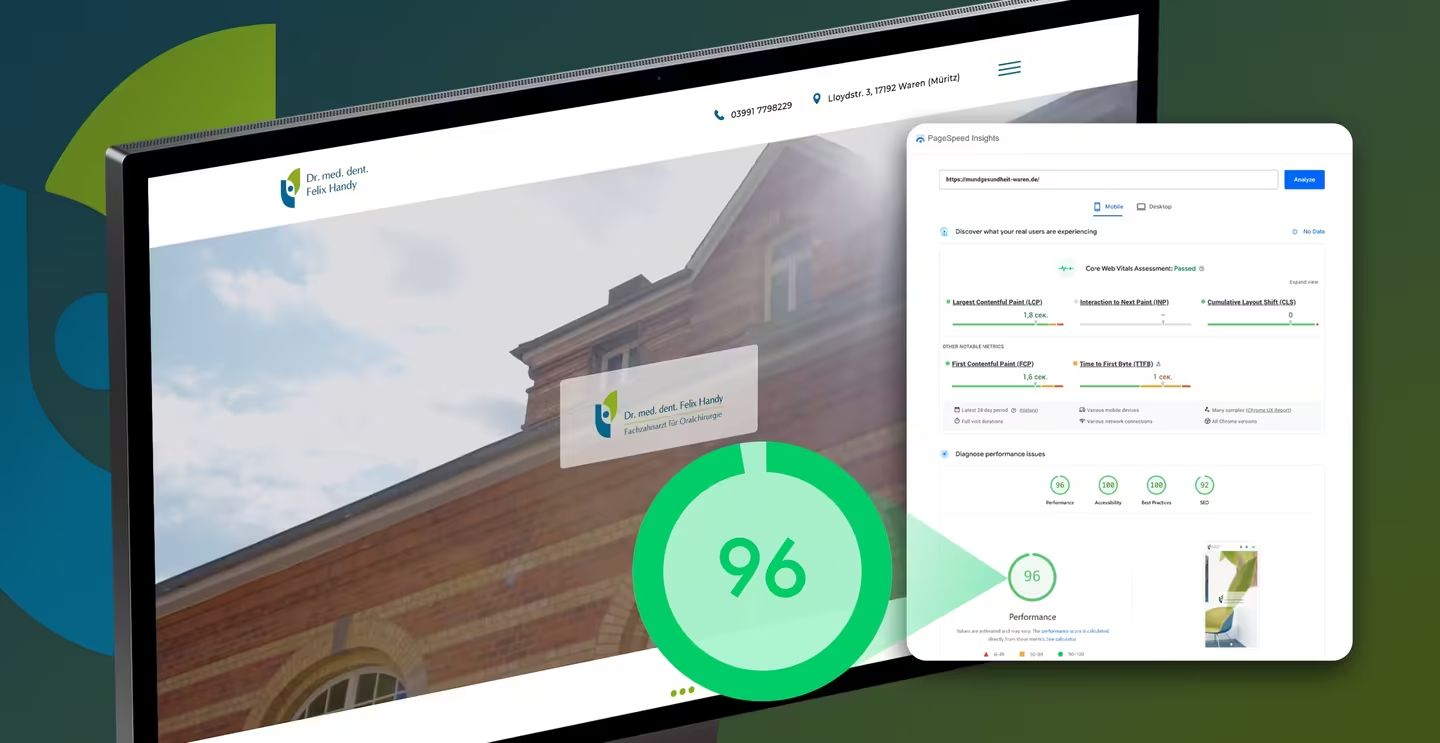
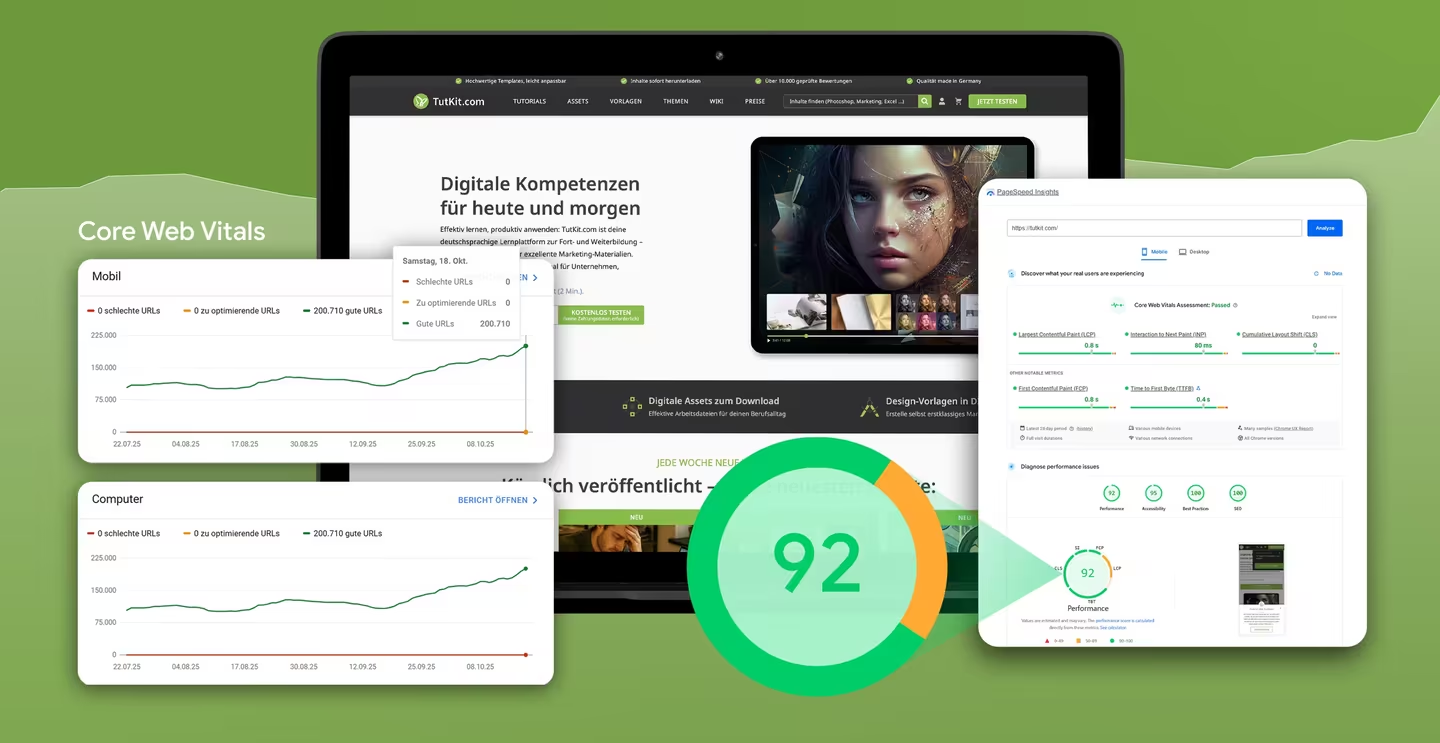
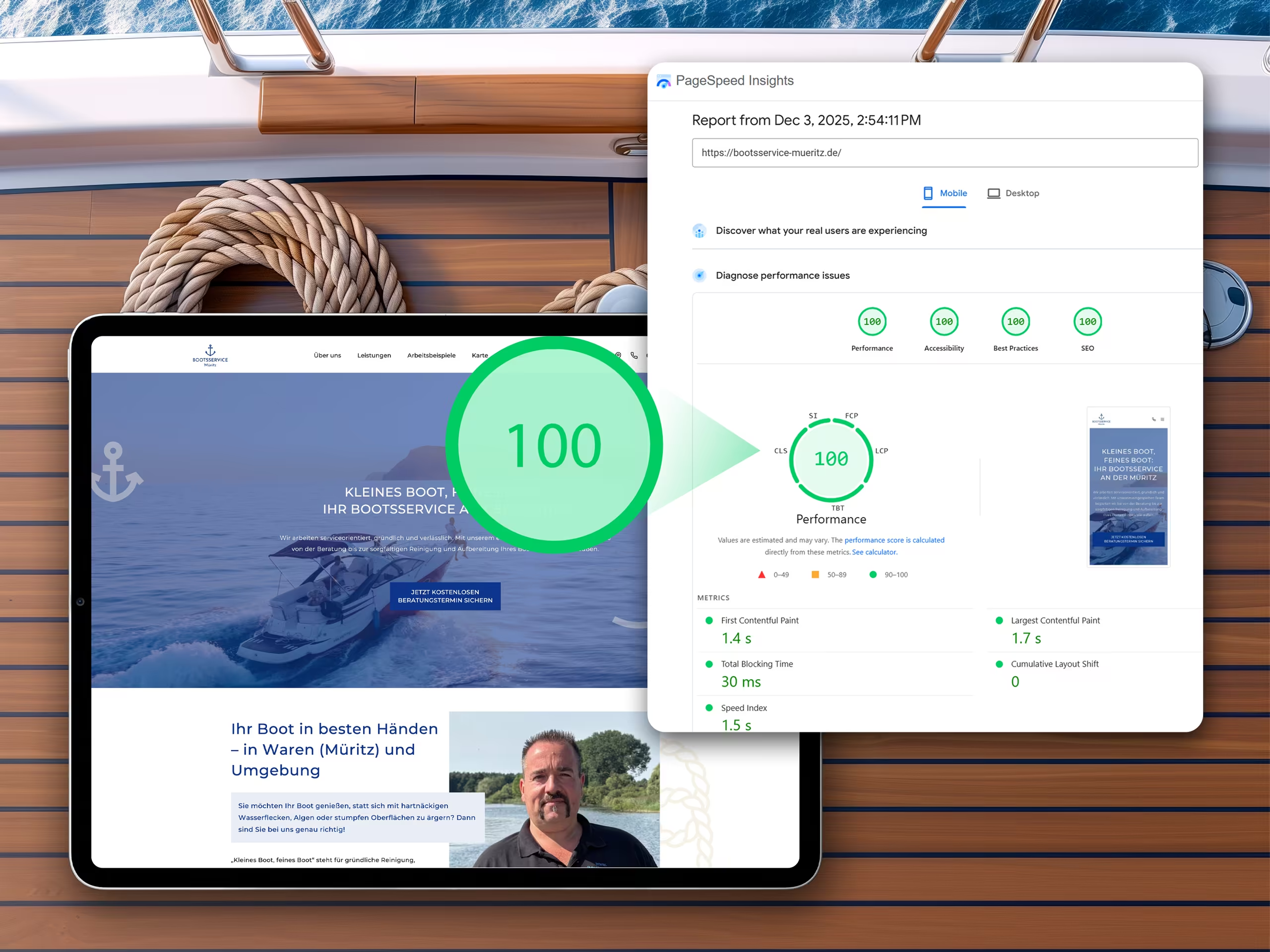
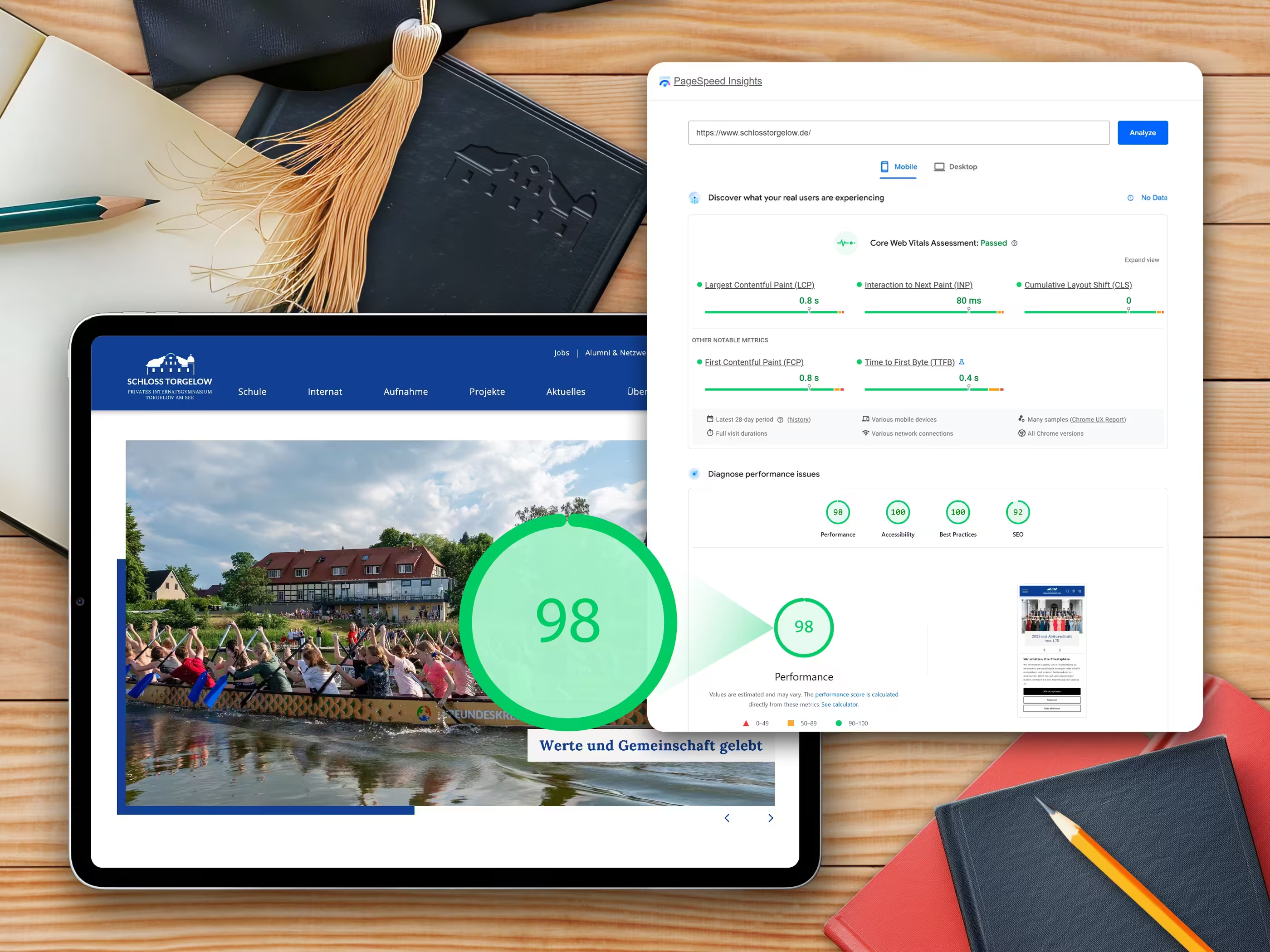
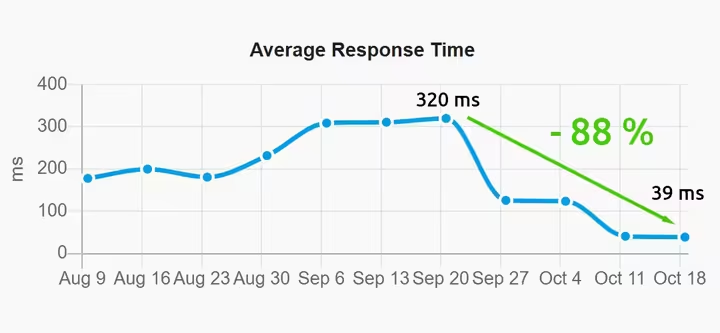
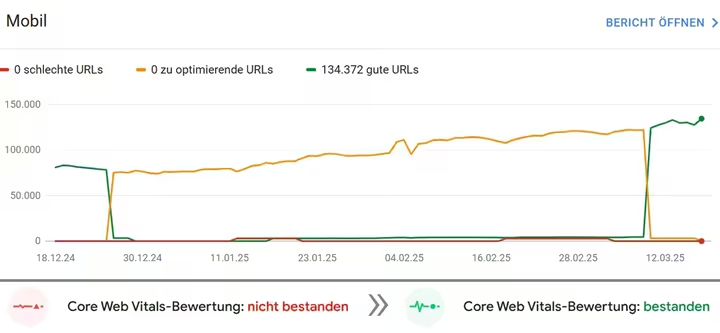
PageSpeed Optimierung Referenz - Bootsservice Müritz Website mit perfektem Google Performance Score 100 und optimalen Core Web Vitals zeigt erfolgreiche technische SEO-Optimierung und blitzschnelle Ladezeiten

PageSpeed Optimization & Core Web Vitals | Making Websites Measurably Faster

PageSpeed optimization is essential for online success. Slow websites cost revenue, rankings, and credibility. Every additional second of loading time makes visitors impatient, and Google penalizes poor Core Web Vitals immediately.

We analyze your website technically, identify performance bottlenecks, and optimize every area: servers, code, fonts, images, databases, scripts. Result: noticeably faster loading times, better rankings, higher conversion rates.

Jetzt anfragen

Why PageSpeed Optimization is Crucial Today

PageSpeed is no longer a “nice-to-have” but is crucial for good rankings:

  • Up to 40% of users leave a page after waiting more than 3 seconds, resulting in negative user signals collected by Google.
  • Google prefers fast websites in rankings because it always wants to ensure the best user experience.
  • Conversions (and thus revenue) increase with every second you save… statistically proven.
  • Mobile users expect instant responses… and most users are browsing your website or shop on their smartphones.
  • Core Web Vitals are an official ranking factor from Google.

Your service or product is likely content-wise comparable to your competitors’, right? Whenever content-similar websites compete, Google decides which website ranks higher based on other factors. And PageSpeed is an important ranking factor for that!

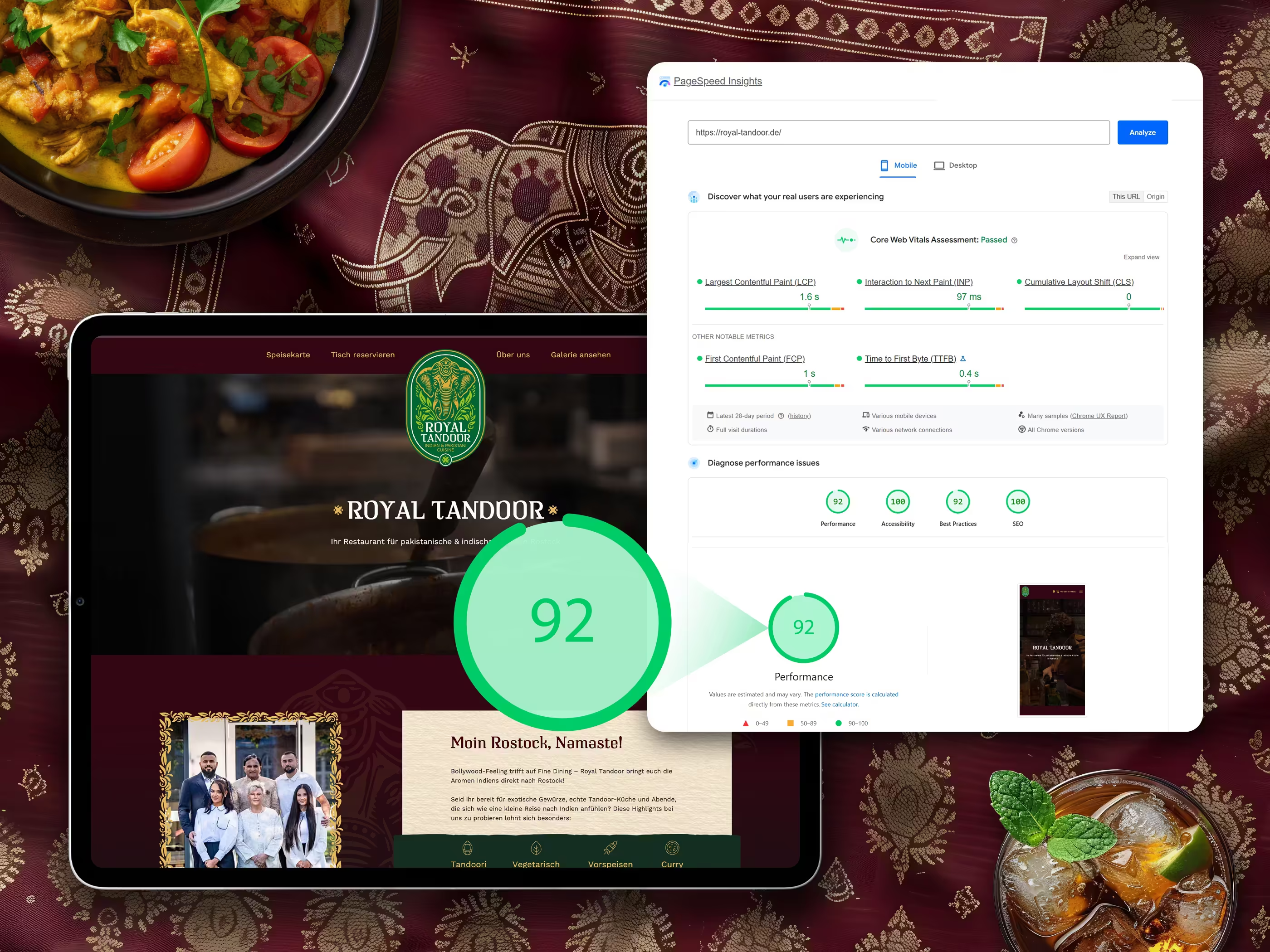
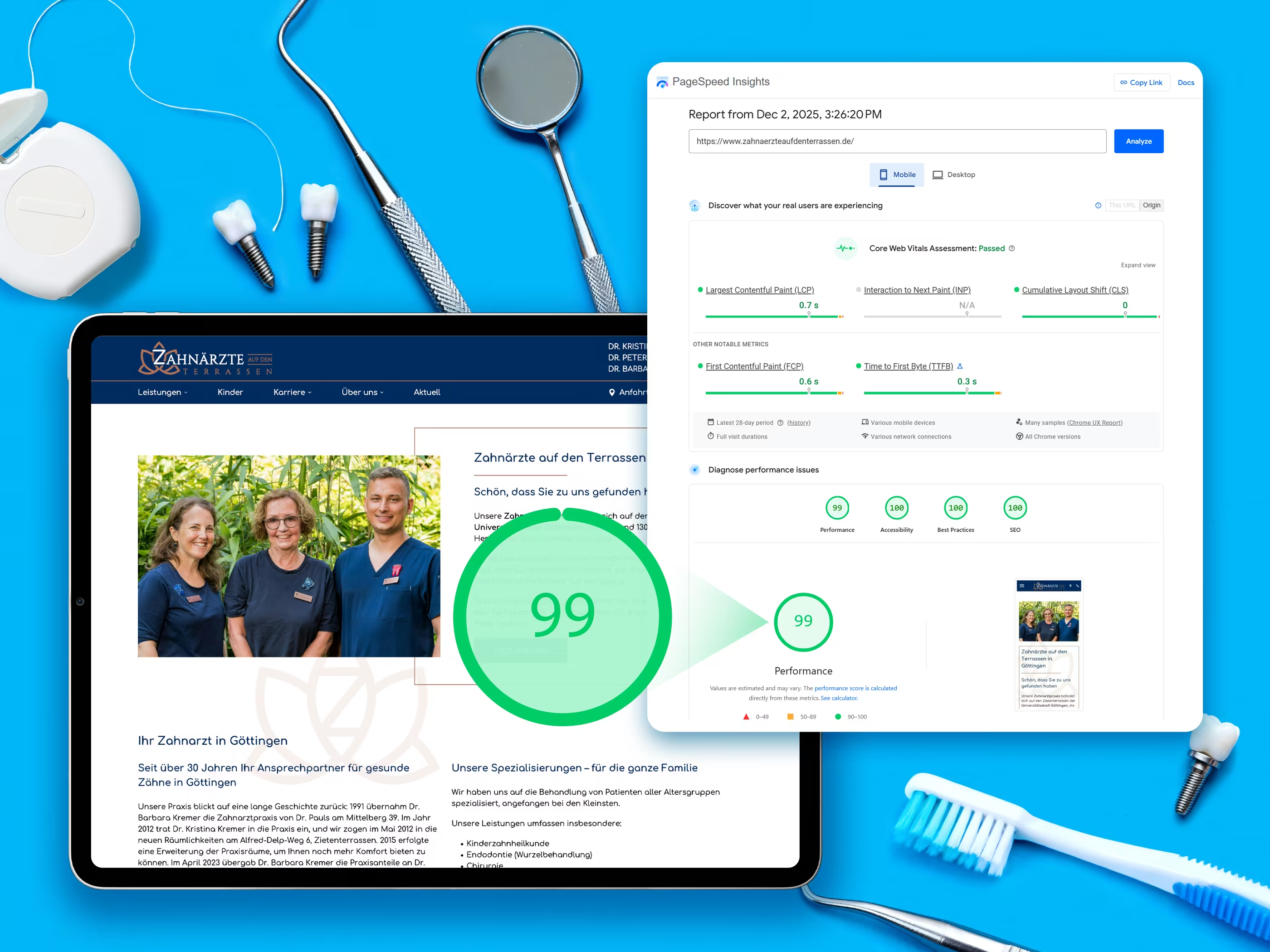
We ensure that your values end up in the green zone – stable, sustainable, and ultra-fast in experience. No plugin magic. No fake optimization. Just real technical work.

This is how we improve your PageSpeed

  • Performance Audit: Analysis of all technical bottlenecks
  • Image Optimization: WebP, AVIF, Lazy Loading, Responsive Images
  • Code Optimization: Minimize & clean HTML, CSS, JS
  • Font Optimization: Preloading, Subsetting, Font-Swap
  • Caching Systems: Browser cache, Server cache, Object cache
  • Server Performance: Optimize TTFB, configure PHP, Server tuning
  • Database Optimization: Reduce and accelerate queries, create indexes, clean tables
  • External Scripts: Defuse Analytics, widgets, chat systems
  • Core Web Vitals: Professionally improve LCP, CLS, TBT, INP

Our customers trust us

schlosstorgelow.de
leuchtNatur.eu
zahnwohl-neuenhagen.de
personalberatung.de
lenz-wild.de
malerbetriebschwarz.com
leko-energy.de
wald-zu-tisch.de
mueritz-automobile.de
fidelis-revision.de
fischkaufhaus.de
bootservice-mueritz.de
immo-bau-mehr.de
K&K Vacation Properties
awo-mueritz.de
K&K Vacation Properties
mundgesundheit-waren.de
K&K Vacation Properties
charter-schulz.de
K&K Vacation Properties
elbmed-prignitz.de
K&K Vacation Properties
kuk-ferienwohnungen.de
TutKit.com
tutkit.com
MeckCura Care Service
meckcura.de
Logo of dentist Lars Wöller
ign Architects + Engineers
ign-architekten.de
Carolinum Gymnasium
gymnasium-carolinum.de
Corel Corp.
corel.com
Adobe
adobe.com
Böser & Briehn Care GmbH
boeser-briehn.de
IHK Neubrandenburg
neubrandenburg.ihk.de

Detailed Analysis and Identification of Bottlenecks

Every professional optimization starts with a thorough technical audit. We use a range of tools — Google PageSpeed Insights, GTmetrix, WebPageTest, Chrome DevTools — to obtain a complete picture of the performance. We analyze not only obvious speed metrics but also Core Web Vitals, critical rendering paths, blocking resources, and potential bottlenecks. Special attention is paid to examining the code, the database structure, server settings, and used plugins or modules. We create a detailed report prioritizing the issues based on their impact on overall performance. This is the foundation for all further work — understanding what exactly slows down the website and which measures will achieve the maximum effect.

Server-Side Optimization and Infrastructure

The server is the foundation of a fast-working website, and there are two aspects to consider: what we can configure programmatically and what depends on hardware capabilities. First, we assess the hardware component of your server. If you have a serious project with high user loads, a cheap shared hosting solution will simply not be enough — you will need a dedicated server with sufficient resources. Processor, memory, speed, and type of hard drives (preferably SSD) must meet the expected load. These are physical limitations that we cannot work around with software adjustments.

After assessing the hardware, we move on to code optimization. We review and configure PHP settings, update versions to the current state, and optimize web server settings (Apache/Nginx). Special attention is paid to server response time (TTFB), which should be minimal. We configure efficient server-level caching, implement Gzip/Brotli compression, and optimize HTTP headers. If necessary, we recommend switching to more powerful hosting solutions or integrating a CDN for global load time acceleration. Additionally, we optimize database connections, clean up unused tables, and optimize slow queries.

Working with Code and Resources

Here the actual technical work begins. We analyze all the loaded code — HTML, CSS, JavaScript — and ruthlessly remove everything unnecessary. Files are minimized, styles and scripts are combined where possible, and asynchronous loading is implemented for non-critical resources.

We place special focus on critical CSS — we extract styles that are necessary for the first screen and load them prioritally.

We dedicate separate attention to font optimization. In an ideal world, designers use a maximum of 2-3 fonts, but reality is often more complex — especially for multilingual websites, where different fonts may be required for Cyrillic, Latin, Arabic, or hieroglyphs. In any case, we try to minimize their impact on performance: We use font-display: swap to prevent rendering blockages, load only necessary font weights and language sets, and apply preloading for critically important fonts. Where possible, we replace web fonts with system alternatives or use modern variable fonts that allow multiple font weights in one file.

We review and optimize all external scripts — Analytics, social widgets, chats — as they often “silently” consume a significant portion of performance.


Comprehensive Optimization of Images and Media

Images are the primary resource for speeding up most websites. We convert all images to modern WebP/AVIF formats with maximum compression while maintaining quality. We implement responsive images so that mobile devices receive appropriately sized versions. We configure lazy loading for images outside the first screen. Video content is optimized — we use efficient codecs and configure streaming loading. For particularly resource-intensive websites, we integrate specialized image optimization services that automatically adjust quality based on the user’s device and connection speed.

Final Review and Result Monitoring

After implementing all optimizations, we conduct comprehensive tests on various devices and connection types. We verify that all website functions are working correctly and have not suffered from the optimization. We measure the achieved improvements of all key metrics.
If you are using a CMS, we configure automatic optimization for new content. We provide a detailed report with “Before” and “After” results, including recommendations for maintaining the achieved performance. Optionally, we set up a monitoring system that tracks website speed and warns about potential problems.

Continuous Monitoring and Aftercare

Optimization is just the beginning. We continuously monitor your website to ensure that performance remains top-notch in the long term. Updates, new plugins, or content changes can again worsen loading times — you will be notified immediately with us.

Our automatic monitoring provides timely warnings about performance issues. This way, you stay one step ahead of Google and your visitors.

Challenges in Practice and Why We Love Them

All these optimization steps may sound simple when considered individually — but the reality is considerably more complex. Every website comes to us from different developers: wild combinations of plugins that collide, outdated code, custom adaptations that cause problems with every change. We regularly encounter e-commerce systems with hundreds of extensions, websites with critical database errors, or platforms that other agencies have already written off as hopeless.

This is precisely where the allure lies! While competitors give up on “difficult cases,” we see a fascinating technical puzzle. The more entangled the situation, the more interesting the solution process. We never tell our clients “that’s too complex, it would be easier to create a new website.” We say: “Aha, interesting! We can solve that. We might need a bit more time“. Our years of experience provide a wealth of proven solutions for every conflict and legacy system. So don’t worry if your website has “grown complex” or has a technical history — we love such projects the most.

  • Über 1.000 zufriedene Kunden
  • 20+ Jahre Erfahrung

5 von 5 Sternen
Basierend auf Google-Bewertungen

Simple to Intermediate Projects

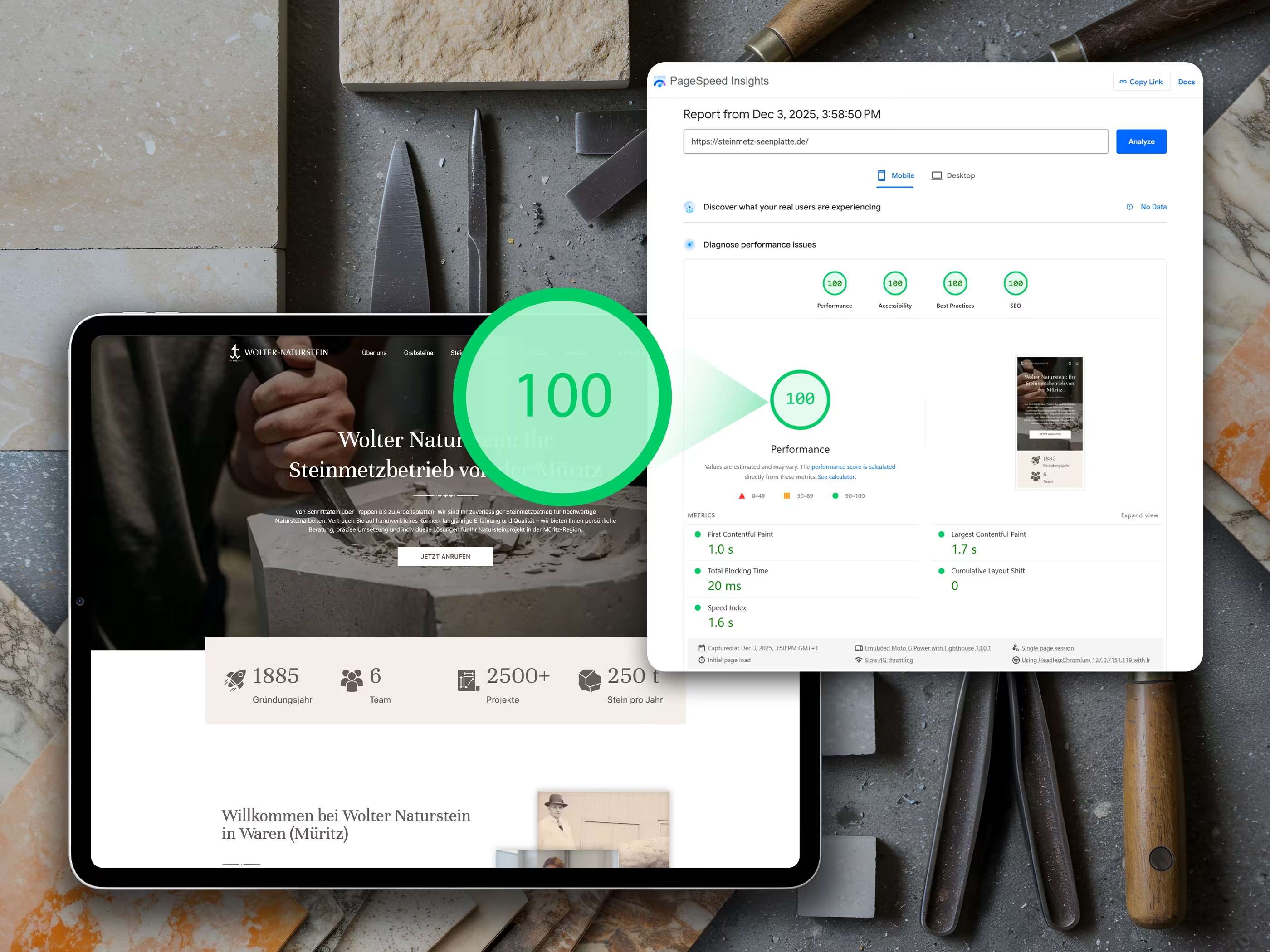
Boot Service Müritz – Our client from the maritime industry offers professional boat cleaning, maintenance, and preparation directly in Waren at the Müritz. From exterior cleaning to interior cleaning, polishing & waxing, and underbody cleaning – a full-service for boat owners, dealers, and rental companies. The owner works with precise deadlines, reliability, and attention to detail. Here we were able to achieve a 100% PageSpeed optimization – from image compression to perfect server configuration. Such smaller projects are our daily bread and are usually completed within a few days.

Schloss Torgelow – This exclusive boarding school is part of Germany’s elite educational institutions. Here, the future of Germany learns, and the website must meet this expectation. The result: one of the best school websites in the world with perfect design, top-notch content, and of course, impeccable technical optimization. When future leaders visit your website, nothing can be left to chance.

Complex Large Projects

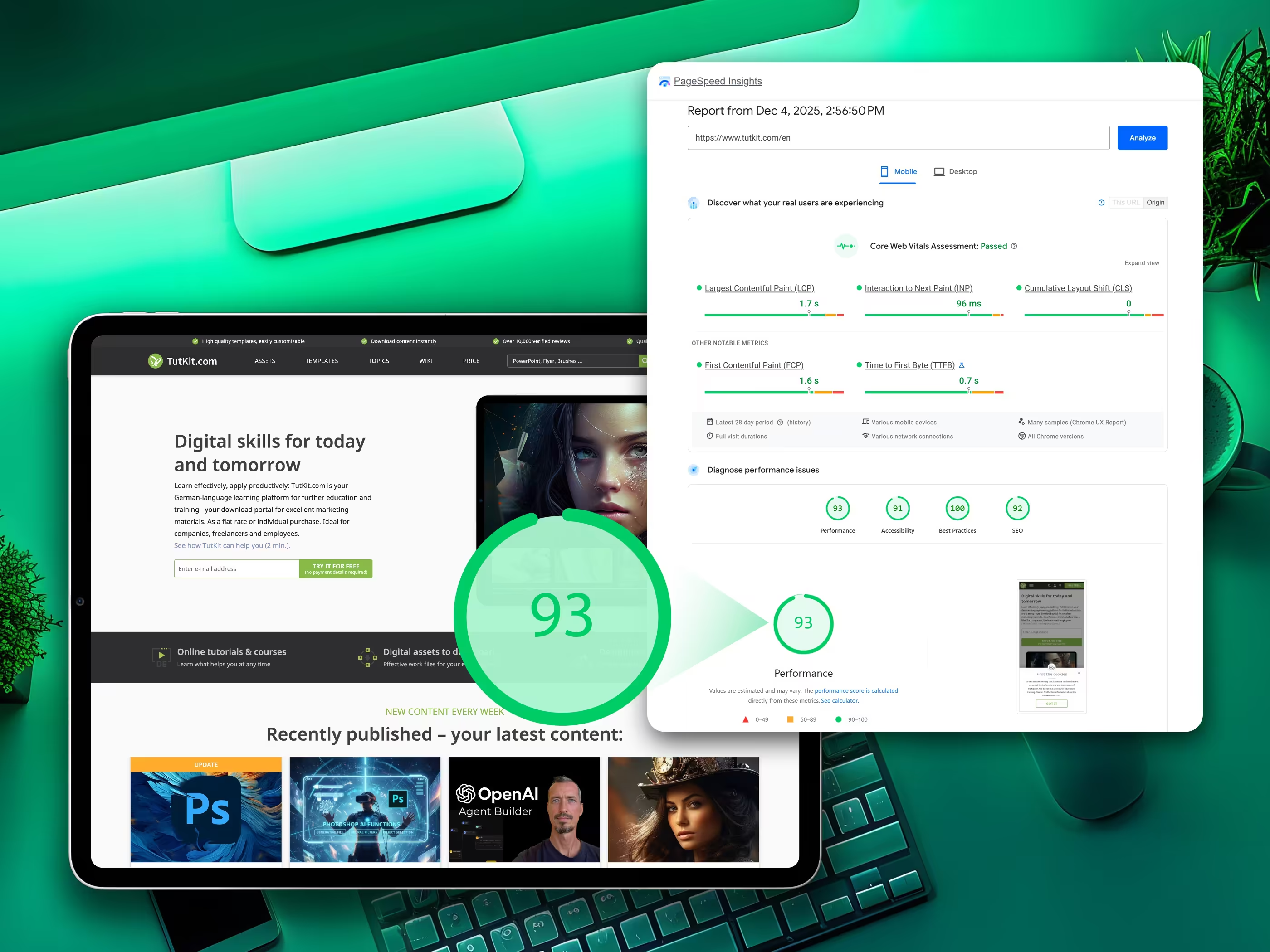
TutKit.com – Our own baby and our biggest challenge. A multilingual e-learning portal with tens of thousands of visitors daily from 38 countries. Here, the most complex database queries, huge media files, and countless user interactions take place. Nevertheless, we have achieved perfect technical and SEO optimization. In such mammoth projects, every millisecond counts. We have years of experience with high-traffic websites and know exactly where the performance killers lurk. Whether it’s WordPress, Drupal, Shopware, or custom development – we can optimize any complex site to peak speed. If we can get our own giant running quickly, we can do the same with your project.

This is just a small excerpt – this list could go on for pages. But one thing is still missing: Your Website! Contact us and we will make your site faster than light. Promise!

What does an SEO audit cost: 4eck Media tablet view with fair pricing for comprehensive website analysis SEO and individual consulting.

What does a PageSpeed optimization cost?

We don’t have flat rates – every project is unique. Typically, our PageSpeed optimizations start at €1,000 and vary depending on the scope and technical complexity of your website. After our free initial analysis, you will receive a transparent offer tailored precisely to your requirements. Contact us now for your free website analysis!

Quick Form

The agency blog

Get to know 4eck Media, our work and results in the agency blog from all angles. We also share insights into our daily work and creativity in behind-the-scenes posts.

The blog serves to introduce projects that do not fit into the portfolio, or to shed light on topics surrounding SEO and code analysis that contain useful information for you. Feel free to visit regularly for new input from us.

Matthias Petri, Managing Director of the agency 4eck Media.
Questions?
Contact: Matthias Petri
Phone number: +49 3991 7787032

Frequently Asked Questions (FAQ)

What is PageSpeed optimization?

PageSpeed optimization encompasses all technical measures aimed at improving the loading speed of a website. This includes optimizing both the server response time and the time taken by the browser to fully render the page.

What is Google PageSpeed Insights?

PageSpeed Insights is a free tool from Google that analyzes and evaluates the performance of your website. It provides ratings from 0-100 for desktop and mobile, as well as specific improvement suggestions based on the Core Web Vitals.

What are Core Web Vitals?

Core Web Vitals are three important metrics from Google for assessing user experience: Largest Contentful Paint (LCP), First Input Delay (FID), and Cumulative Layout Shift (CLS). They have been an official ranking factor since 2021.

What does LCP (Largest Contentful Paint) mean?

LCP measures the time until the largest visible element of the page is loaded. A good LCP score is under 2.5 seconds. Large images or videos are often the main contributors to poor LCP scores.

How do I improve my LCP score?

Optimize large images by compressing them and using modern formats (WebP), utilize Lazy Loading for content outside the visible area, and improve server response time.

What is FID (First Input Delay)?

FID measures the time between the first user interaction (click, tap) and the browser’s response. Good FID values are below 100 milliseconds and indicate how responsive your website is.

How can I improve FID?

Reduce JavaScript code that blocks the main thread, split large JS bundles, and load non-critical scripts with a delay. Optimizing third-party scripts also helps.

What does CLS (Cumulative Layout Shift) mean?

CLS measures unexpected layout shifts during loading. A good CLS value is below 0.1. Elements that change their position significantly worsen the user experience.

How do I prevent layout shifts (CLS)?

Define fixed dimensions for images and videos, reserve space for advertising banners and dynamic content, and load optimized web fonts to minimize font swapping.

What is TTFB (Time to First Byte)?

TTFB measures the time from the page request to the first byte received from the server. Values below 200ms are optimal. A slow TTFB indicates server or hosting issues.

How important is mobile PageSpeed?

Extremely important! Google has been using mobile-first indexing since 2018. Mobile performance is therefore more crucial for rankings than the desktop version. Over 60% of all search queries come from mobile devices.

What PageSpeed score should I aim for?

A score of 90+ is considered very good, 50-90 as needing improvement, and under 50 as poor. However, more important than the score are the actual Core Web Vitals values and the real user experience.

How often should I check my PageSpeed?

After every major website change, at least monthly. Plugin updates, new content, or server changes can affect performance. Continuous monitoring is essential.

Can PageSpeed optimizations affect the design?

No, if done professionally. We ensure that all visual elements are preserved. Sometimes minor adjustments are necessary, but the design and functionality remain completely intact.

How long do the effects of a PageSpeed optimization last?

The technical improvements are usually visible immediately. However, Google requires 2-4 weeks to fully index the changes and take them into account in the rankings. Initial positive effects often become apparent after just a few days.

This site is registered on wpml.org as a development site. Switch to a production site key to remove this banner.